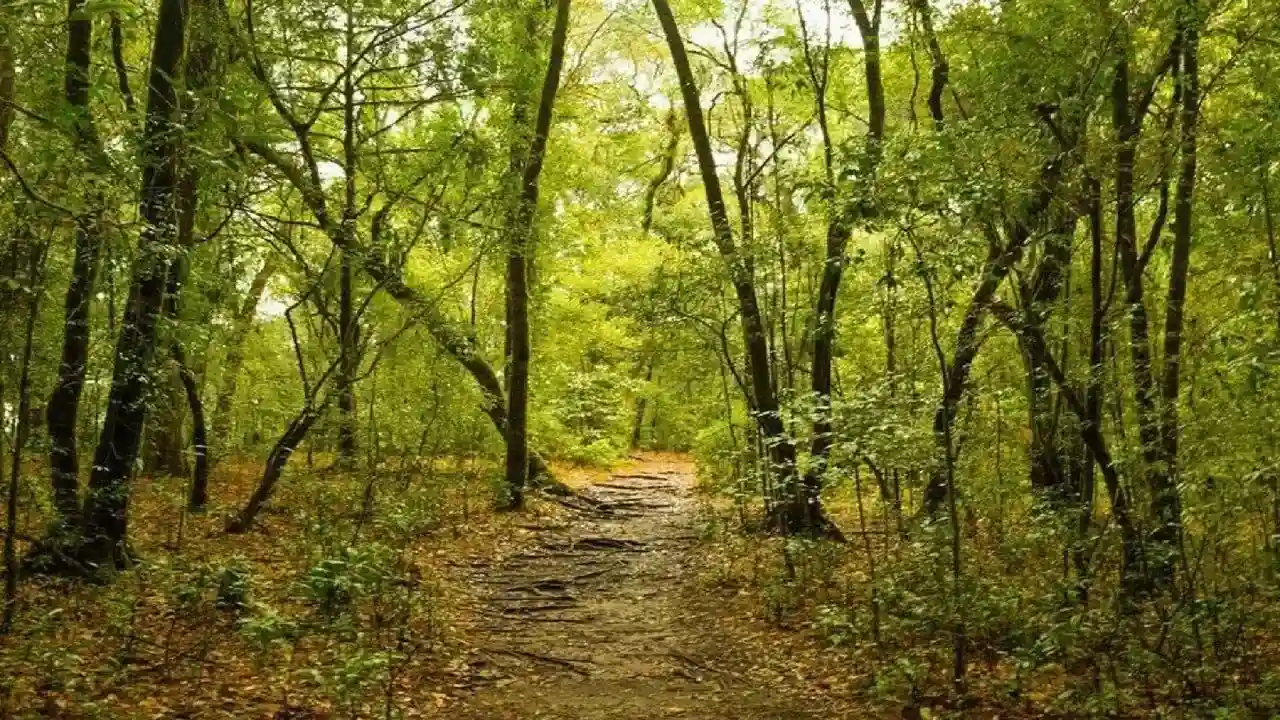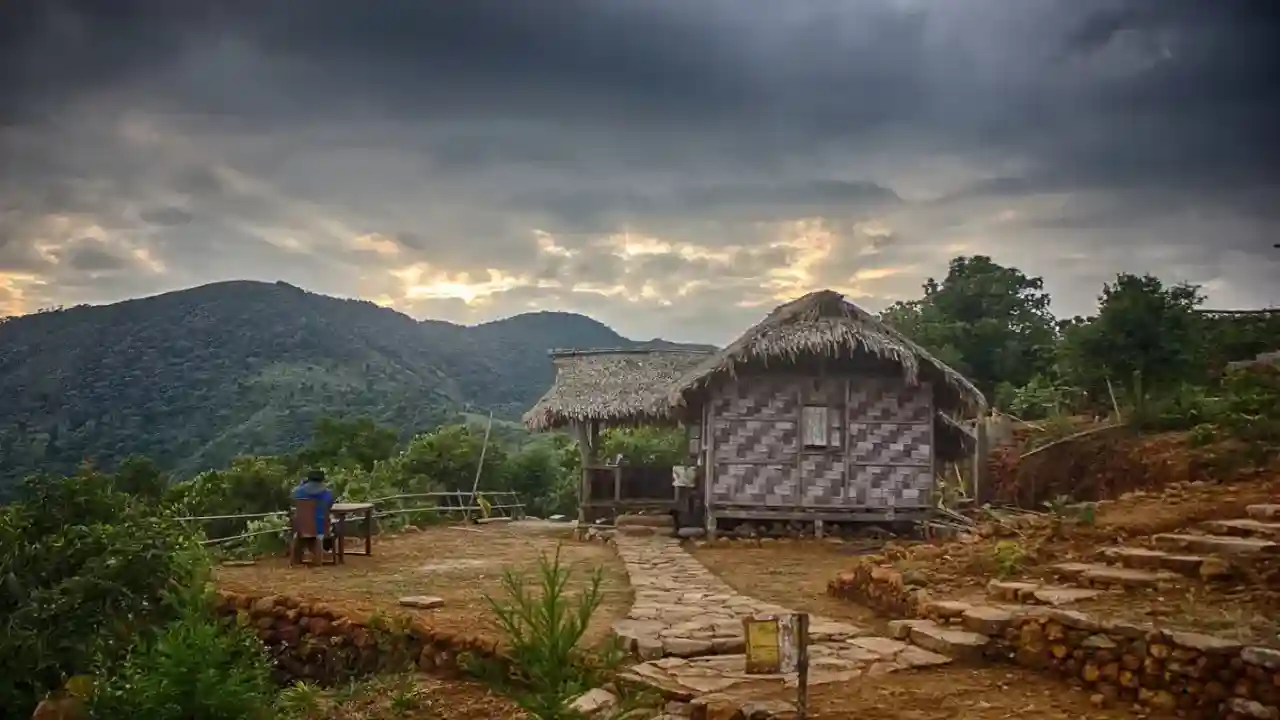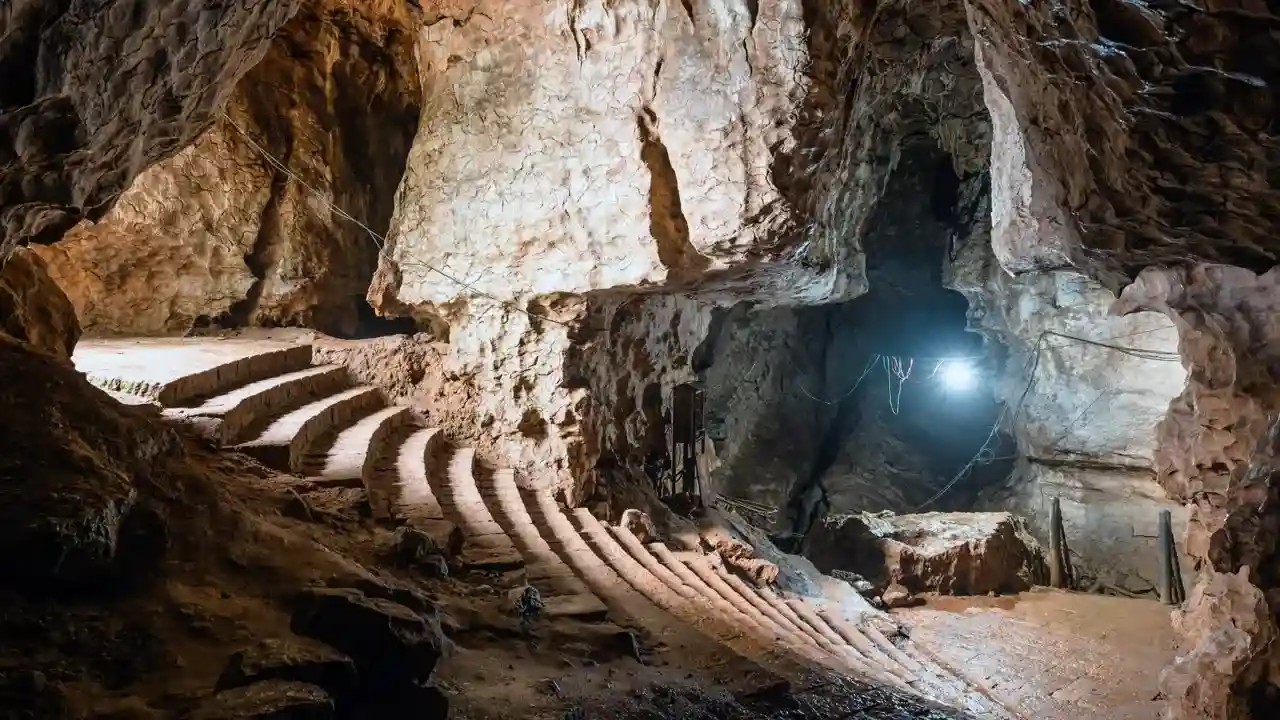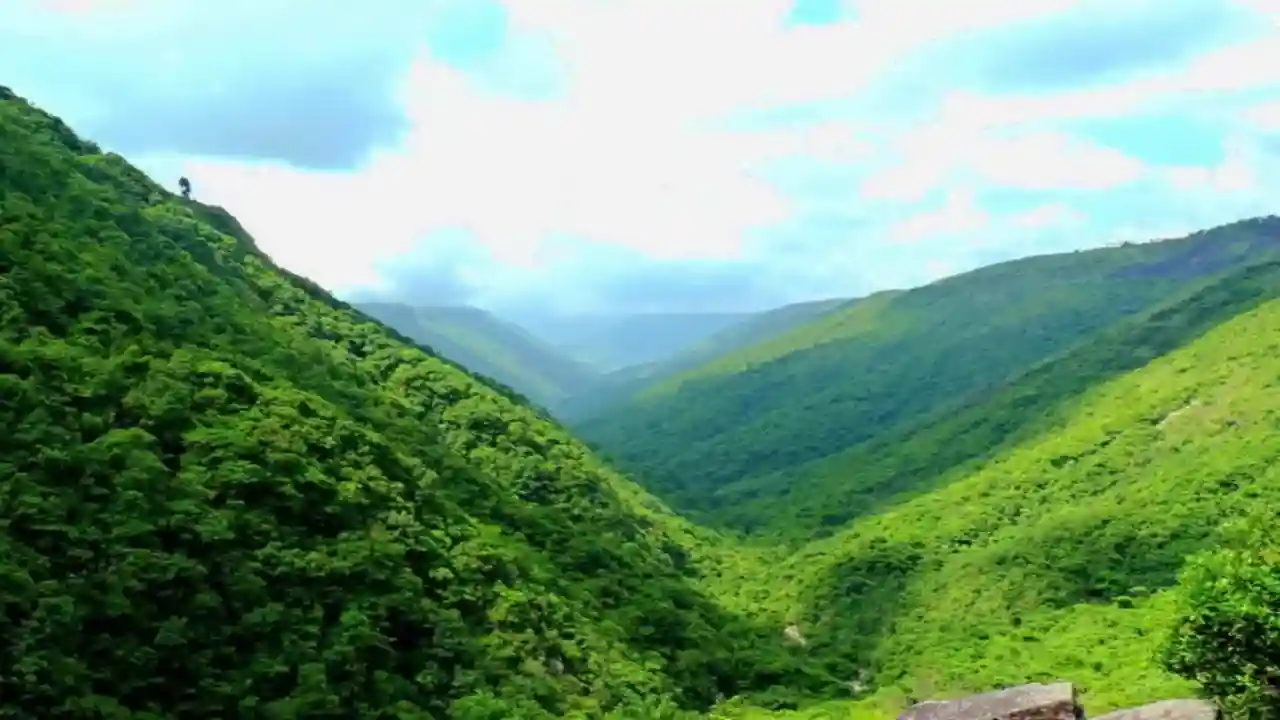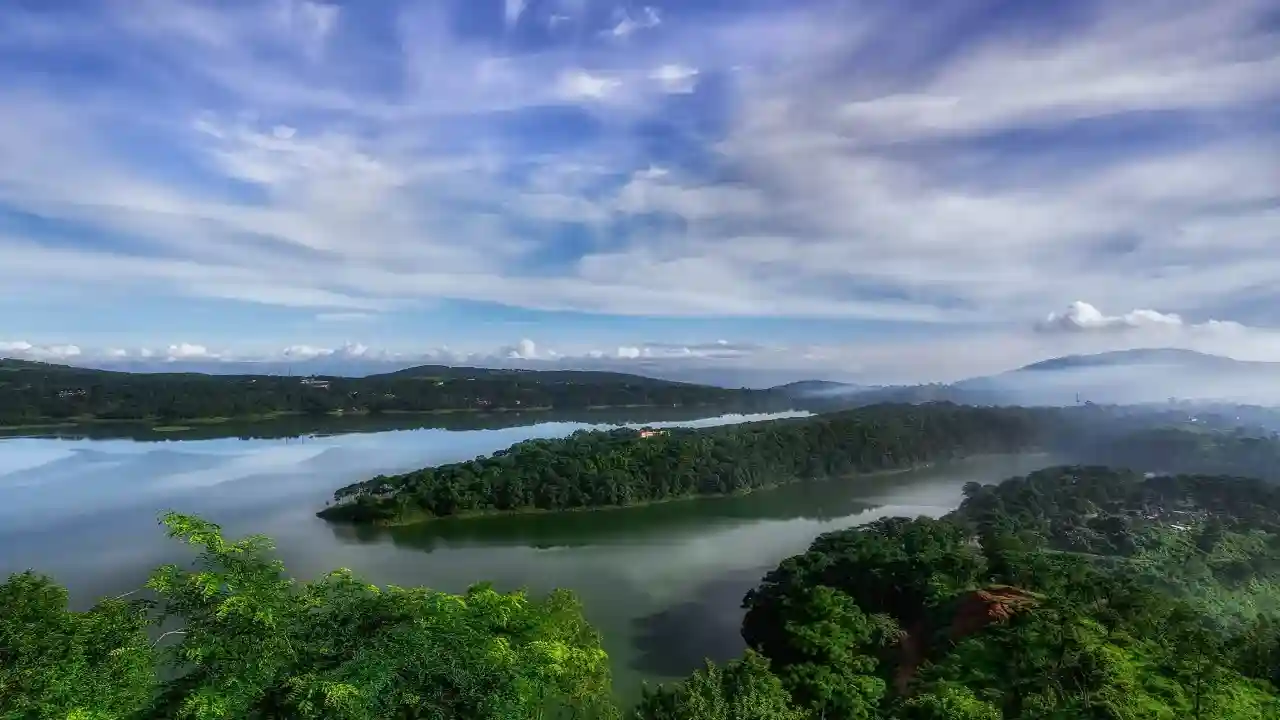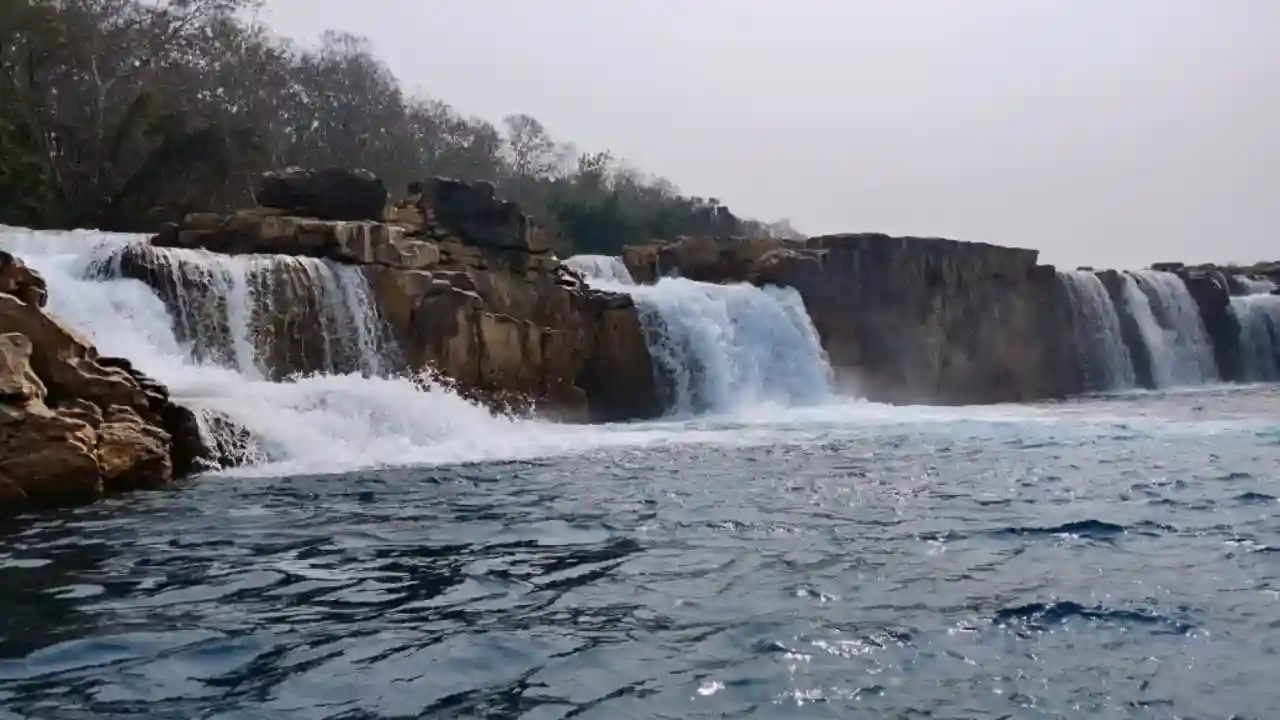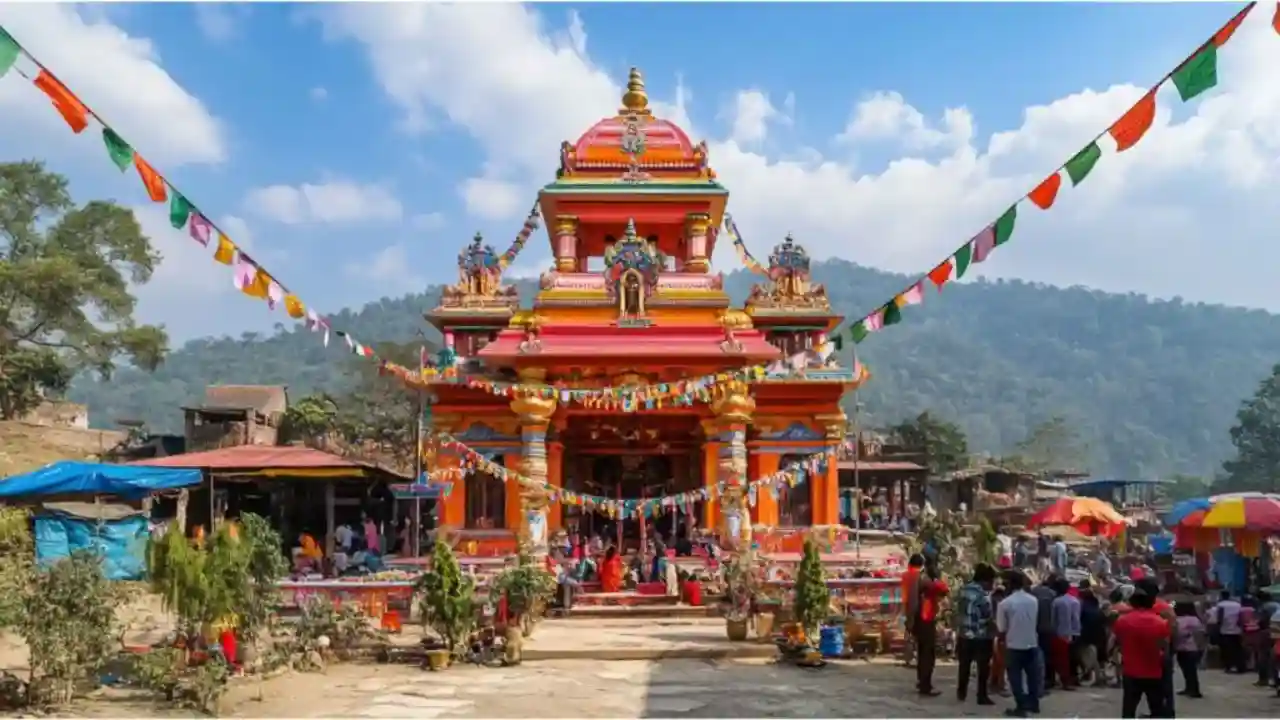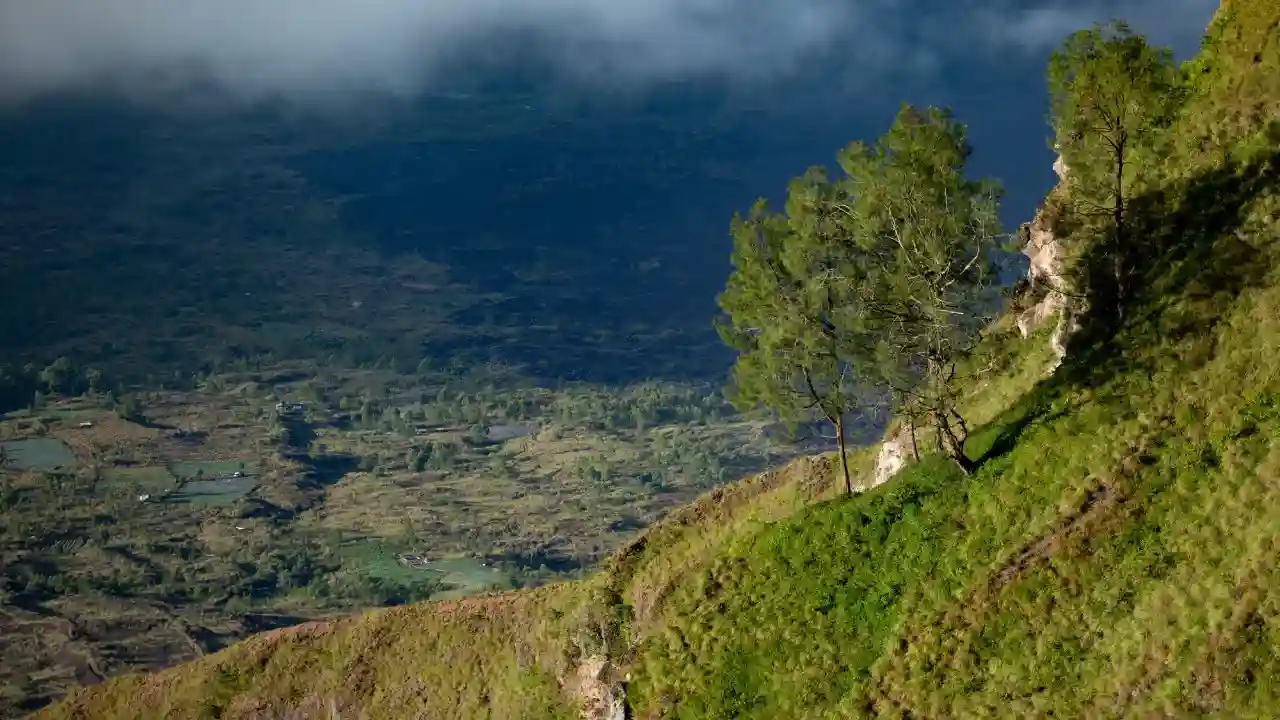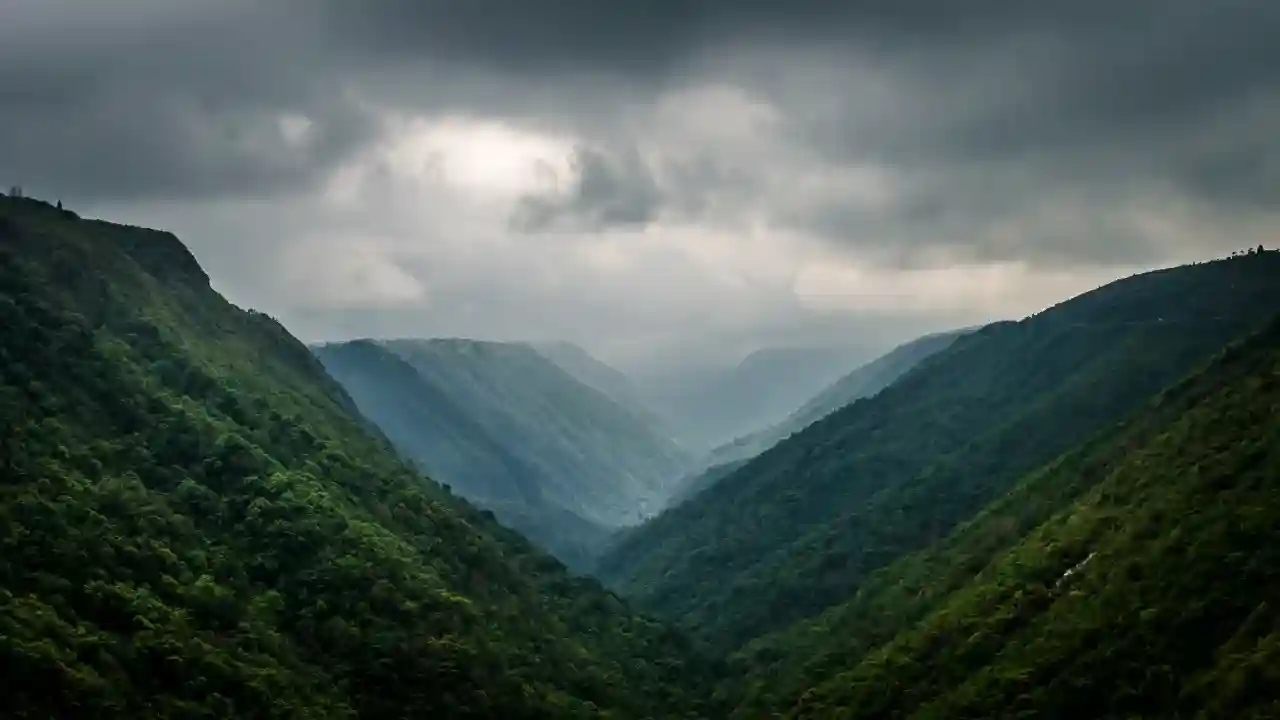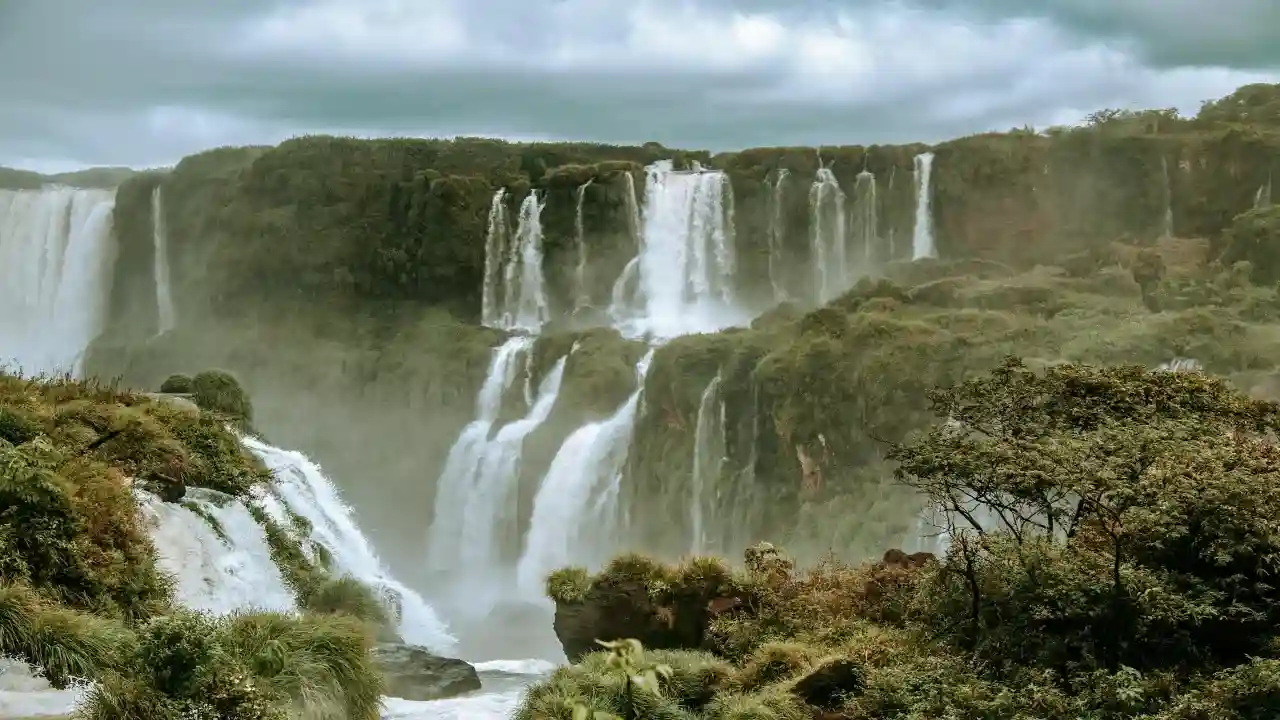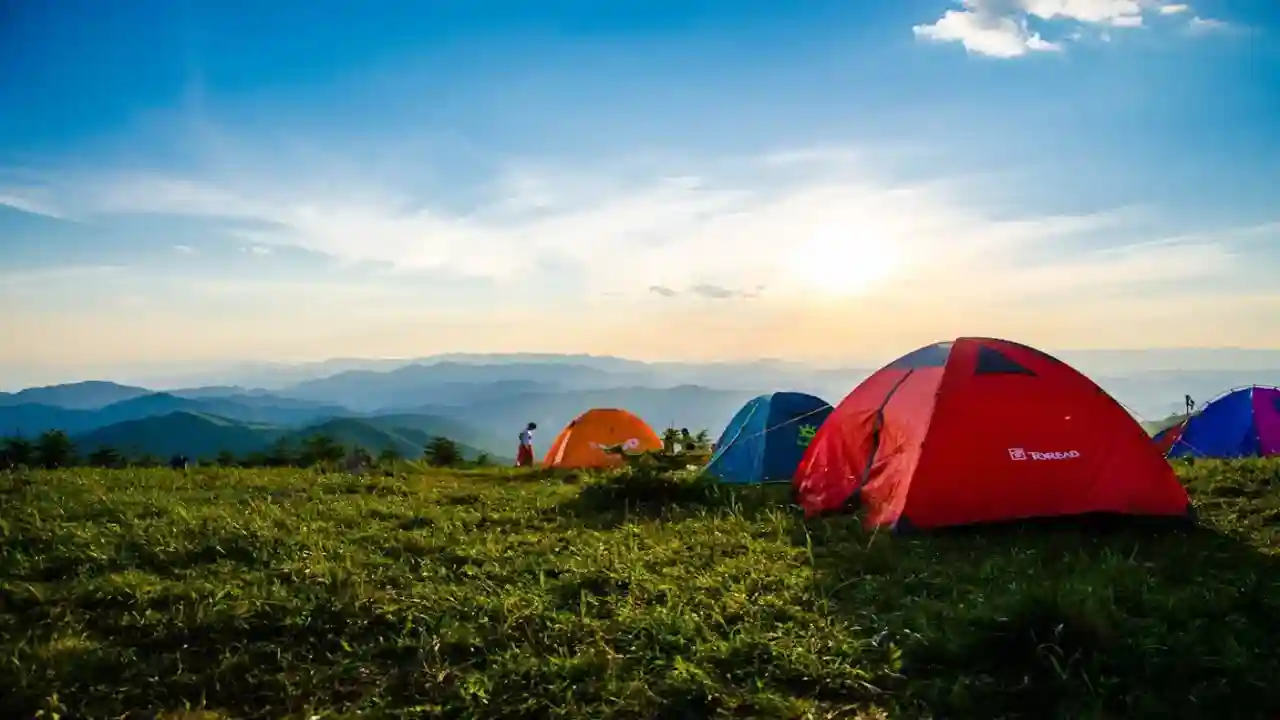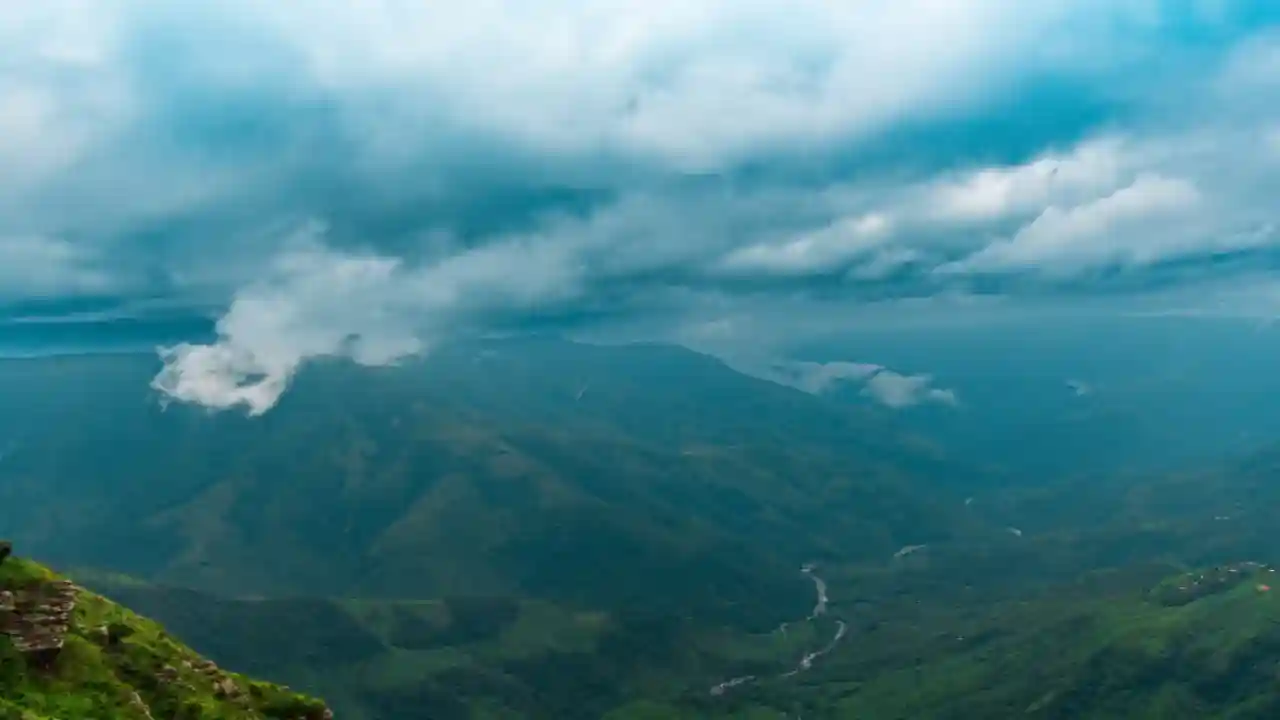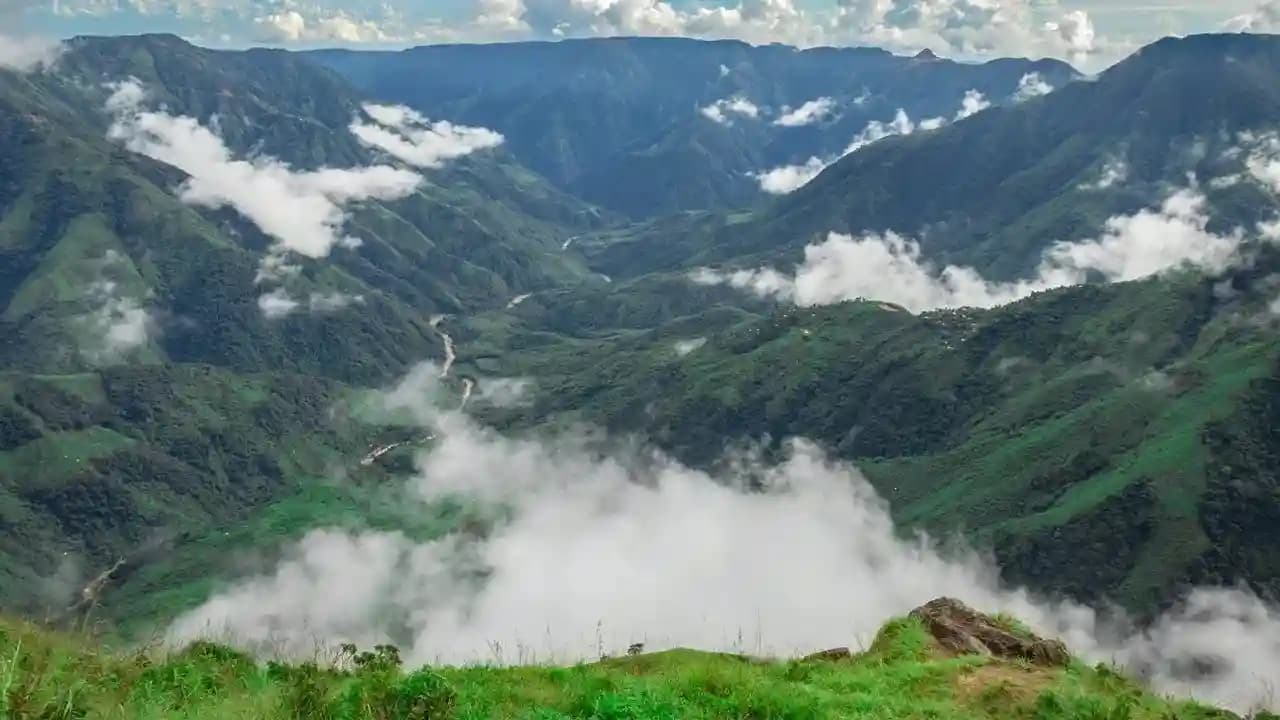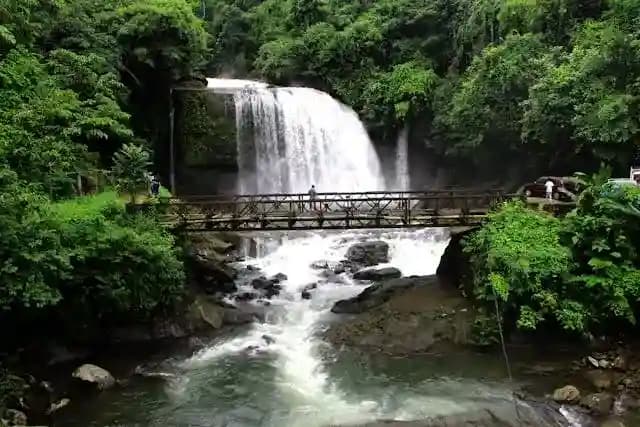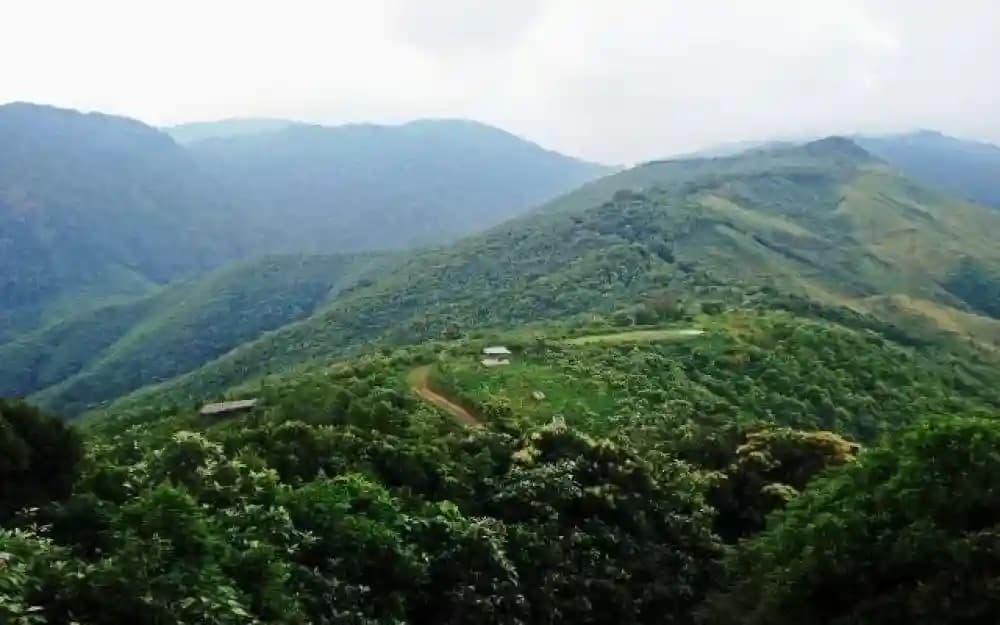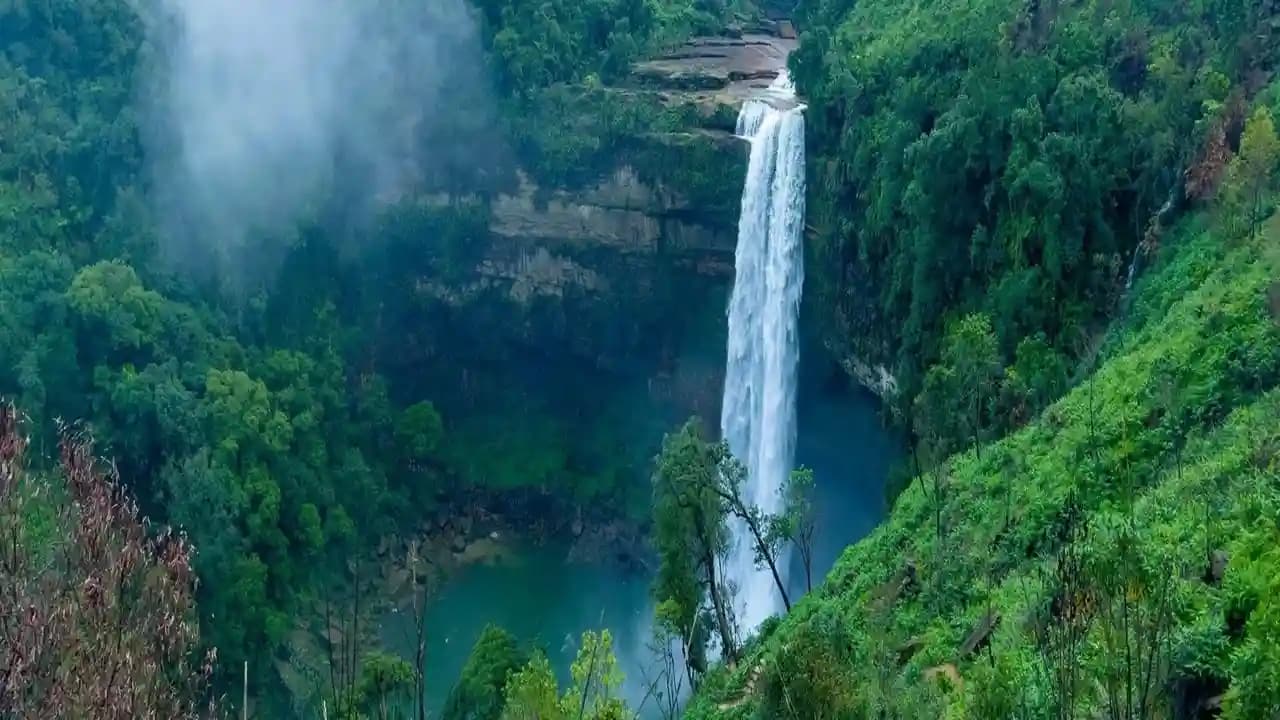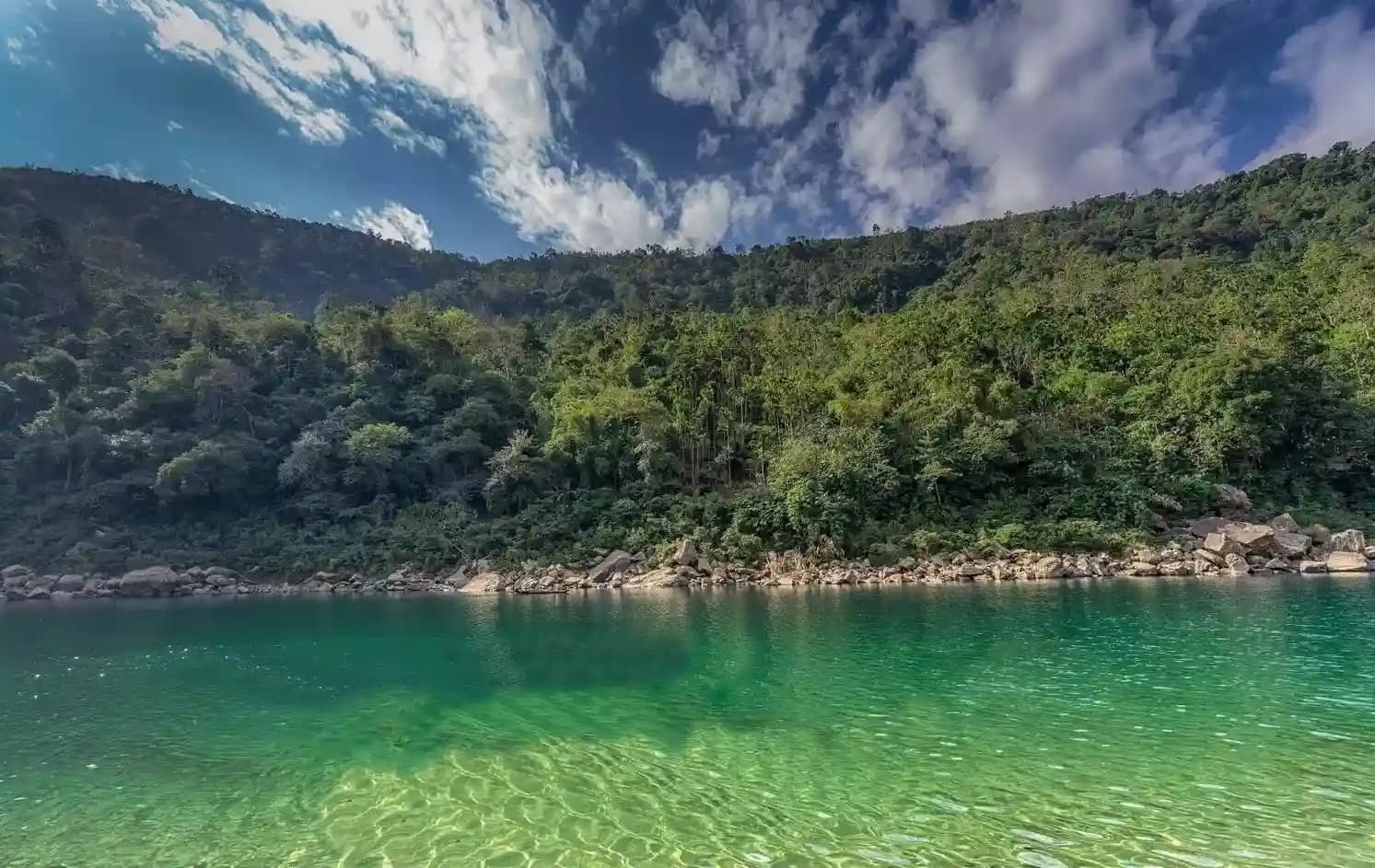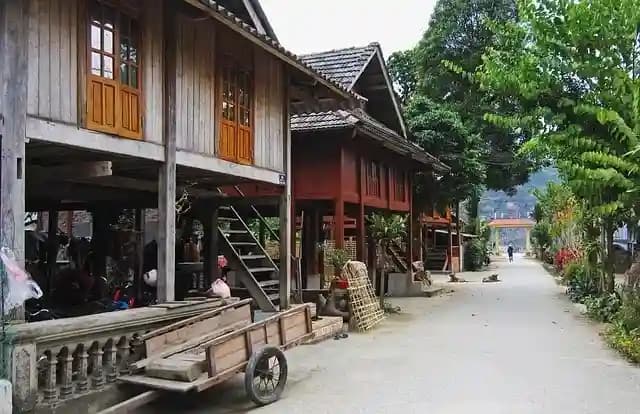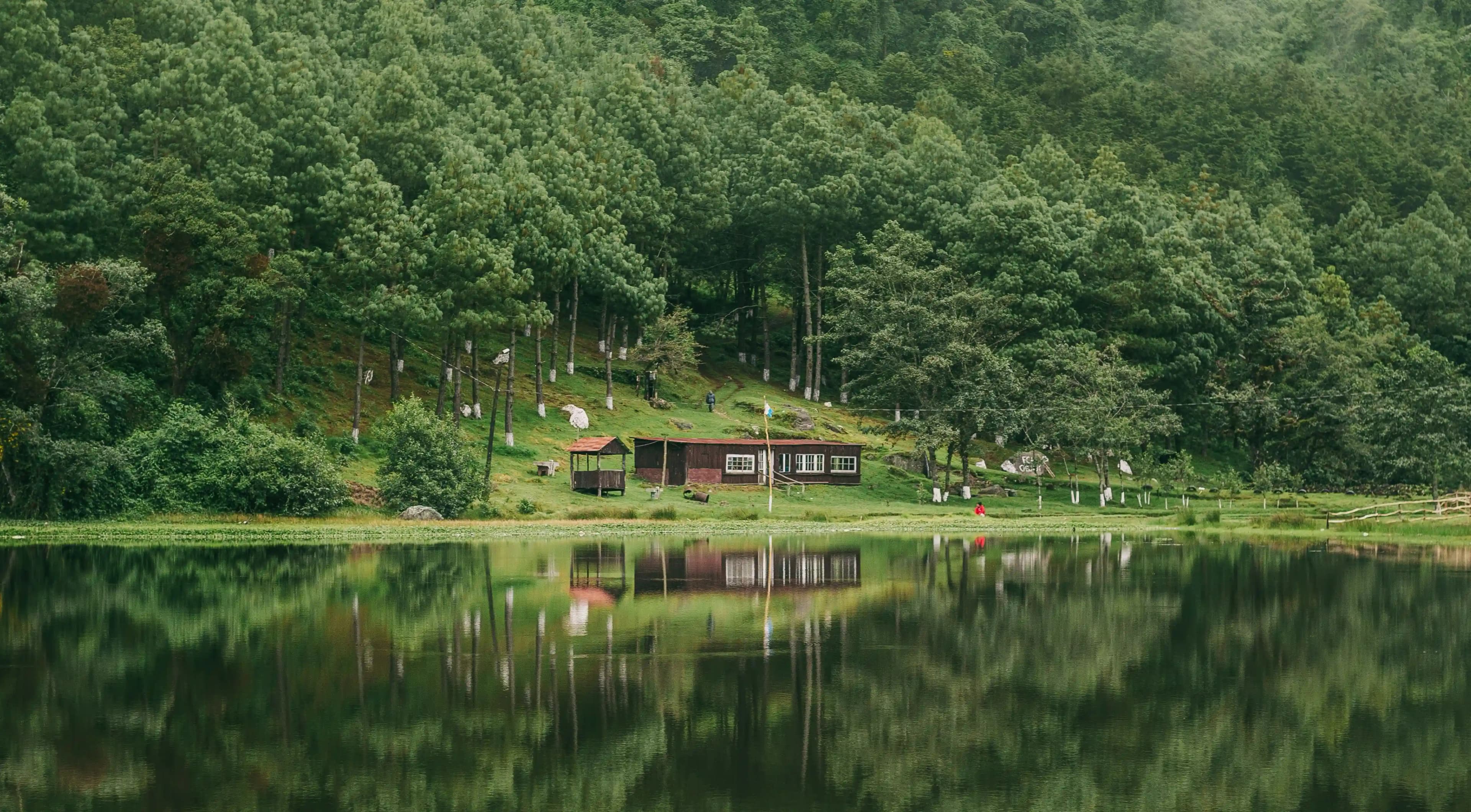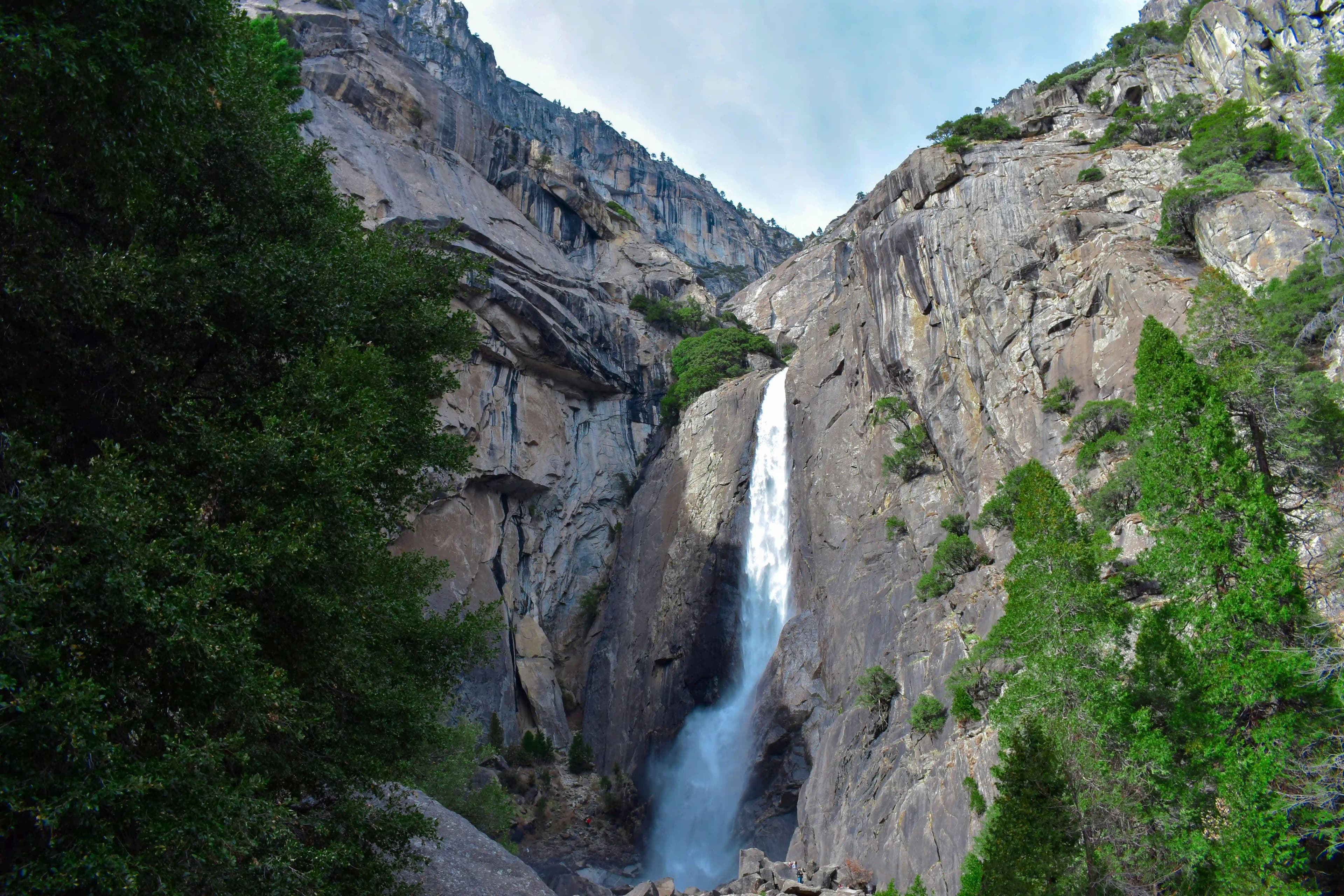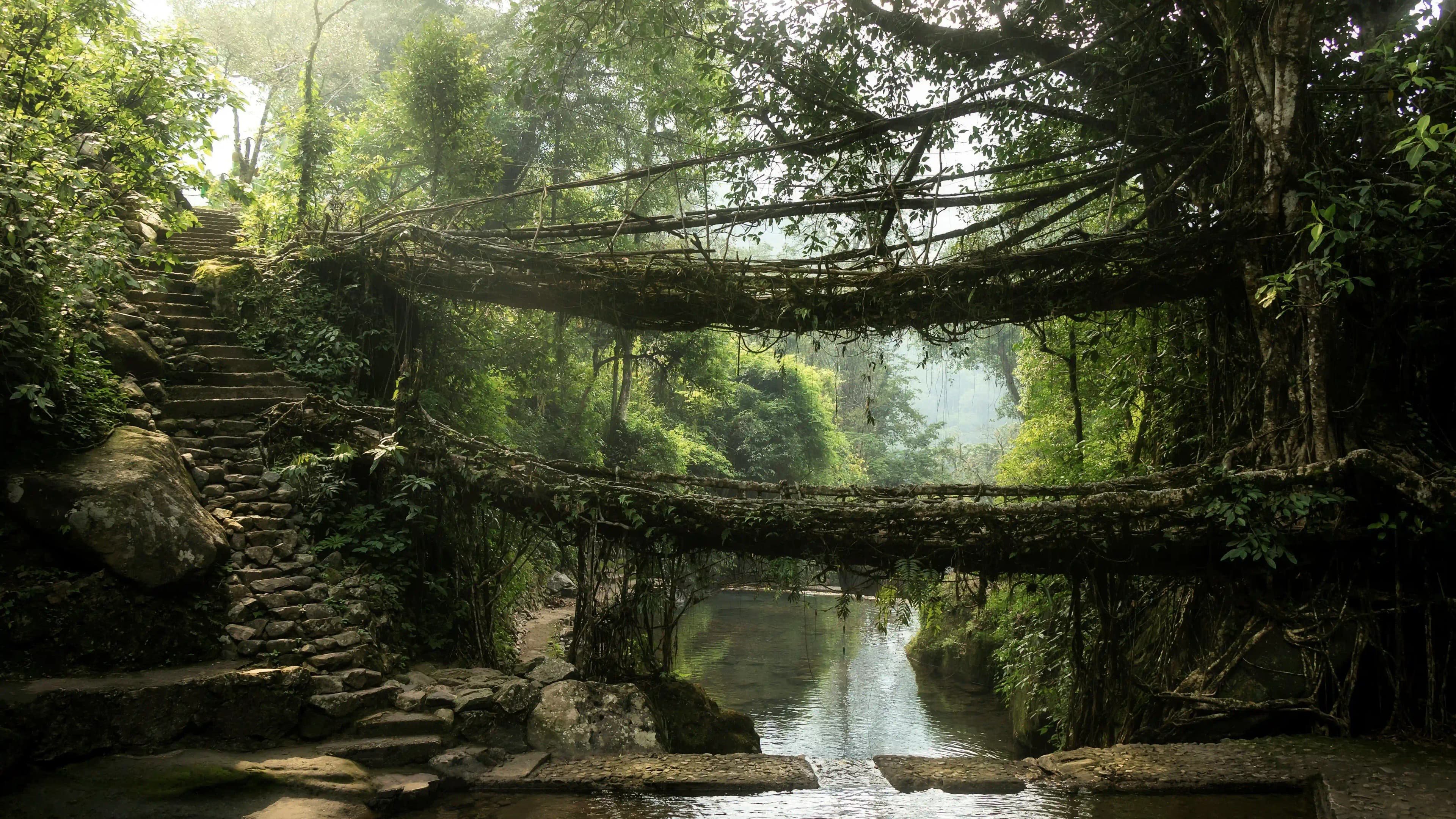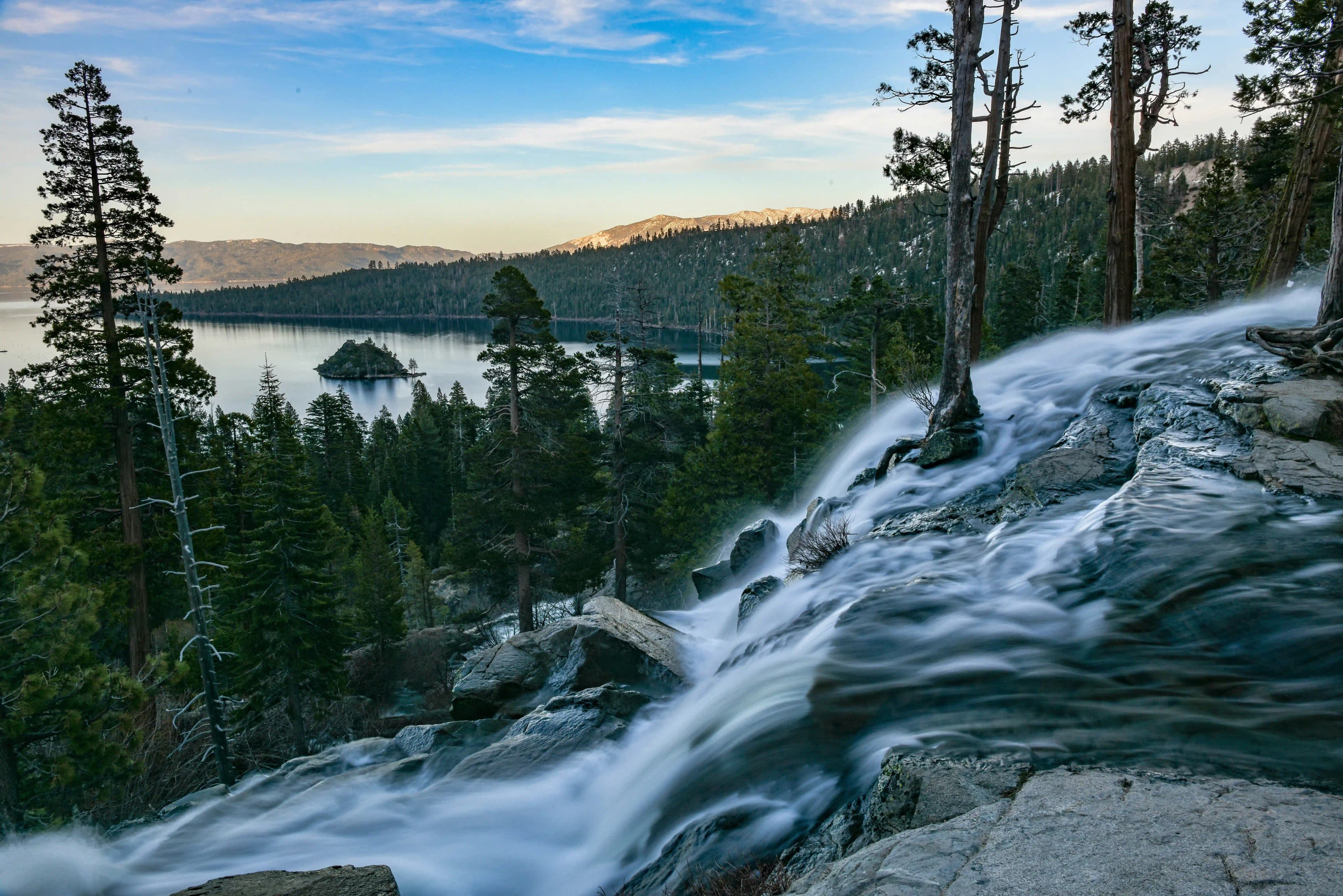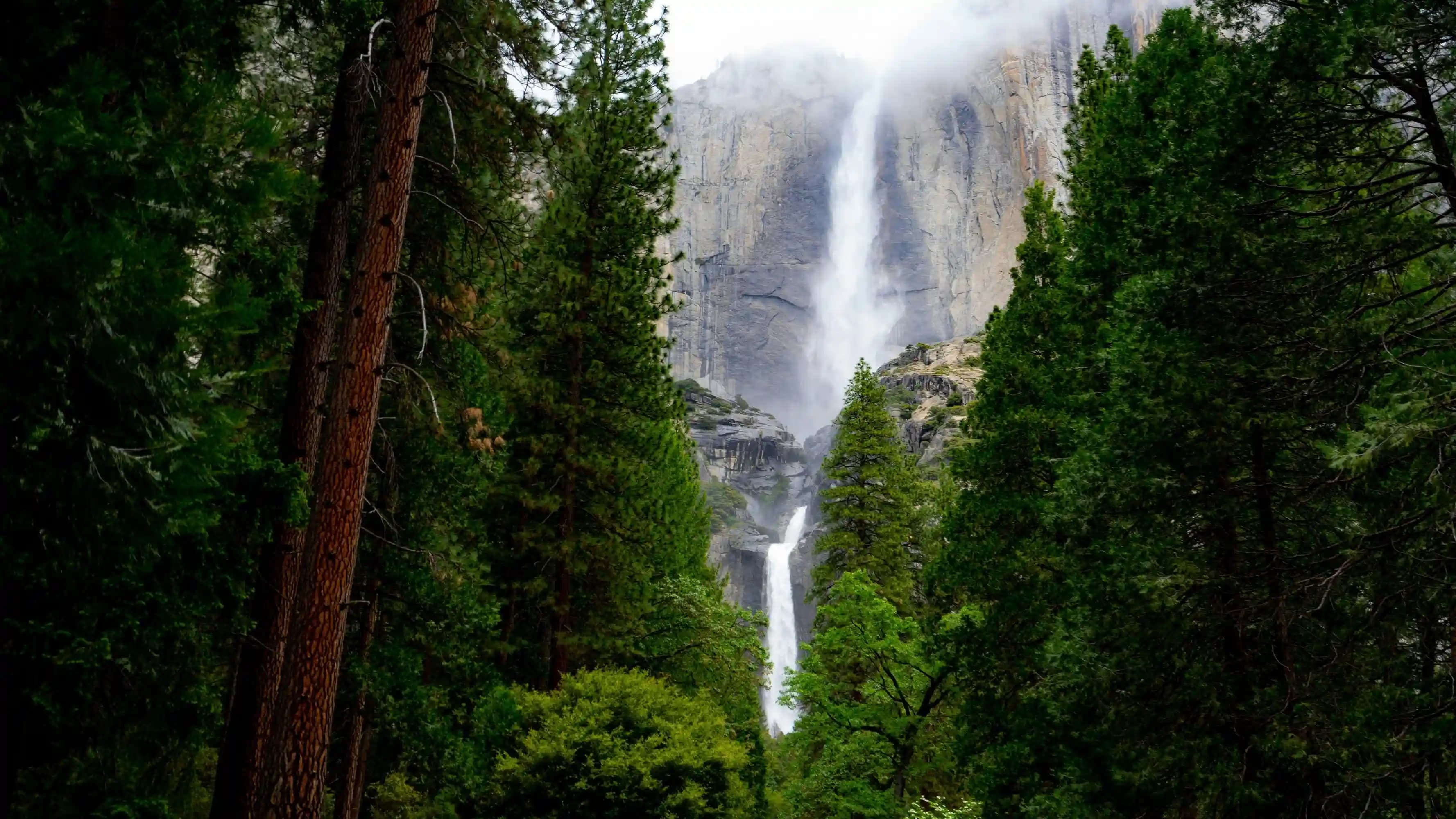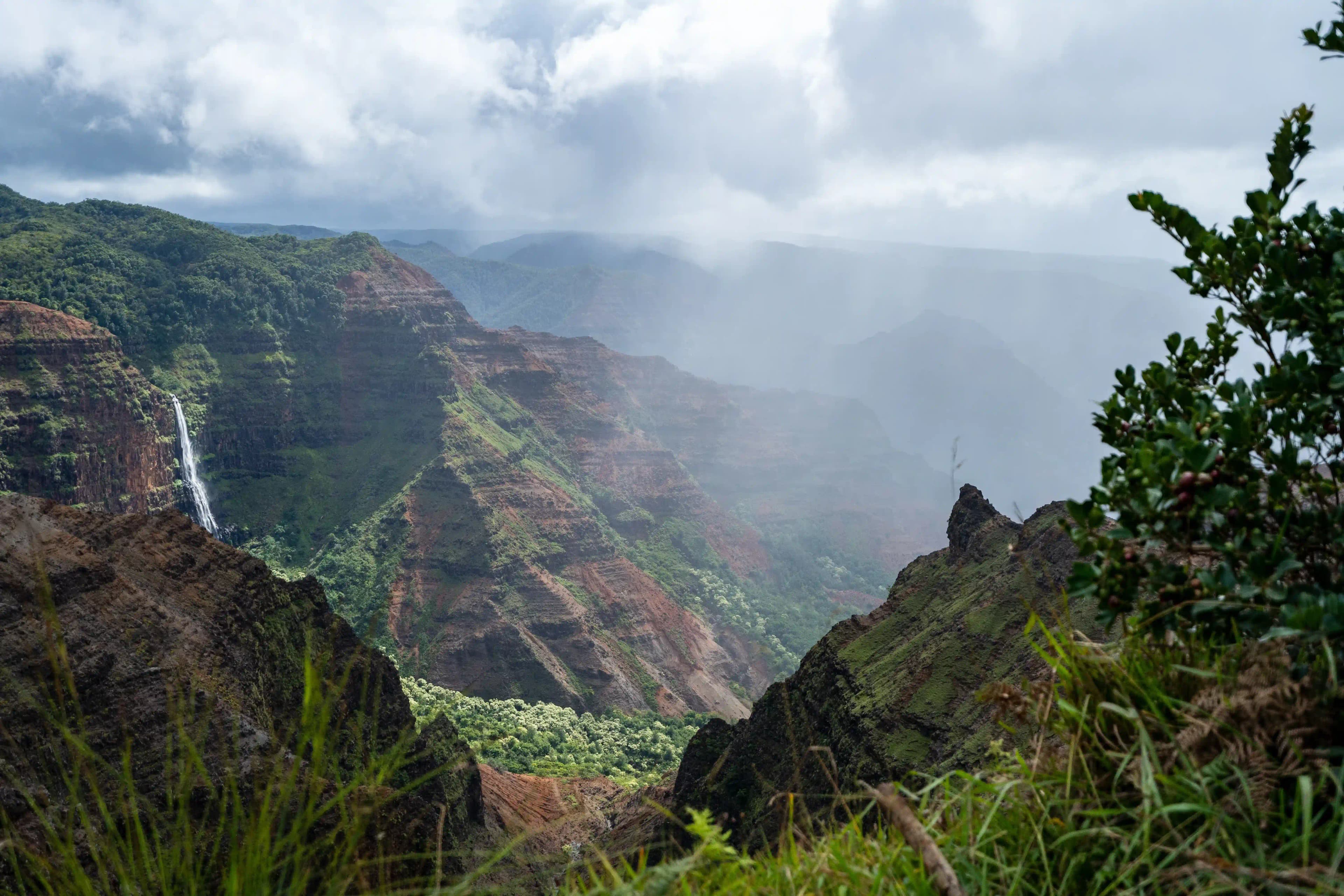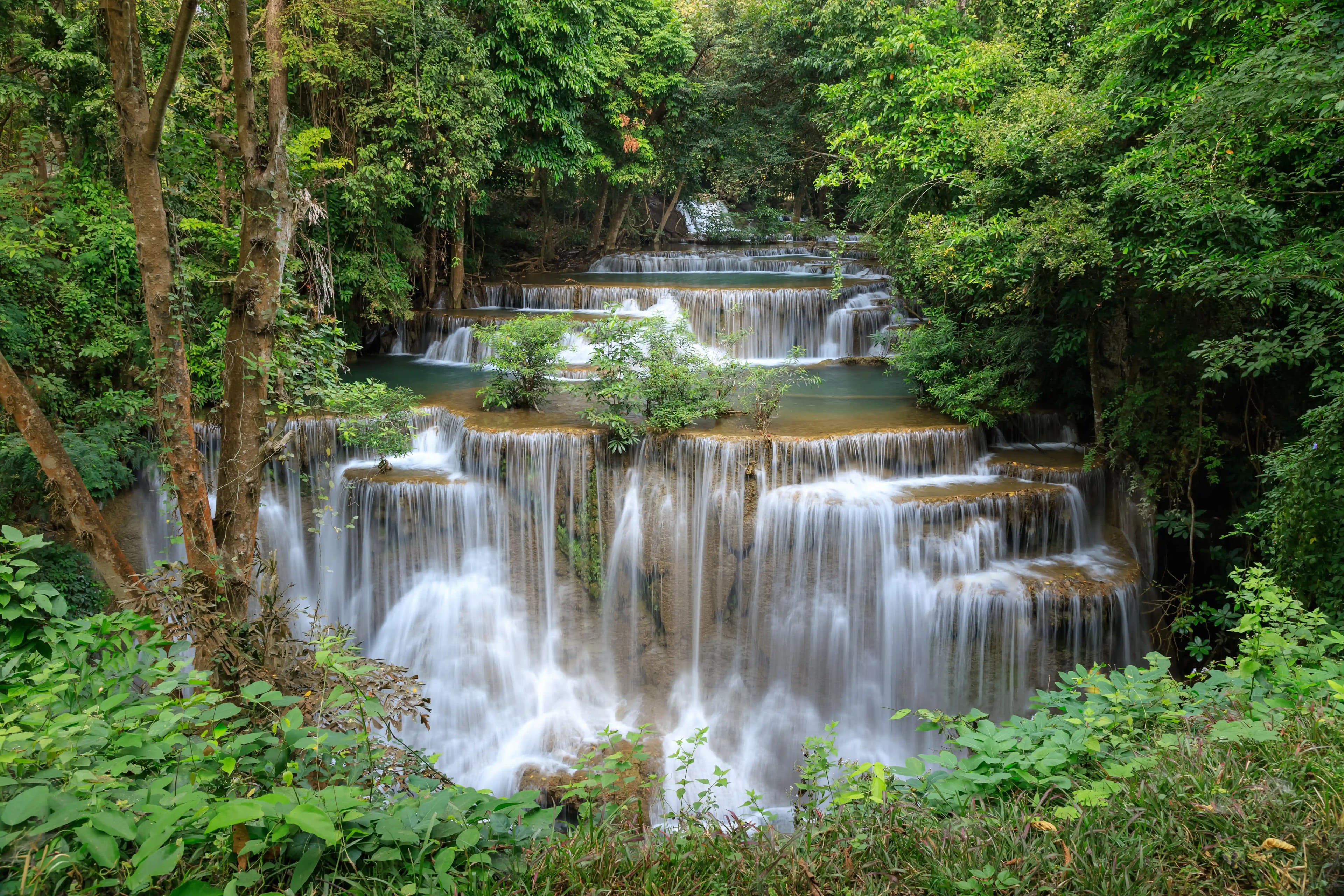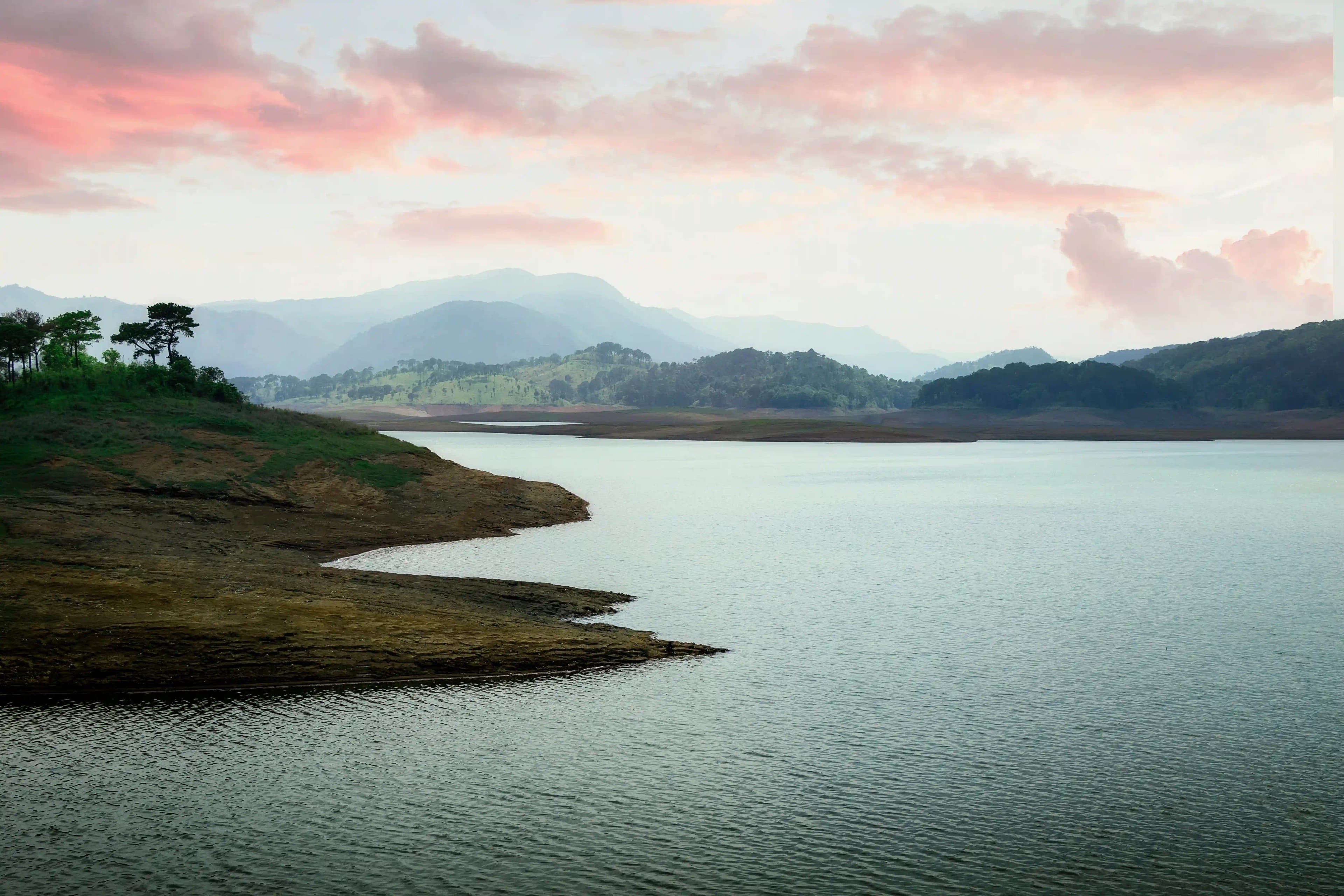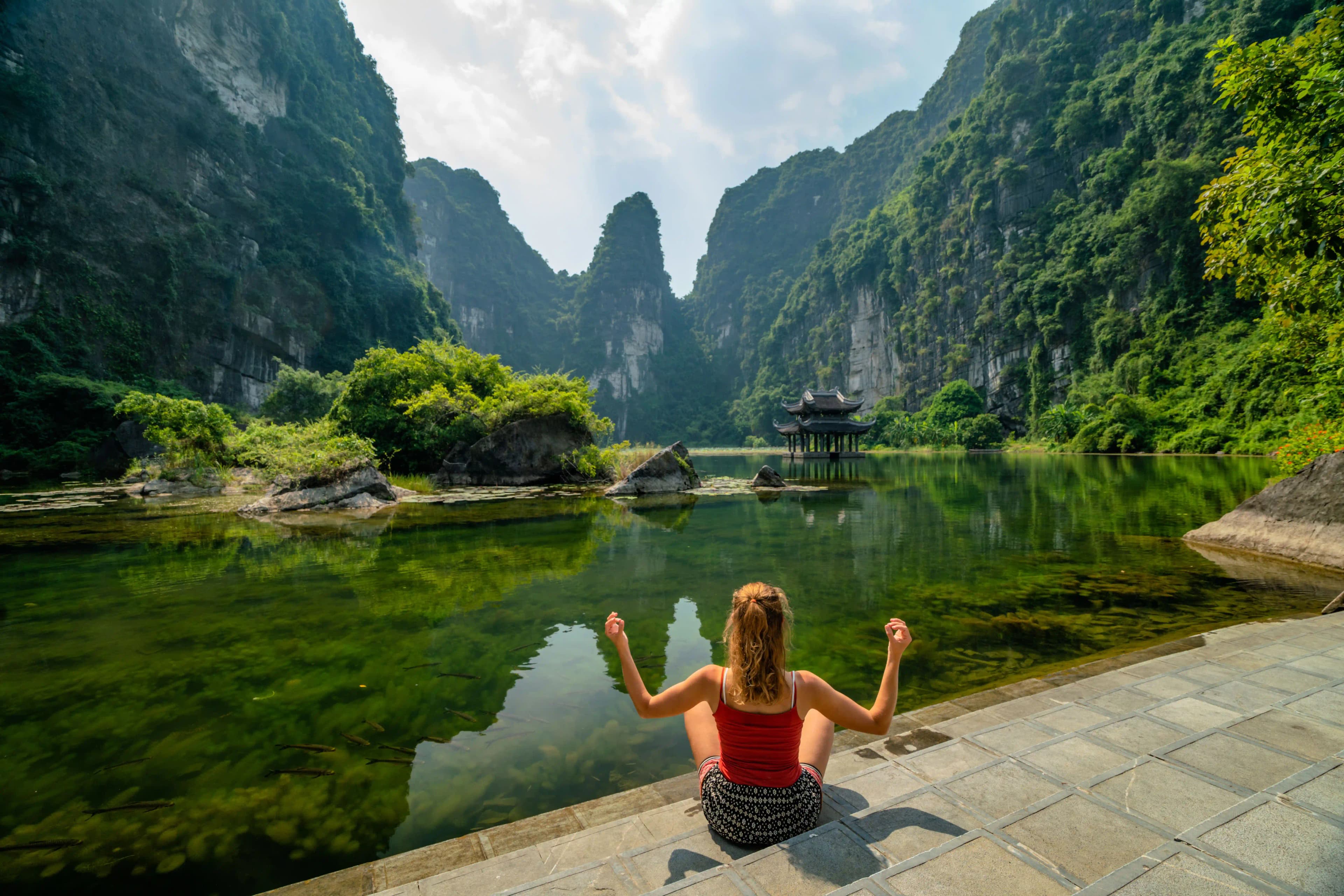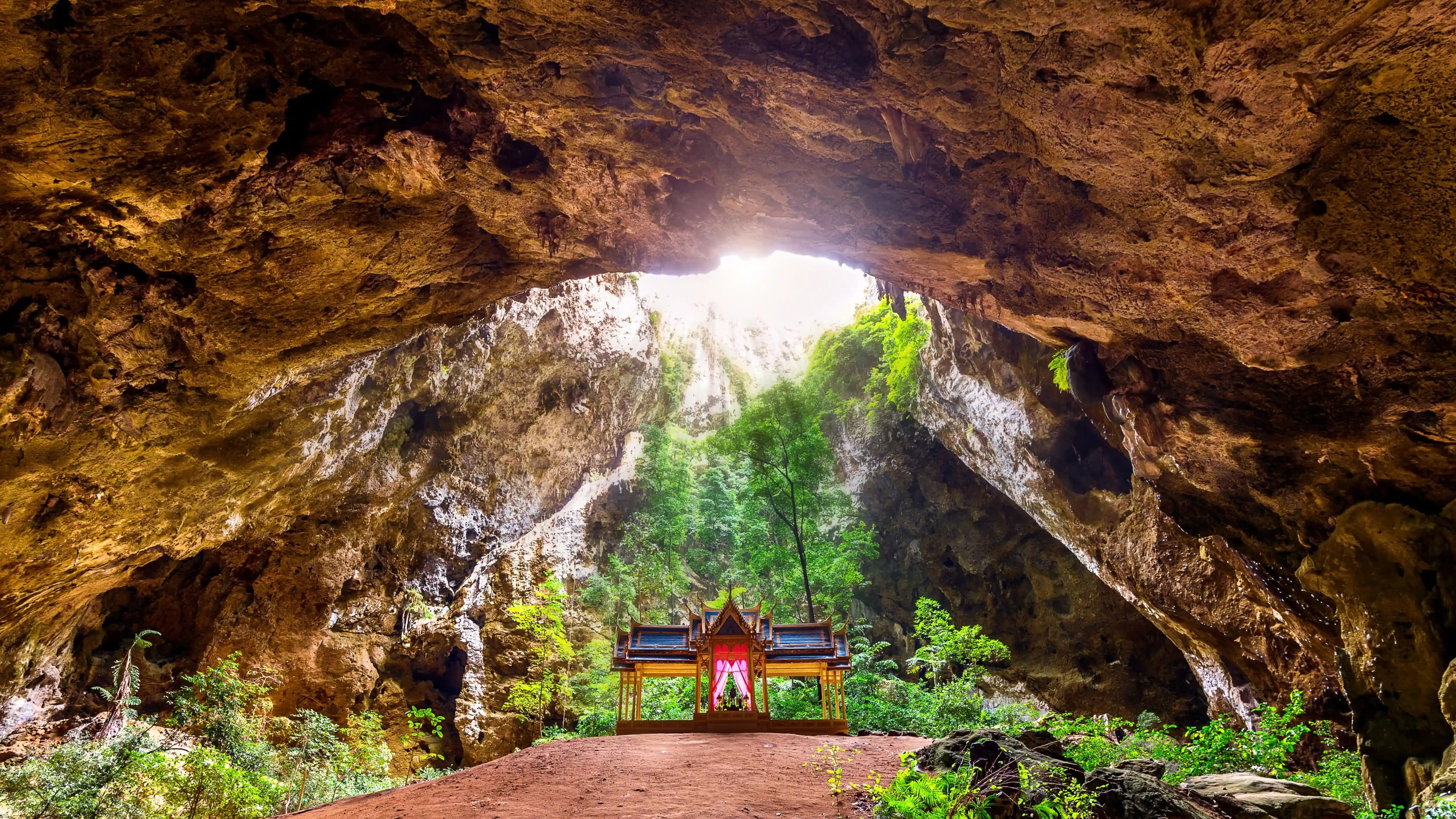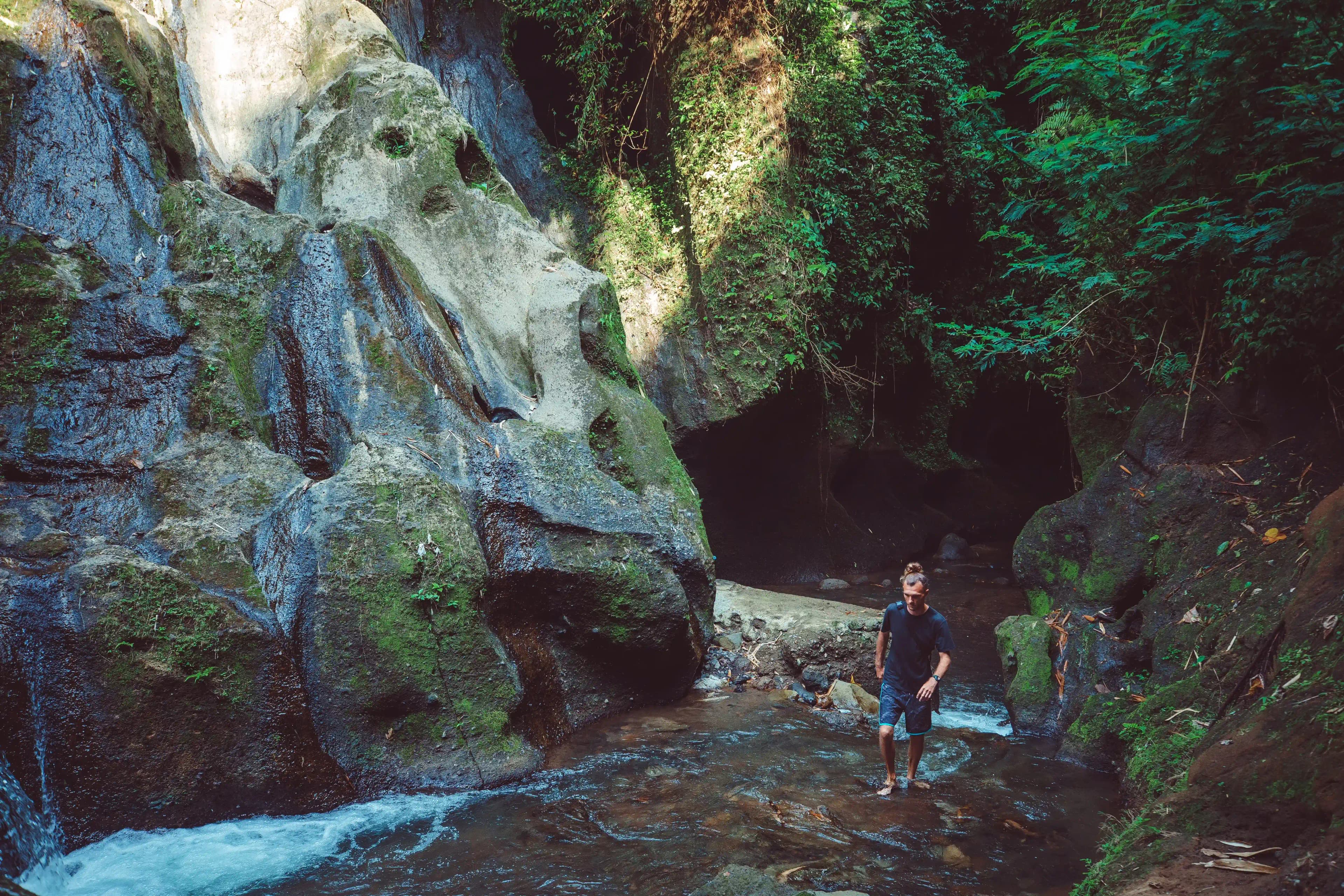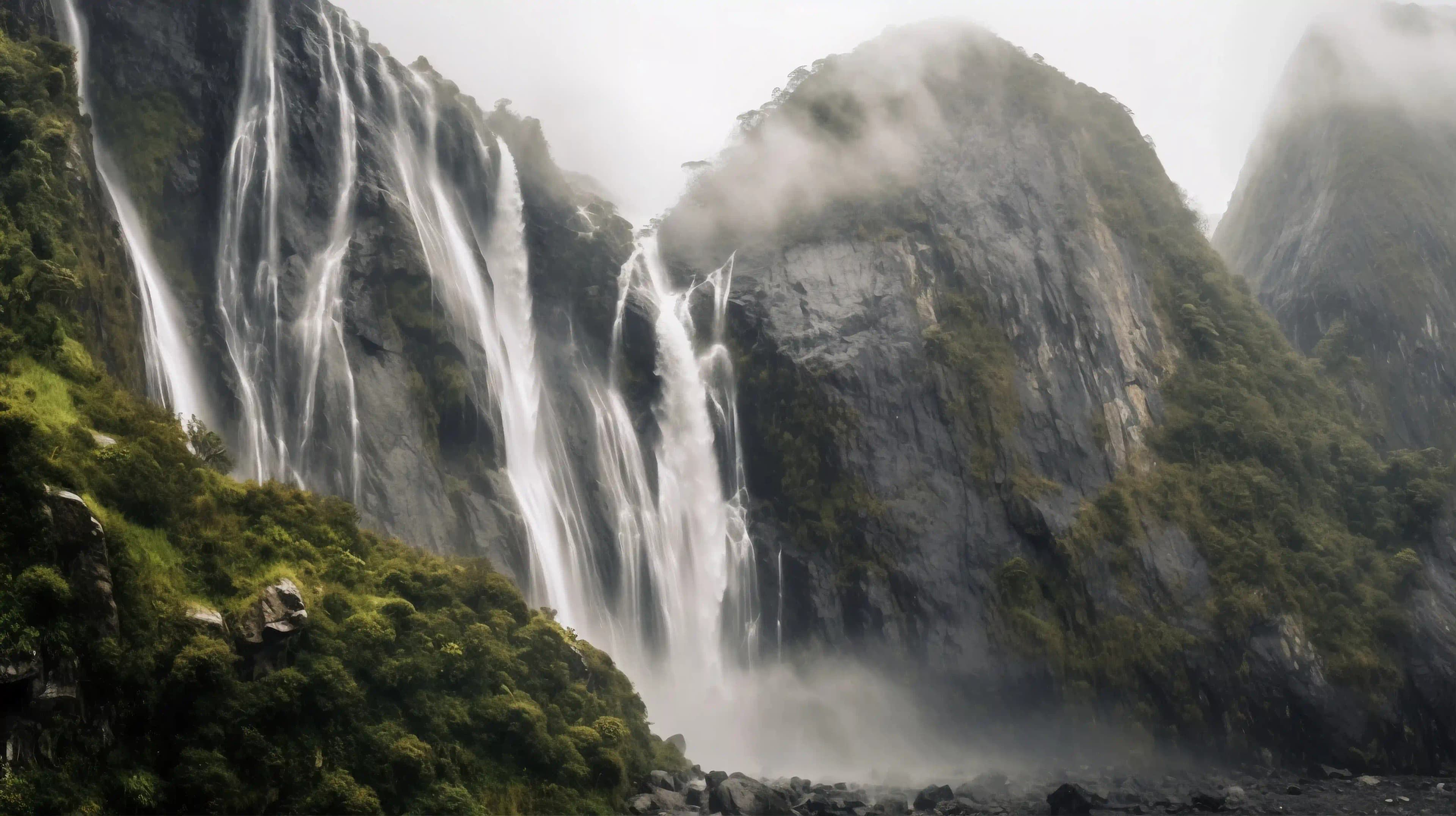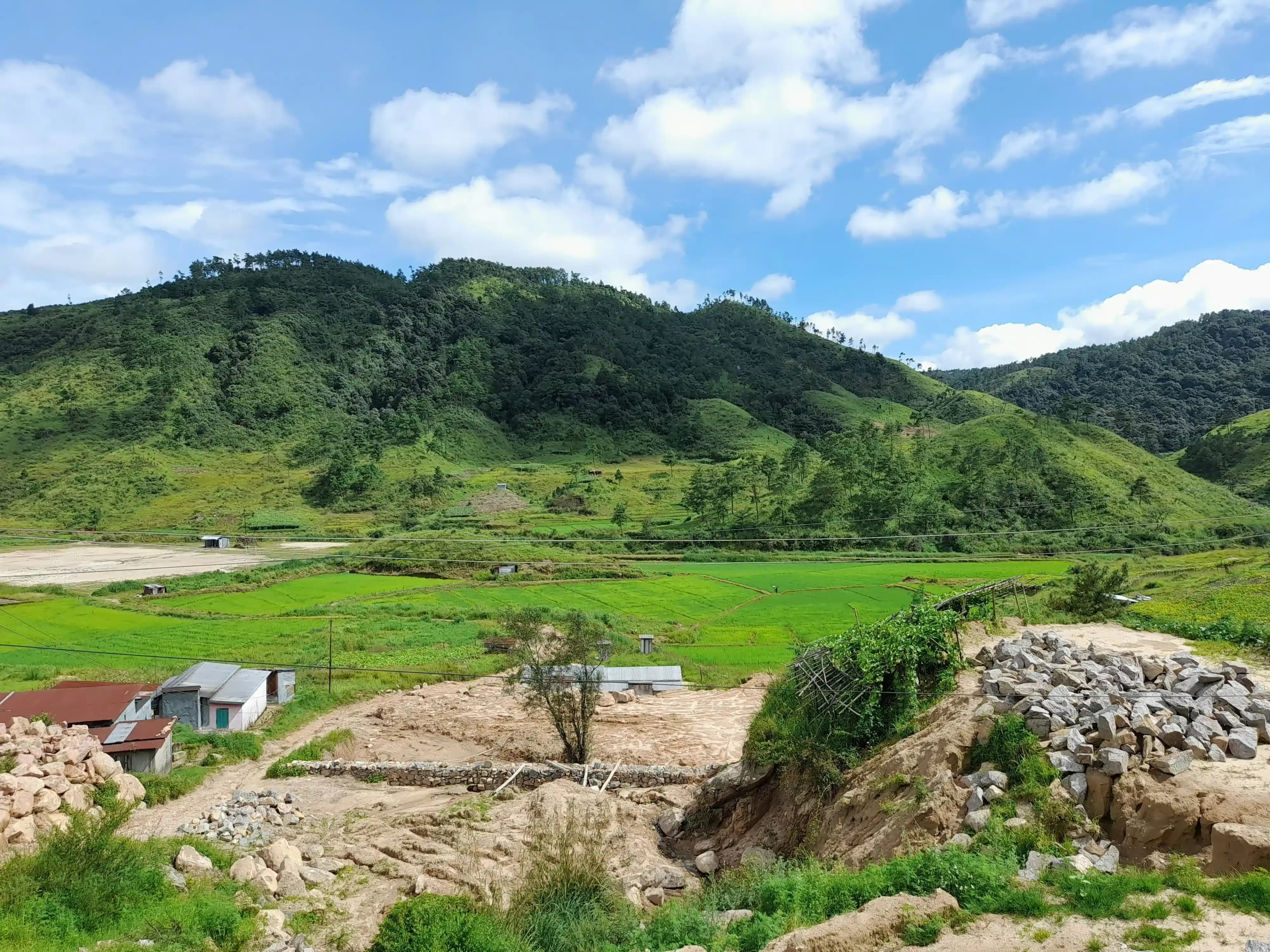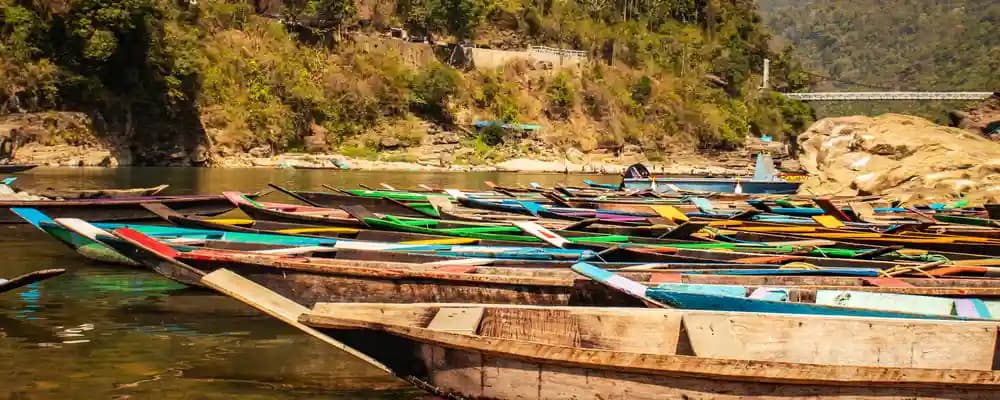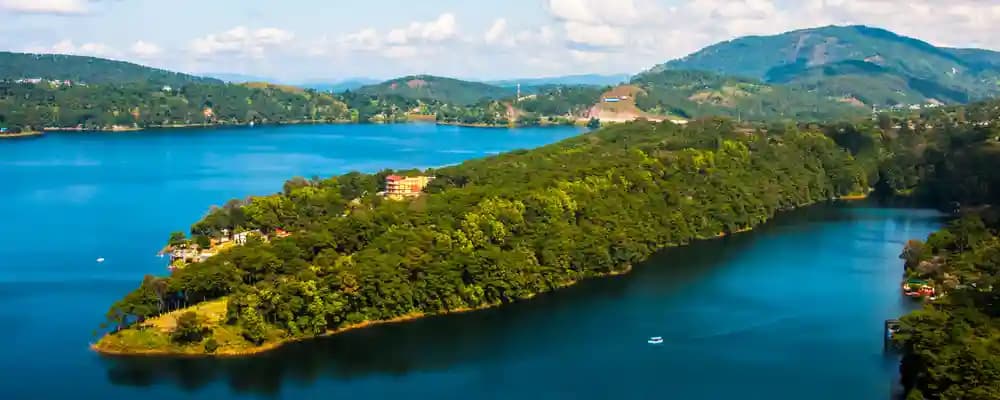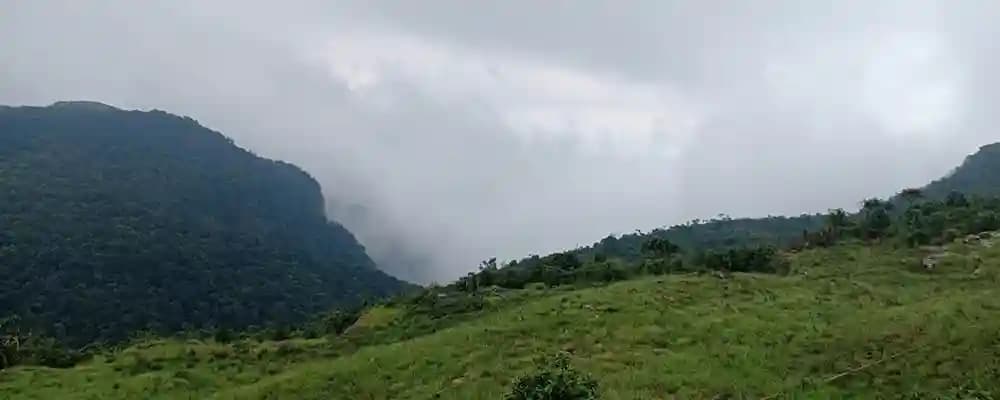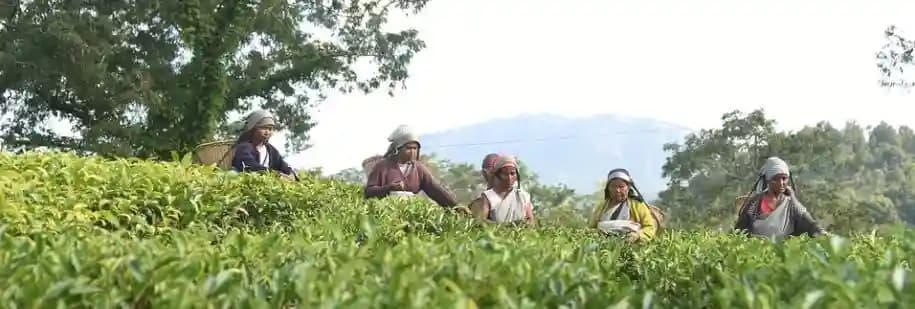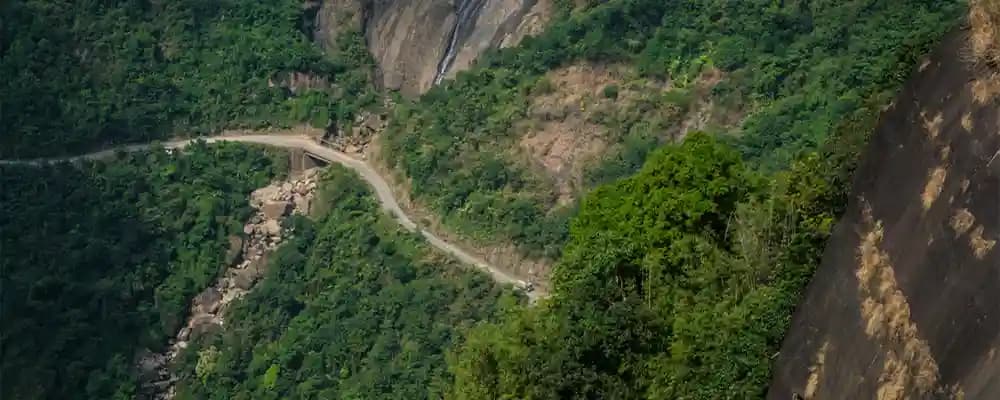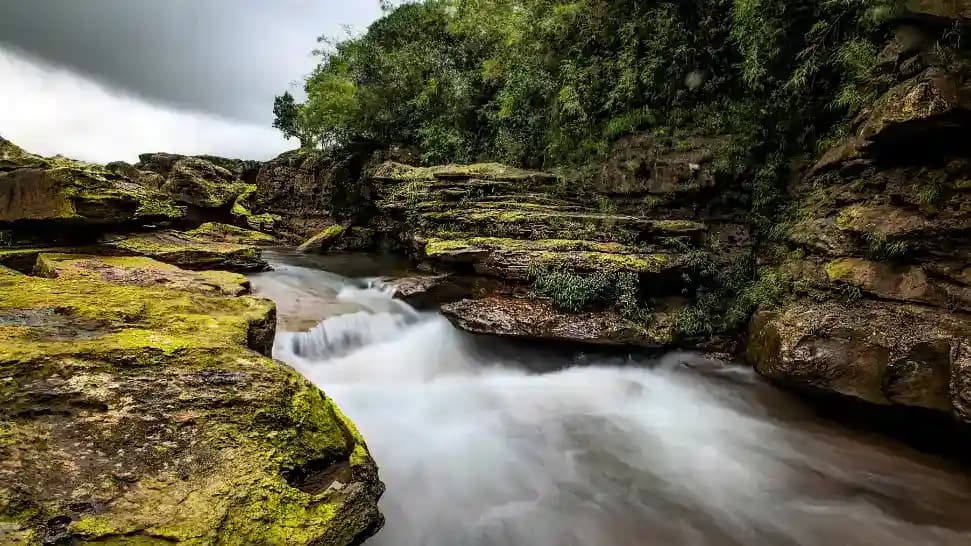
Have you ever wished to experience what it is like to walk around a place where nature seems almost surreal? That is how it feels when you visit the Garden of Caves in Meghalaya - a hidden landscape adorned with moss-covered rocks, secret pools and natural stone corridors that lie deep within the East Khasi Hills. This lesser-known spot situated near Laitmawsiang village near Cherrapunji is not a single cave and is a group of natural rock structures formed by the action of water over centuries. Being surrounded by thick forests and seasonal rivers, this majestic place offers a rugged and unrefined side of Meghalaya that has not made it to the spotlight yet and thus, it has to be included in the itinerary of the best Meghalaya holiday packages to help travellers experience something really offbeat.
Garden of Caves Meghalaya: Overview
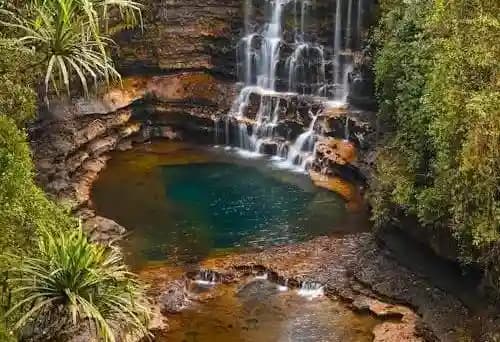
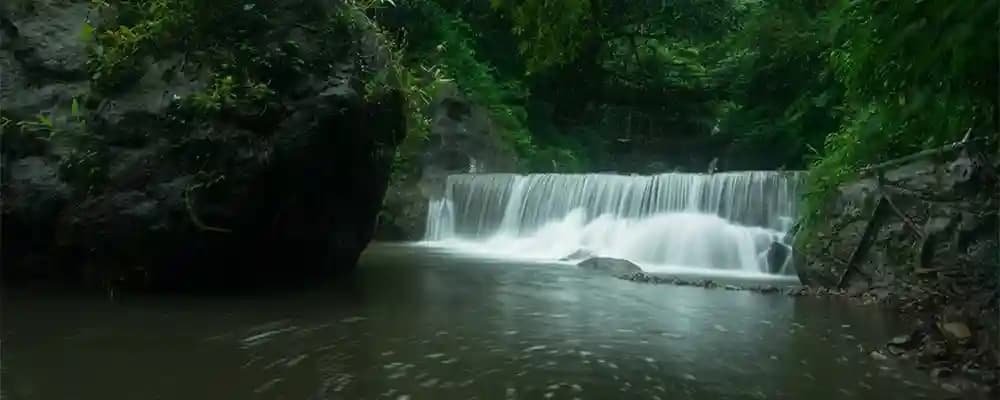
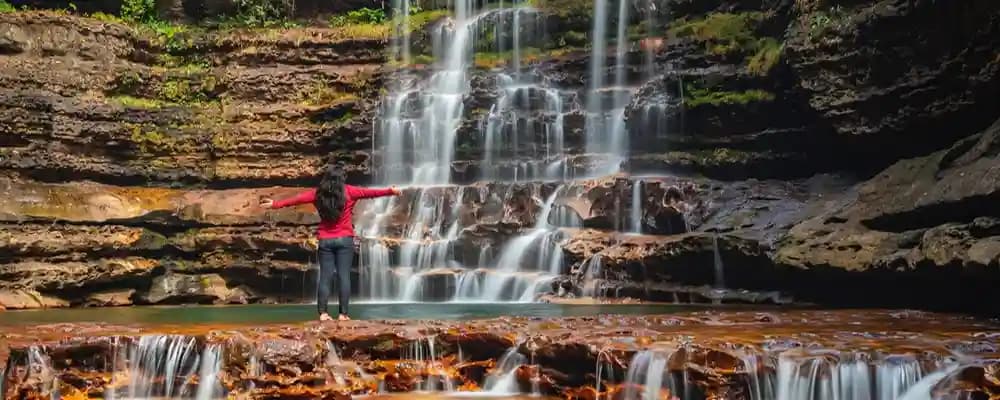
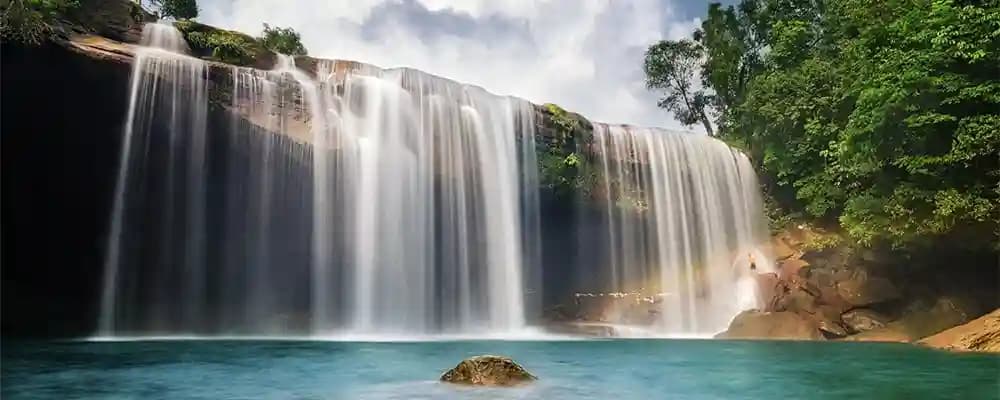
The Garden of Caves is a rare natural sightseeing spot near Cherrapunji in Meghalaya, which is characterized by maze-like rock formations, moss covered boulders, small caves and hidden water pools. Molded throughout thousands of years by the constant rain-shower and the running streams, the area resembles a natural sculpture garden that has been cut by water all the way through. It is located near the Laitmawsiang village on the East Khasi Hills, and is among the best offbeat places in Meghalaya. Among the major attractions found in the garden are U Mawdohnud, a giant table-like rock which is a result of erosion; Sum Syiem, a cascade that looks like a curtain; Ka Synrang Syiem, a cave which is illuminated by golden rays of sunlight; and Riat U Kyrmen, a waterfall that falls softly into the forest.
Garden of Caves Location: Near Laitmawsiang village, East Khasi Hills district, close to Cherrapunji
Nearest Town: Cherrapunji (Sohra)
Garden of Caves Distance from Cherrapunji: Approx. 6 - 7 km
Garden of Caves Entry Fees: Adults ₹100; children ₹50; additional charges applicable for parking and cameras
Garden of Caves Timings: Open daily from 8:30 AM to 6:00 PM
Garden of the Caves History & Mythology
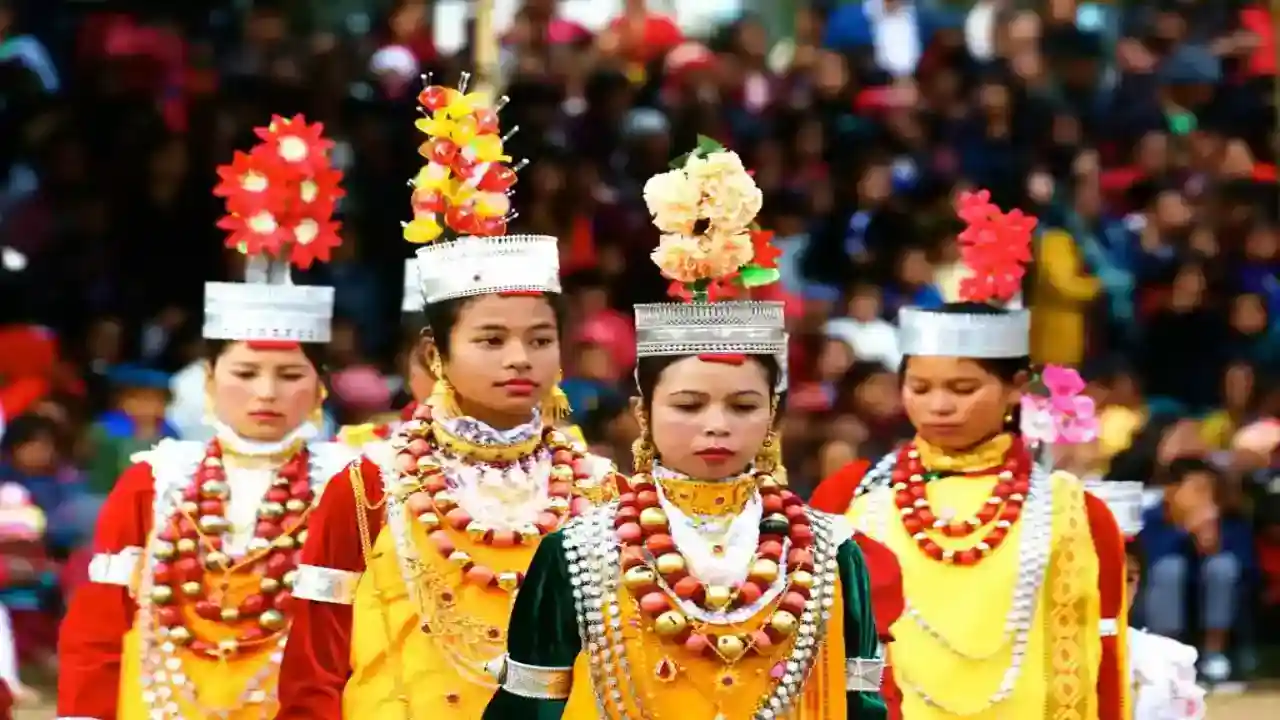
This garden, also known as Ka Bri Ki Synrang, is closely connected to the Khasi culture and mythology and is much more than a geological wonder. The caves and rock formations are regarded as sacred, and most of them are believed to have been the dwelling places of deities and spirits. One of the most well-known legends is about Ka Khoh Ramhah and the giant U Ramhah, who is believed to have protected the surrounding villages. Certain rock formations are said to be similar to some of his body parts or footprints. Features such as Ka Synrang Syiem served as resting places for clan chiefs, while Um Dawai is considered sacred for its healing waters. Together, the garden represents the Khasi belief in animism, where nature is alive, spiritual and worthy of respect.
Best Time to Visit the Garden of Caves
The best time to visit Meghalaya if you want to explore the Garden of Caves is from October to March. This is when the weather is stable, and the trails inside the garden are quite easier to access. The rock formations, caves and waterfalls are beautiful, and there are no risks that come along with heavy rainfall. The post-monsoon period makes the environment green and lush, whereas winter gives clearer and brighter light inside the caves. Monsoon months, from June to September, make the waterfalls in the garden even more powerful, and the garden looks absolutely ethereal. However, continuous rain might make the paths slippery and unsafe for long exploration. Visit the garden in the morning and early afternoon, when the natural light is at its best, to help tourists observe the rock formations.
How to Reach the Garden of Caves
Reaching the garden in Meghalaya is simple and can be planned easily from major towns in the state. The garden is located near Laitmawsiang village, around 12 - 15 km from Cherrapunji. The Garden of Caves distance from Shillong is about 55 km. Guwahati Airport is the nearest airport and is well-connected to major Indian cities. From Guwahati, the journey to the garden takes roughly 3.5 to 4 hours by road. Taxis are easily available from Guwahati, Shillong and Cherrapunji. The nearest railway station is also Guwahati. From Shillong or Cherrapunji, local taxis can drop visitors at the parking area. A short walk through forested paths is required to reach the main garden area.
Key Attractions in the Garden of Caves
The garden is a natural wonderland filled with waterfalls, springs and unusual rock formations. Each spot has its own story. Here are the must-visit natural attractions inside the garden:
1. Ka Synrang Syiem
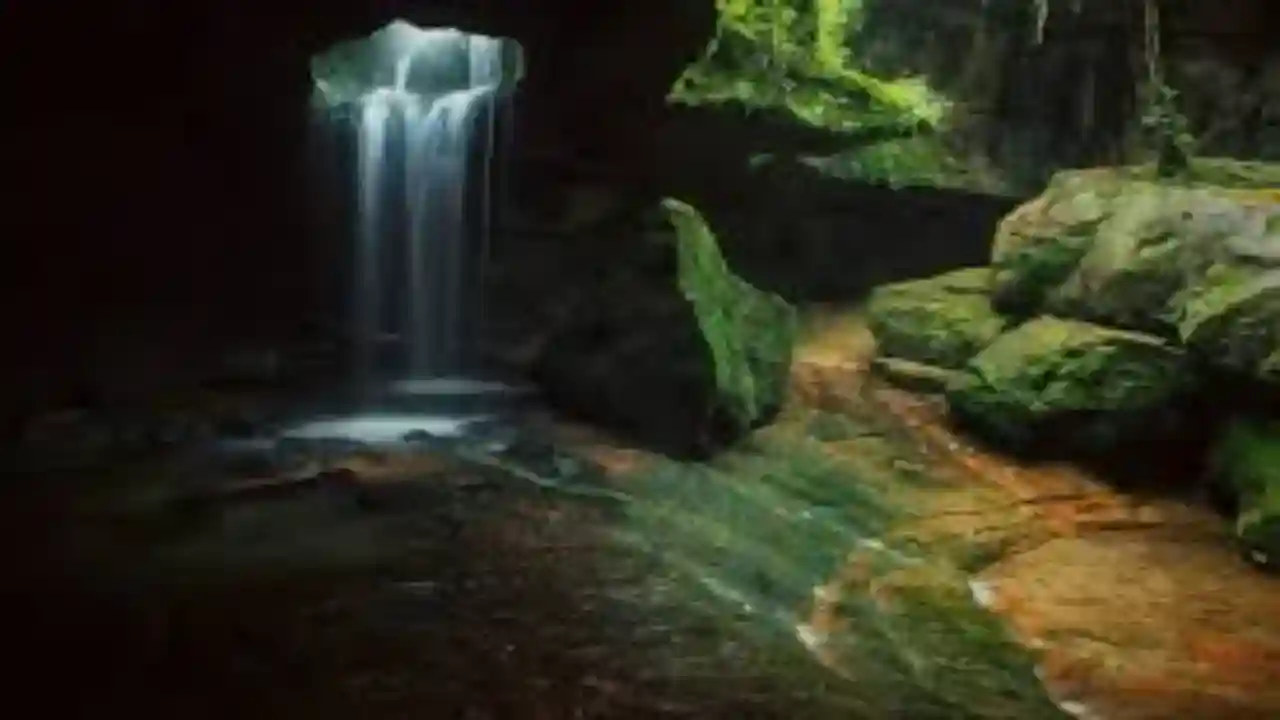
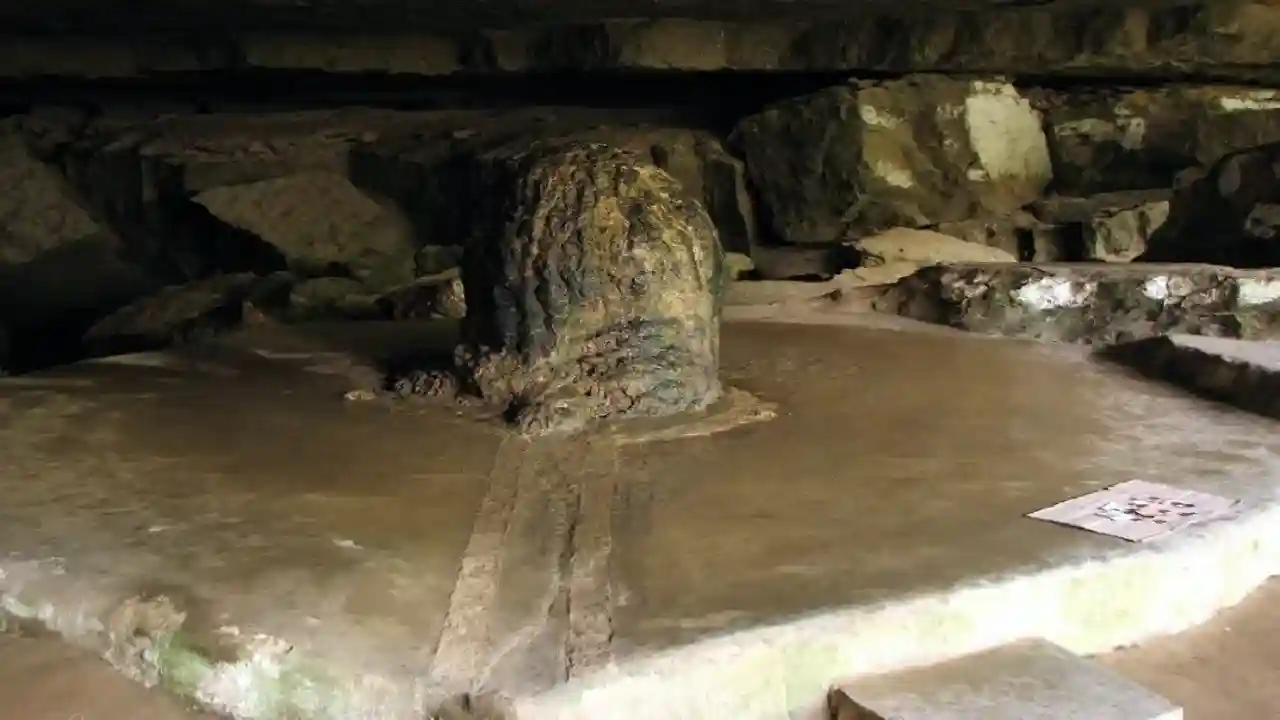
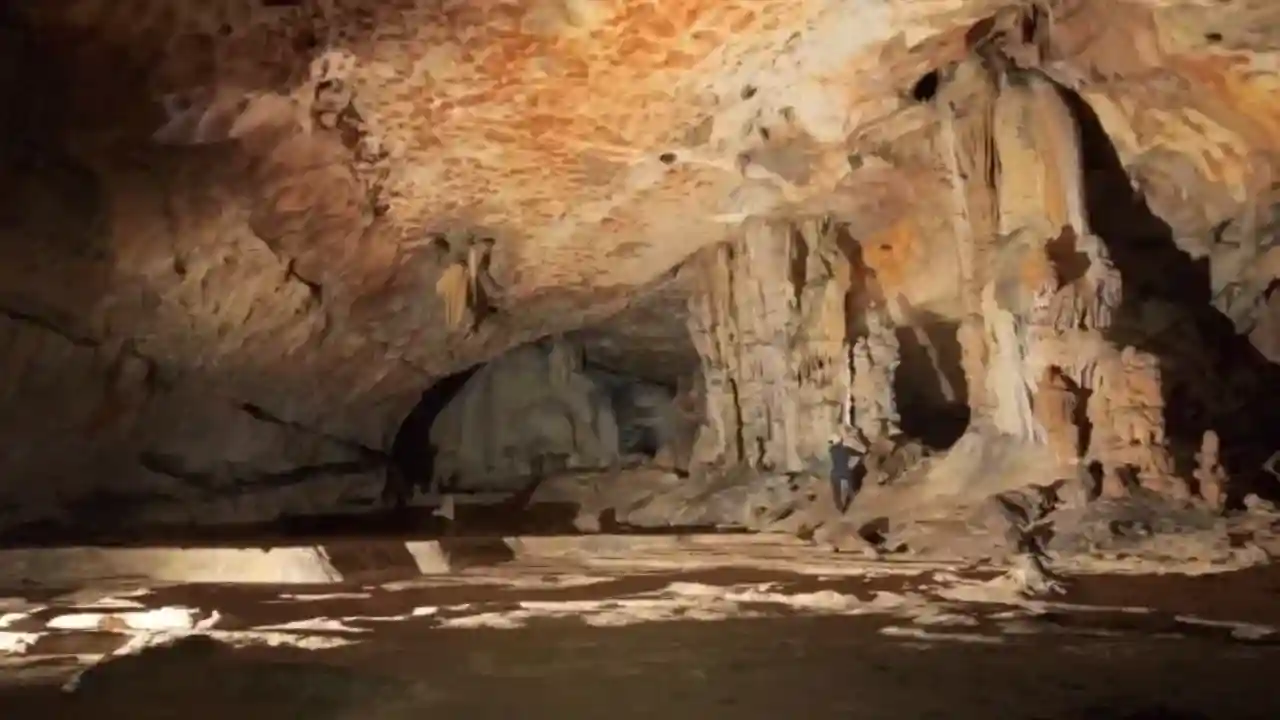
Ka Synrang Syiem, also called "The King’s Cave," is a dramatic cave inside the park in Cherrapunjee. The cave contains bed-like natural structures and spectacular stalactites and stalagmites that have been formed over thousands of years as a result of the erosion of limestone. It is named so because it was used as a resting place of a king or a clan chief in ancient times. Ka Synrang Syiem is a geological wonder that reflects the history of the region and is a must visit destination for any tourist who is willing to learn more about the natural and cultural heritage of Northeast India.
2. Sum Syiem Falls
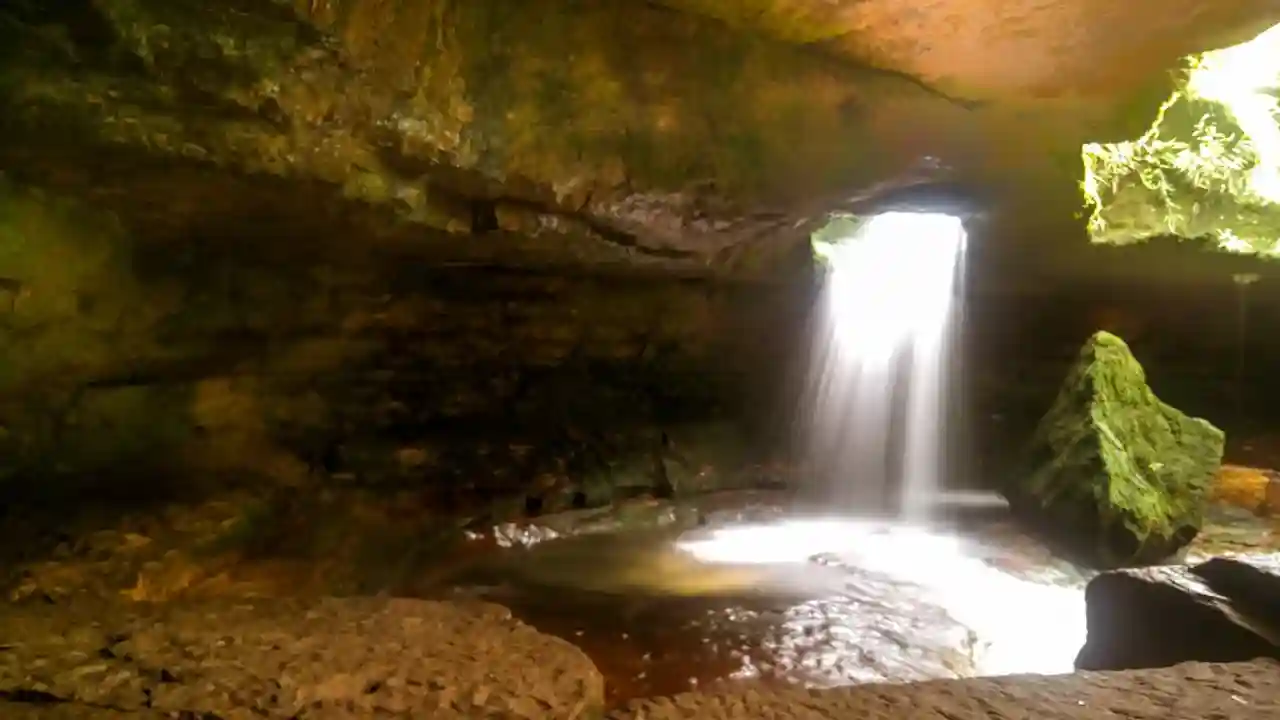
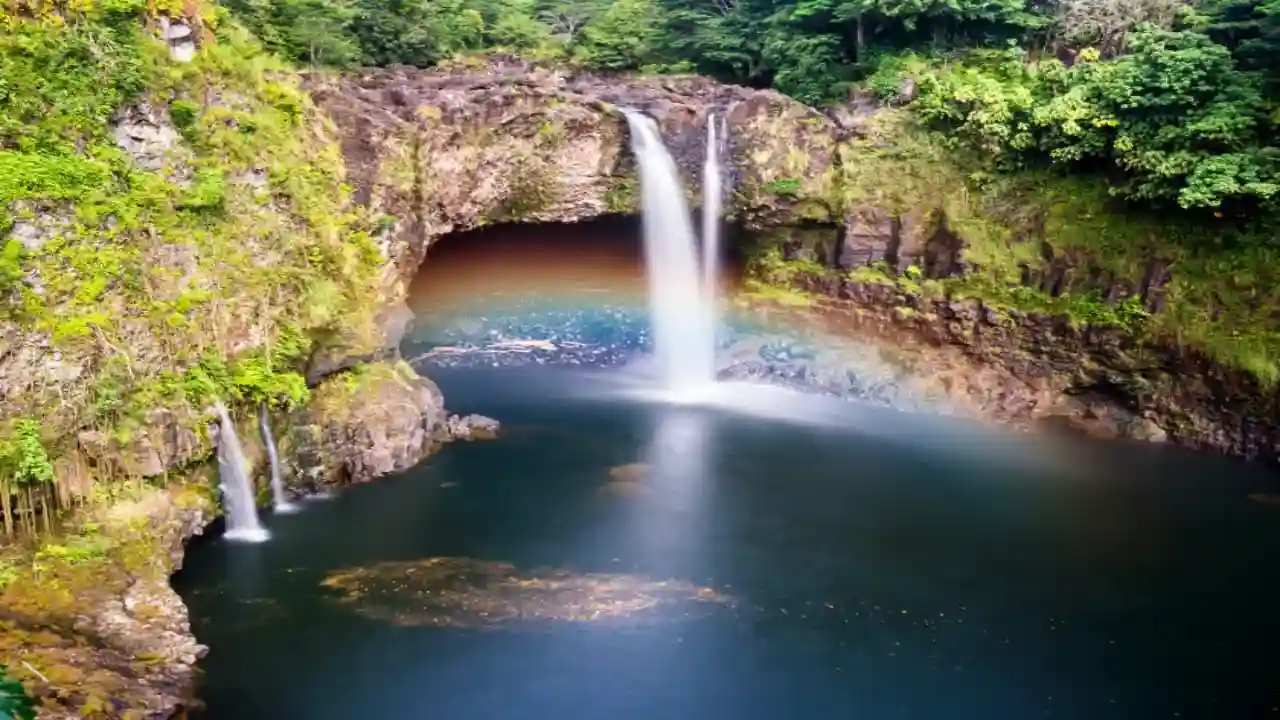
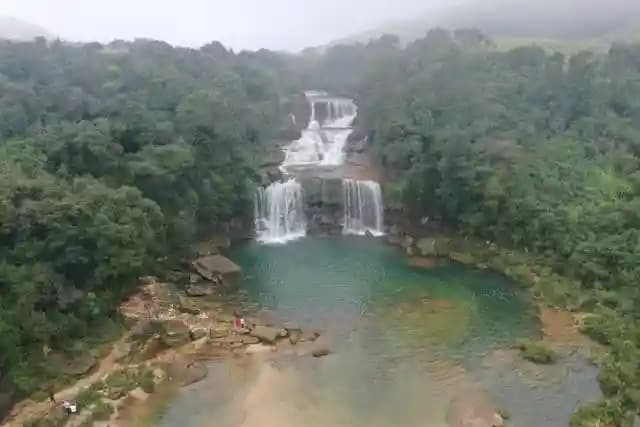
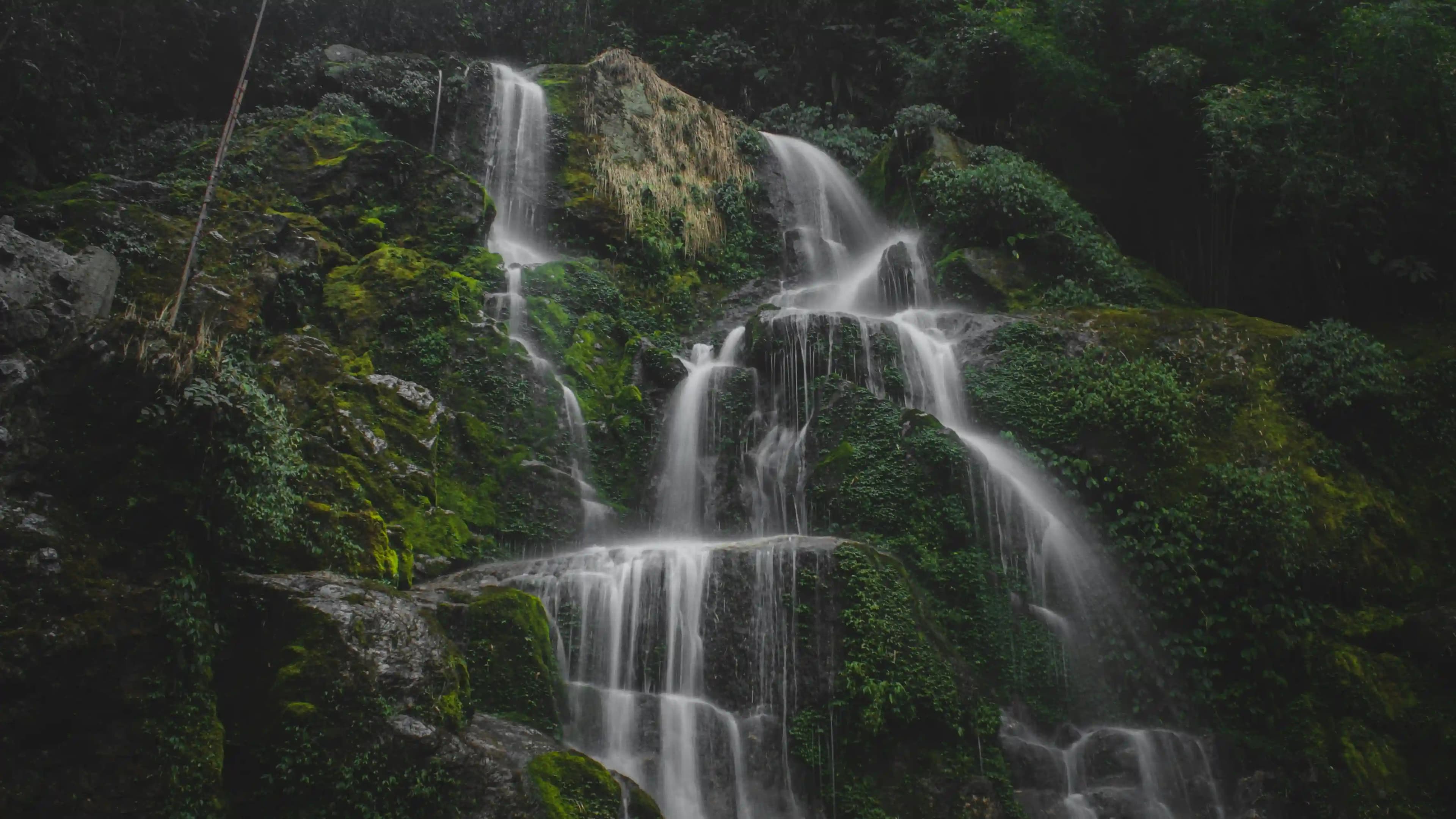
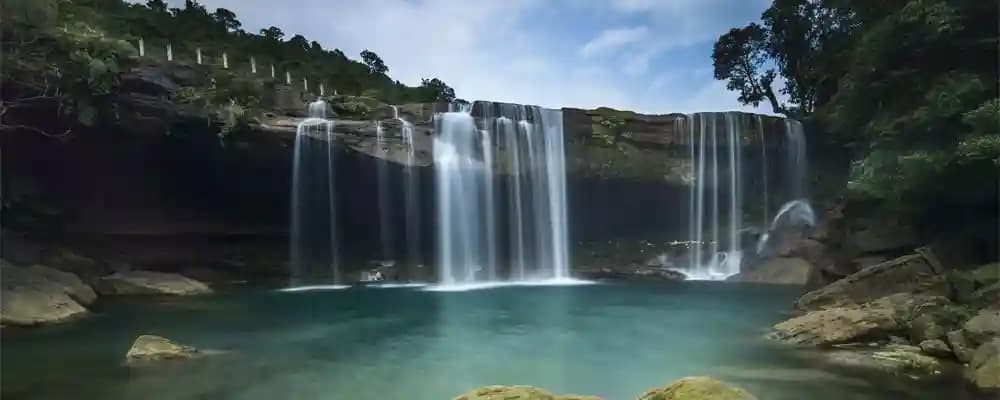
Sum Syiem Falls is a unique waterfall that features a descent through a naturally formed rock opening. According to history, a clan chief once took baths at this site, aided by Maw Rain Briew, a natural rock wall that formed a convenient enclosure. The waterfall is visually striking and features a beautiful composition where water flows in harmony with moss-covered rocks in a forest setting. Today, visitors can admire the same natural beauty and thus the Sum Syiem Falls is a scenic as well as a culturally significant attraction in the garden.
3. Ki Stieh Maw
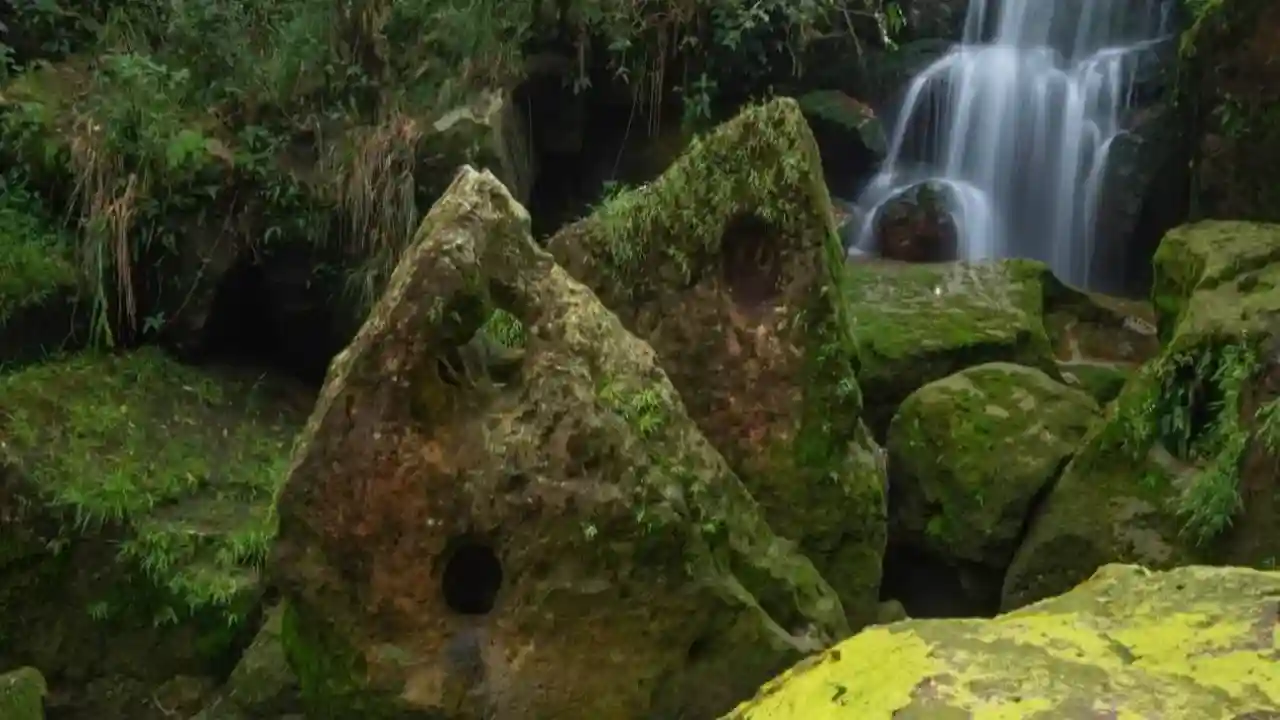
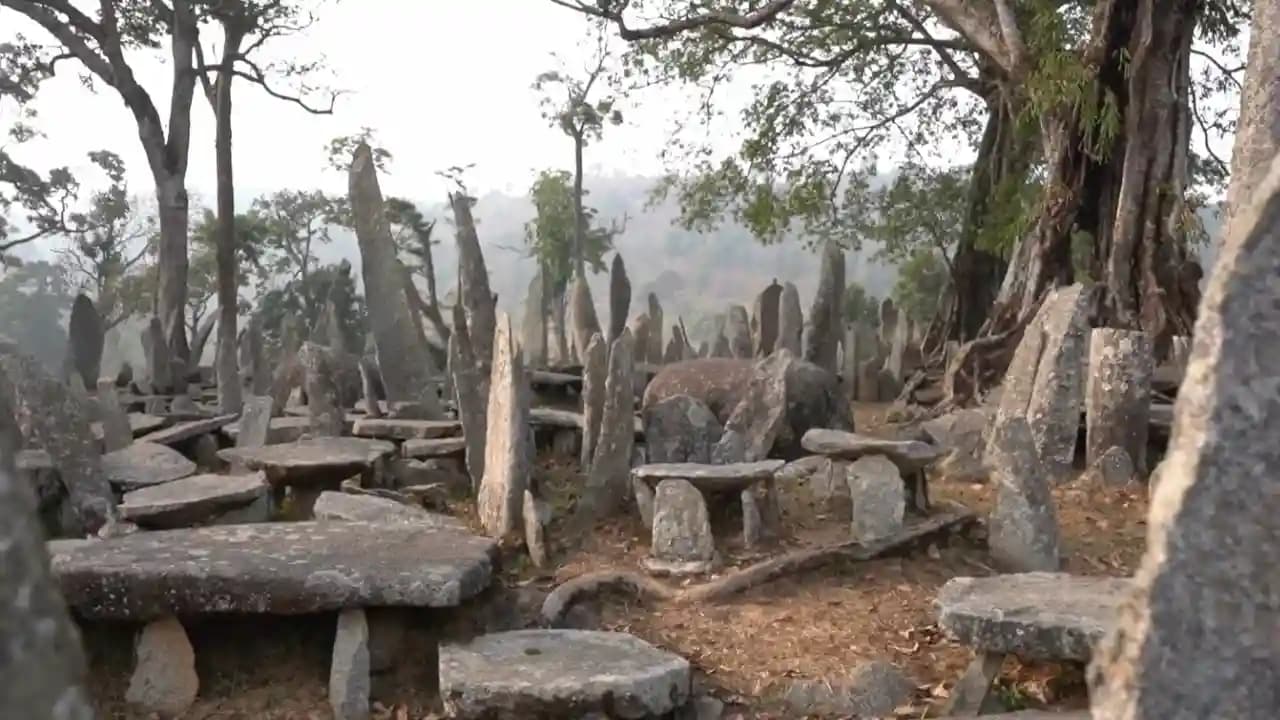
Ki Stieh Maw is a series of stone formations that resemble the shape of ancient battle shields. The naturally formed stones showcase the interaction between geological and historical factors in the region. The stone formations are renowned for their unique shapes and cultural values, providing visitors with information on local legends and the cultural traditions of the Khasi community. When walking through Ki Stieh Maw, tourists get to experience a unique combination of geology and history, enhancing the discovery of the garden.
4. U Mawdohnud
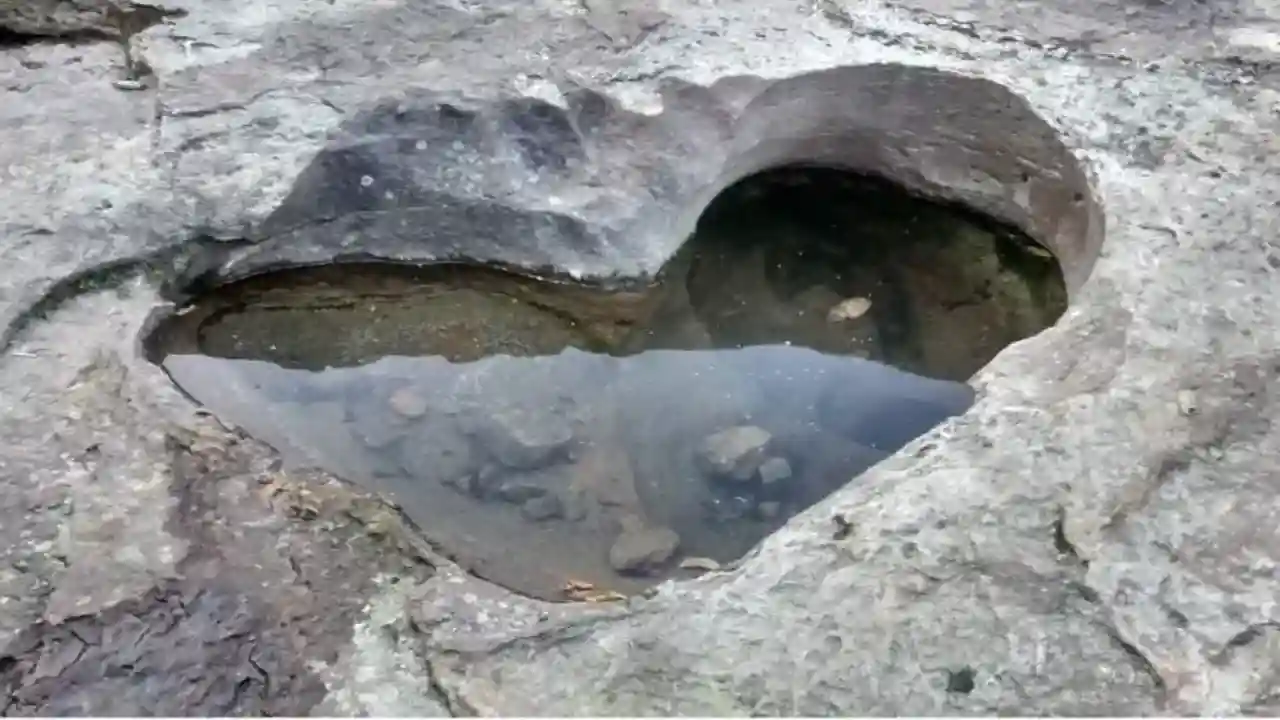
U Mawdohnud, known as the "Heart-shaped Stone," is a central highlight of the garden. This naturally shaped rock features a nearly perfect heart shape, which attracts visitors for its symmetry and geological accuracy. It is one of the most photographed spots in the garden and is a popular spot for visitors looking for a peaceful spot to relax in nature. The rock formation is a good example of the complex processes involved in the erosion of rocks by natural elements over the years, creating fascinating geological formations.
5. Arsdad Falls
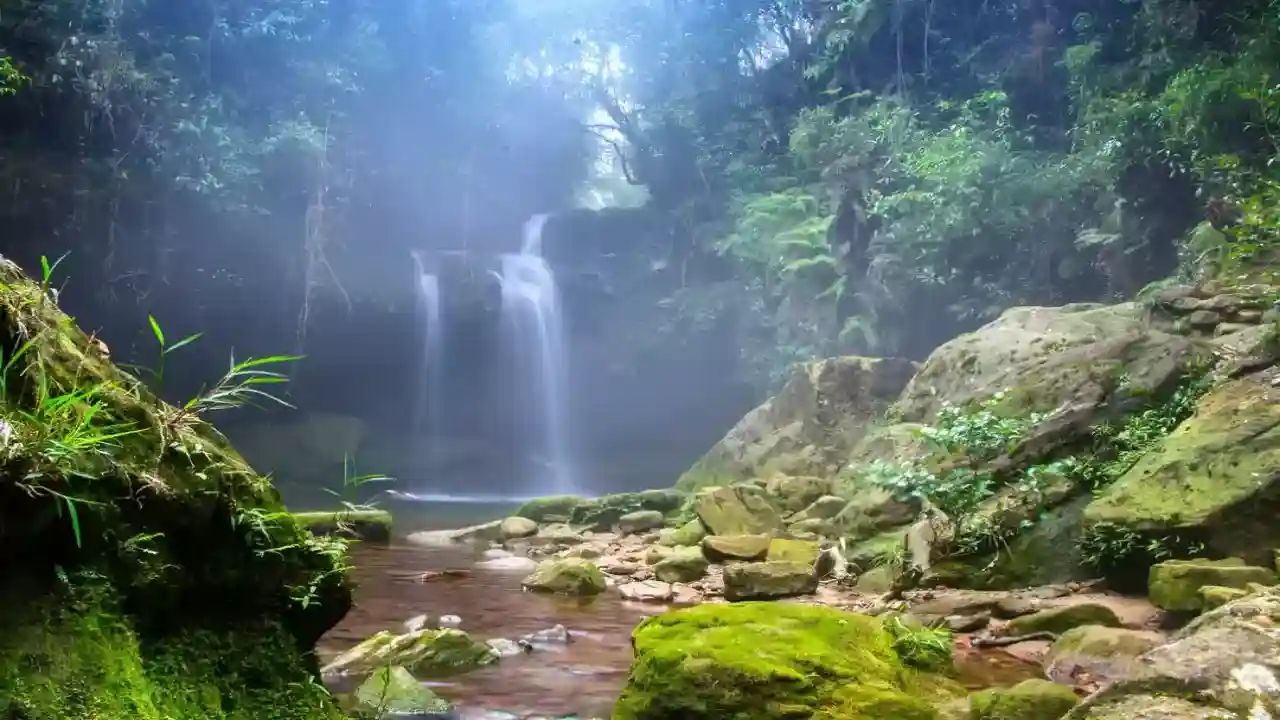
Arsdad Falls is located at the southern end of the park and is famous for its unique formation at the junction of two streams, Dam Um and Um Lwai. The naming of the falls, “Arsdad,” means “confluence,” which refers to its unique feature. The falls are surrounded by a dense forest and offer a combination of natural beauty and a unique geological feature, making it one of the most photographed and admired falls in the garden. The falls' environment and water flow create a landscape that is both peaceful and dramatic for visitors.
6. Riat Umlwai Falls
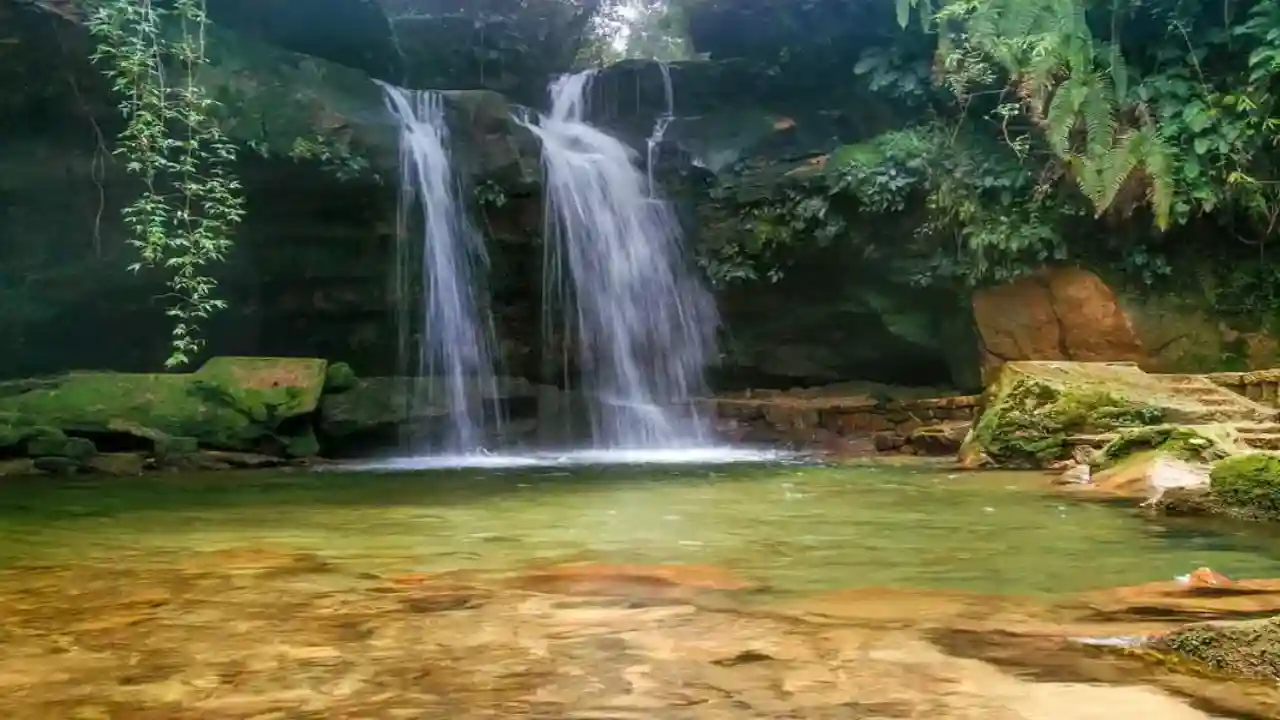
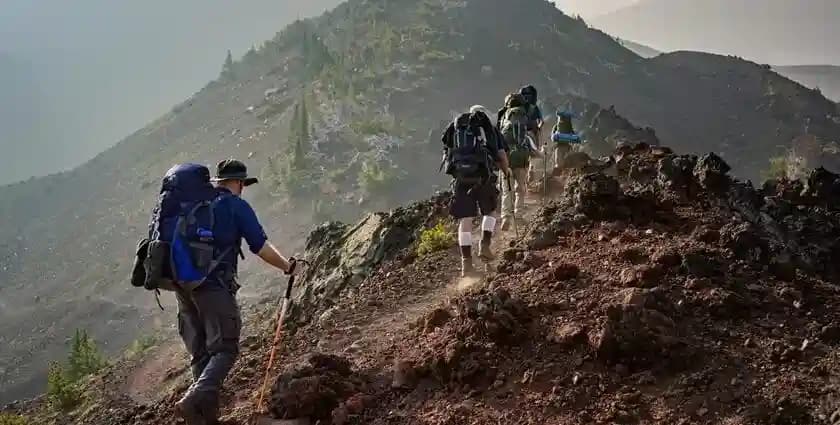
Riat Umlwai Falls is the tallest waterfall in the garden where it is located. The prefix “Um” stands for honey, thus establishing a connection between the name and the local flora and fauna. The waterfall is surrounded by dense vegetation and rich flora, making it a favourite destination for nature lovers. Visitors can go for a Garden of Caves trek to reach the bottom of the falls, where they can enjoy gorgeous views of the cascading water.
7. Um Dawai
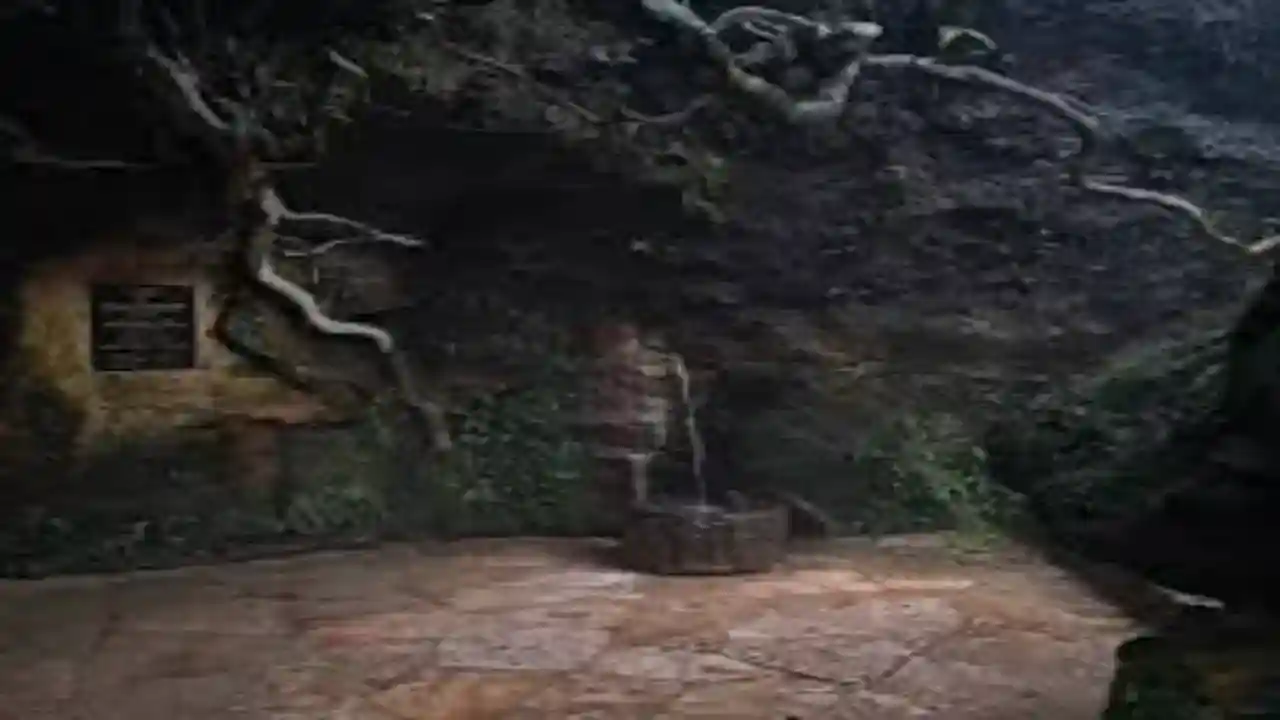
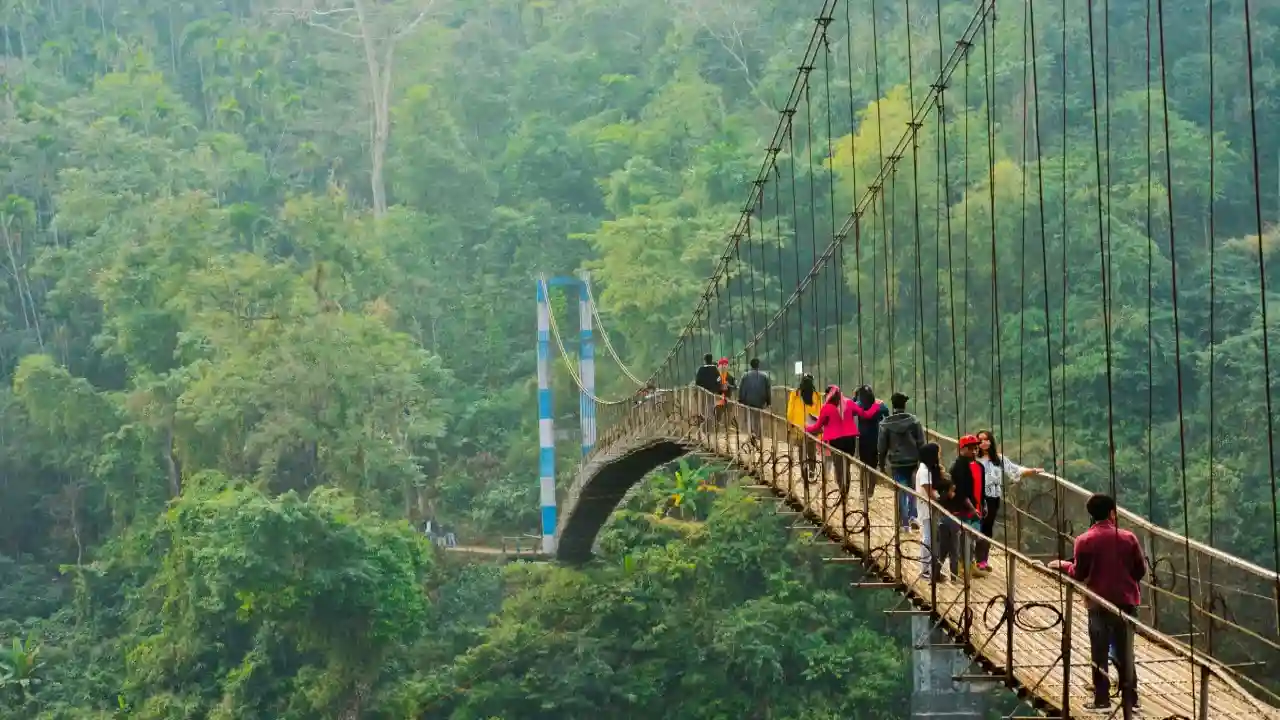
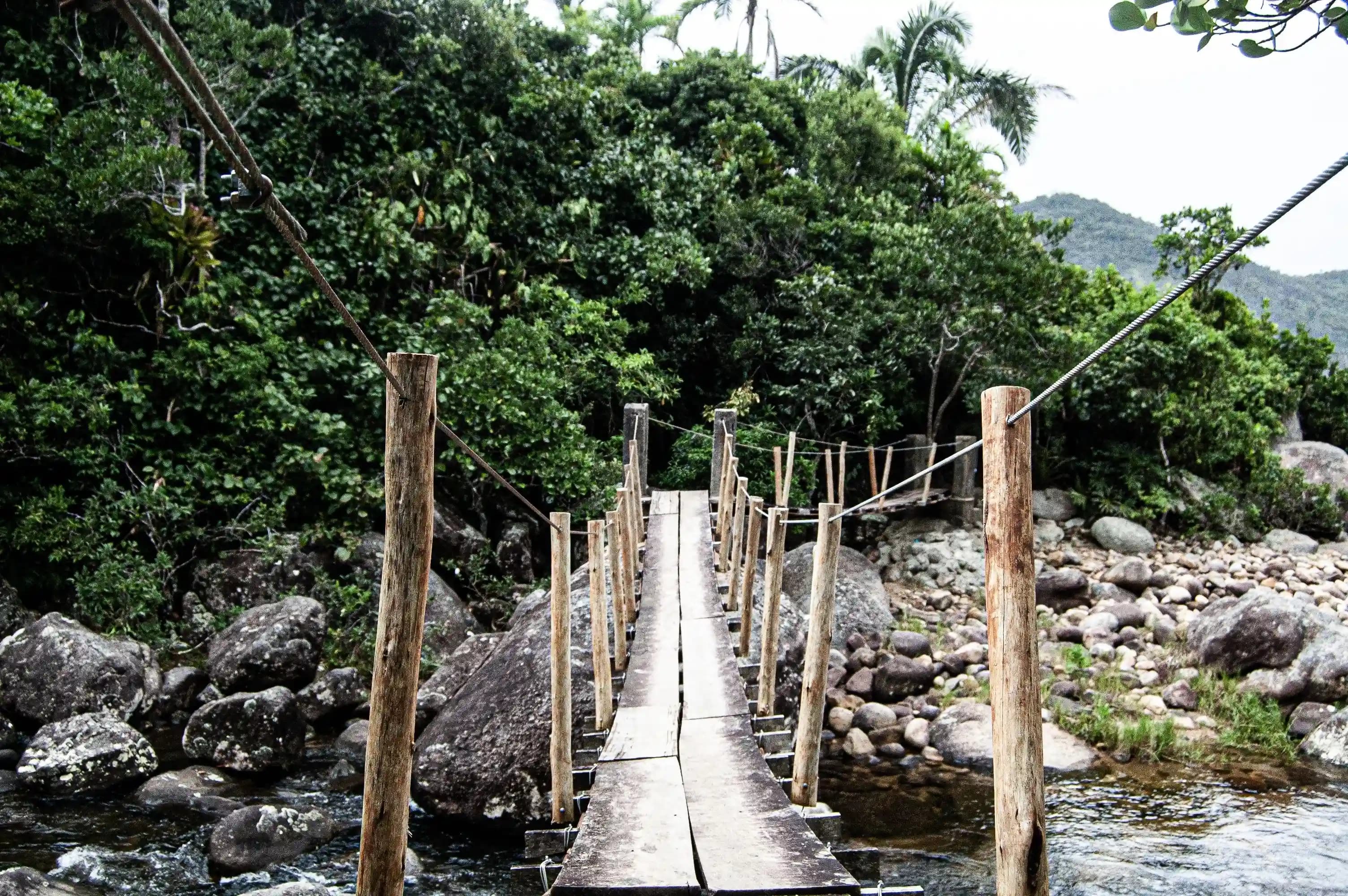
Um Dawai is a natural spring in the garden. It produces exceptionally pure and sweet water. Locals believe that it has medicinal properties capable of healing certain ailments. To reach Um Dawai, visitors must cross the Jingkieng Siej. This is a bamboo bridge that runs across a forest river. The spring is surrounded by a dense forest, and the soothing sound of water dripping from the rock adds to the peaceful environment, making it an ideal place for relaxation and contemplation.
8. Jingkieng Siej
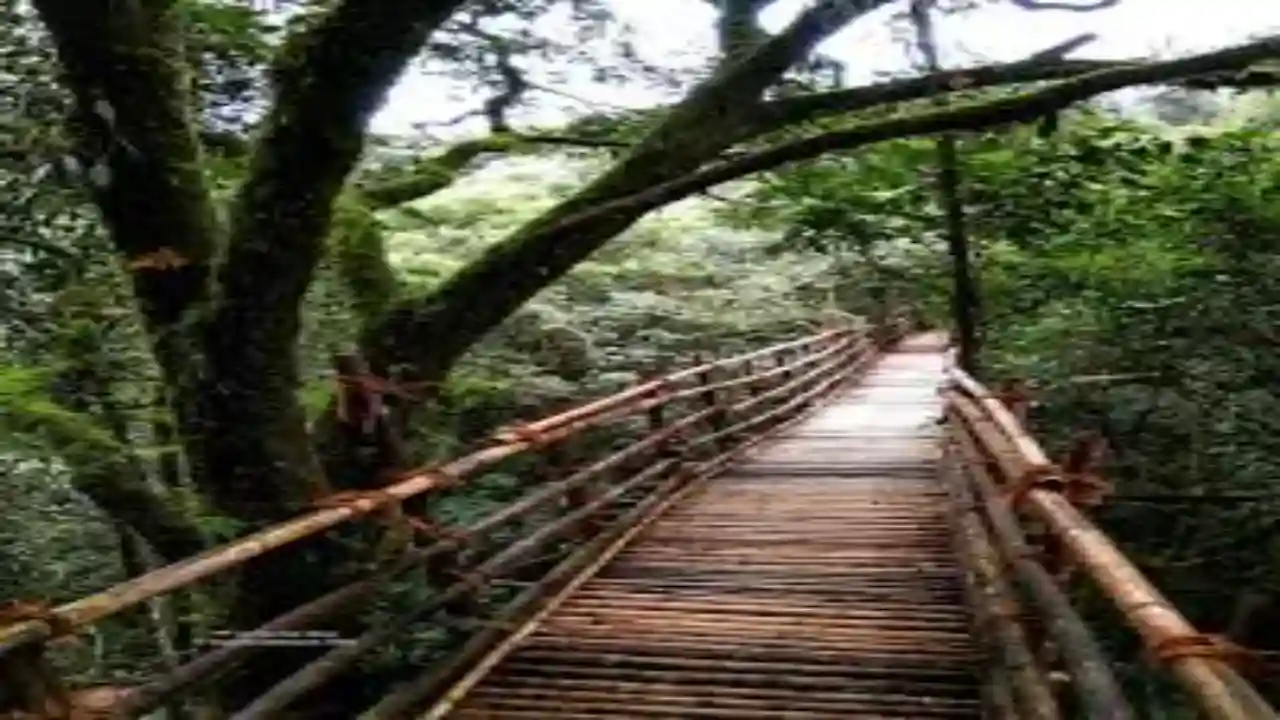
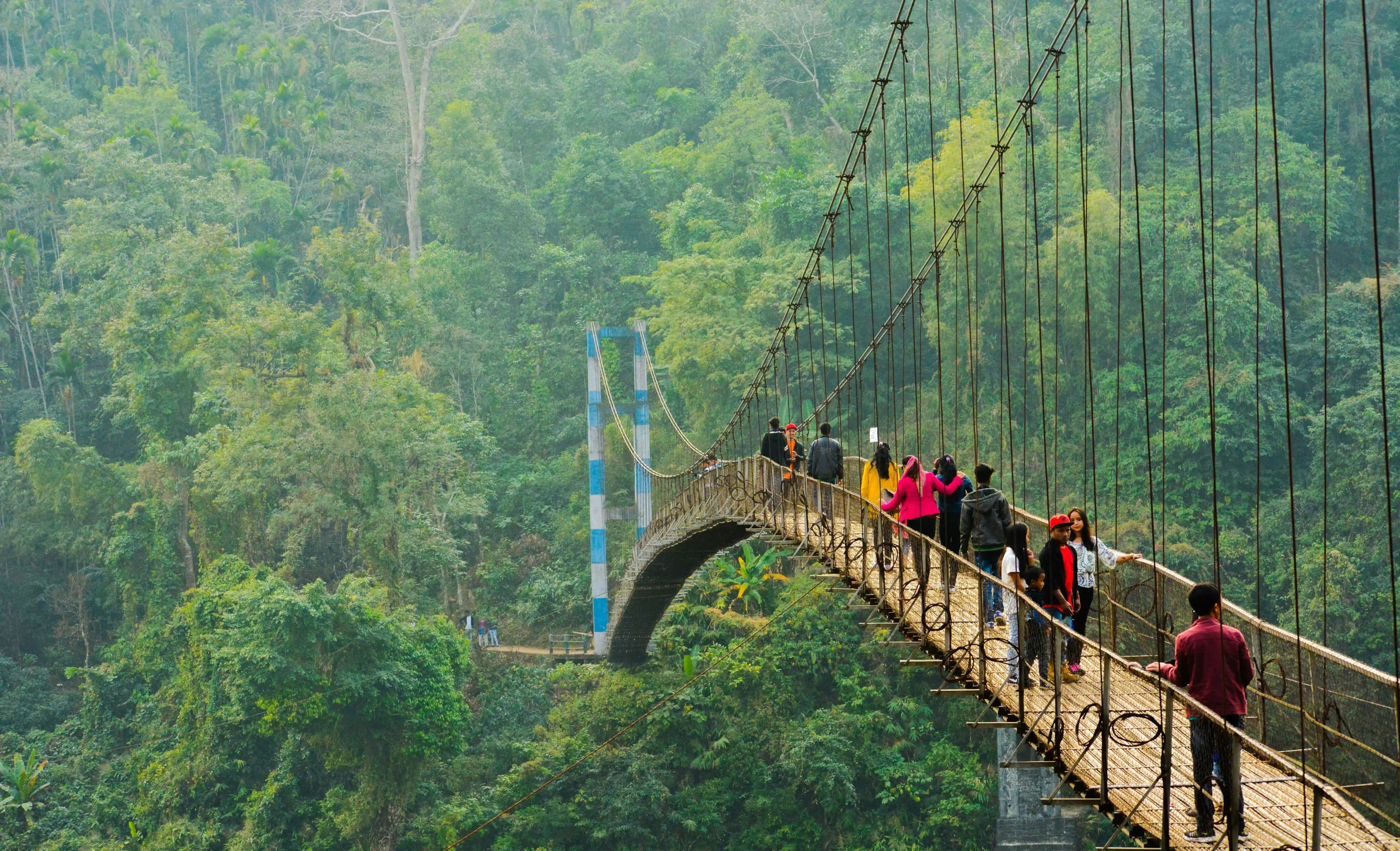
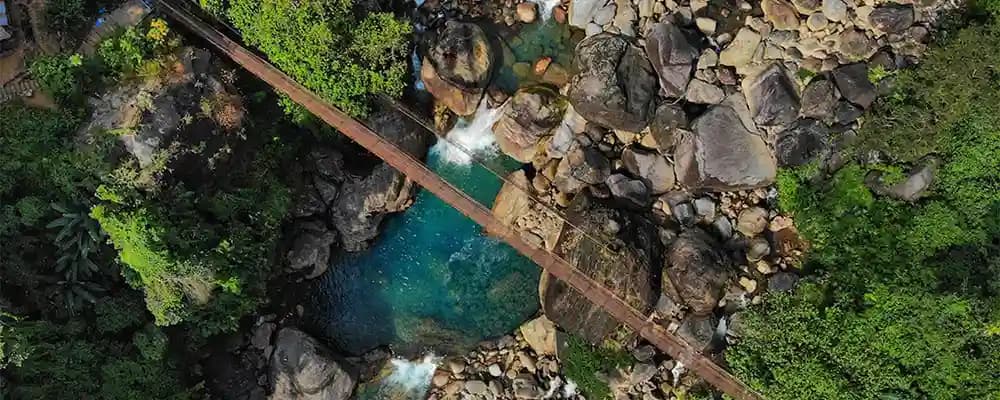
Jingkieng Siej is a bamboo bridge located within the garden and serves as the path to Um Dawai. It stretches over a river running through lush forest and offers breathtaking views and a sense of adventure. Crossing this bridge allows visitors to connect themselves to the forested landscape, while the soothing sounds of water below enhance the overall experience. The bridge adds a memorable element to the exploration of the garden.
Places to Visit Near the Garden of Caves
These attractions around the garden are perfect additions to your Meghalaya itinerary. Each of these places to visit in Meghalaya offers a different experience
1. Nohkalikai Falls
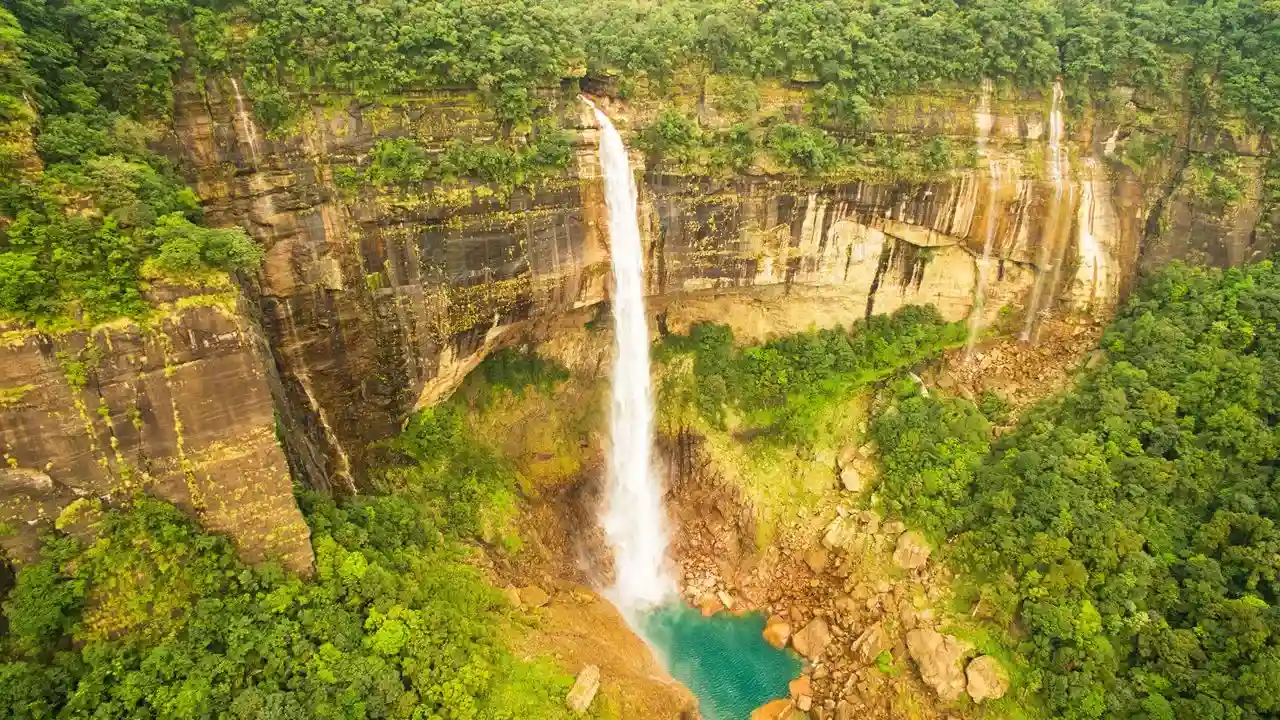
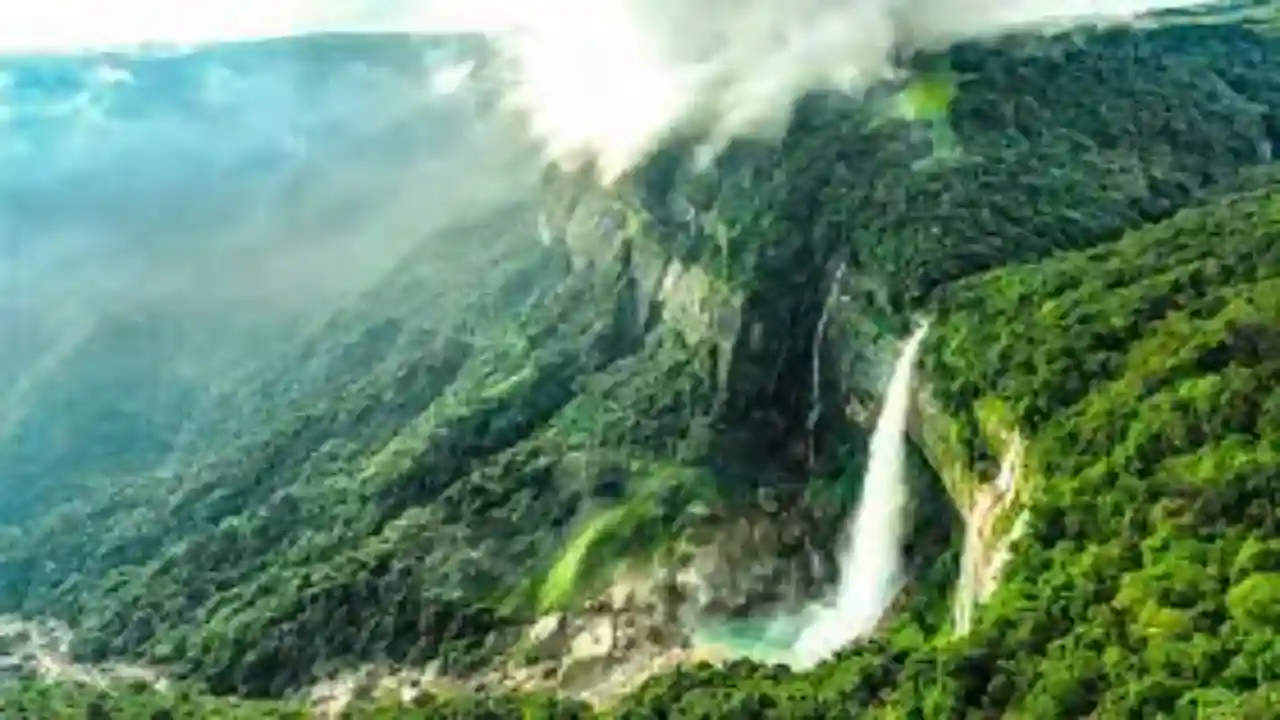
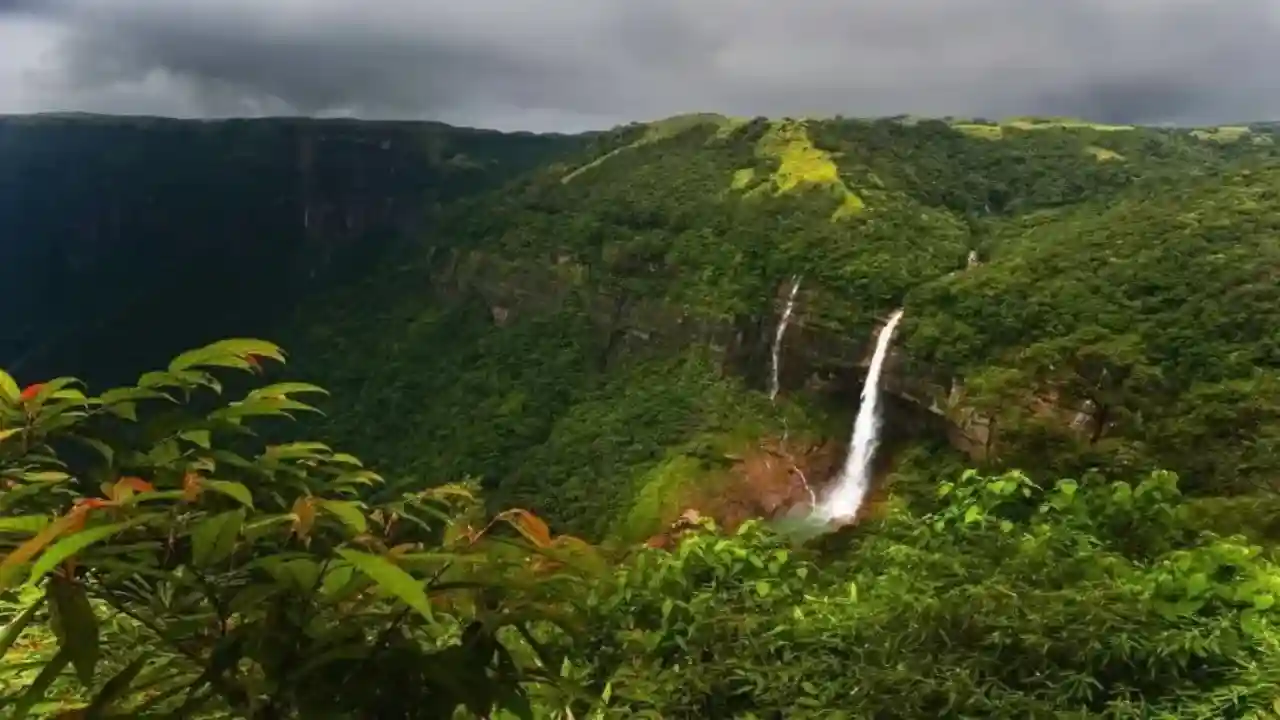
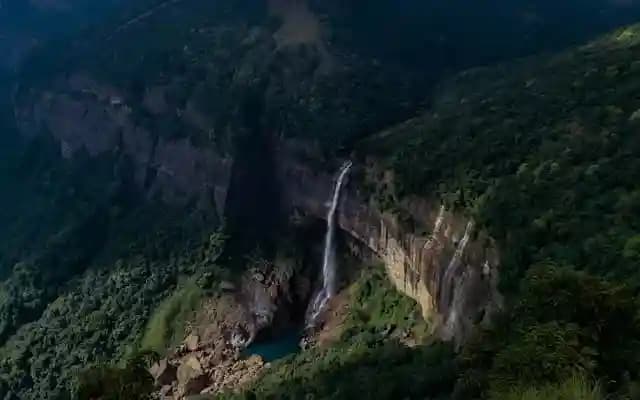
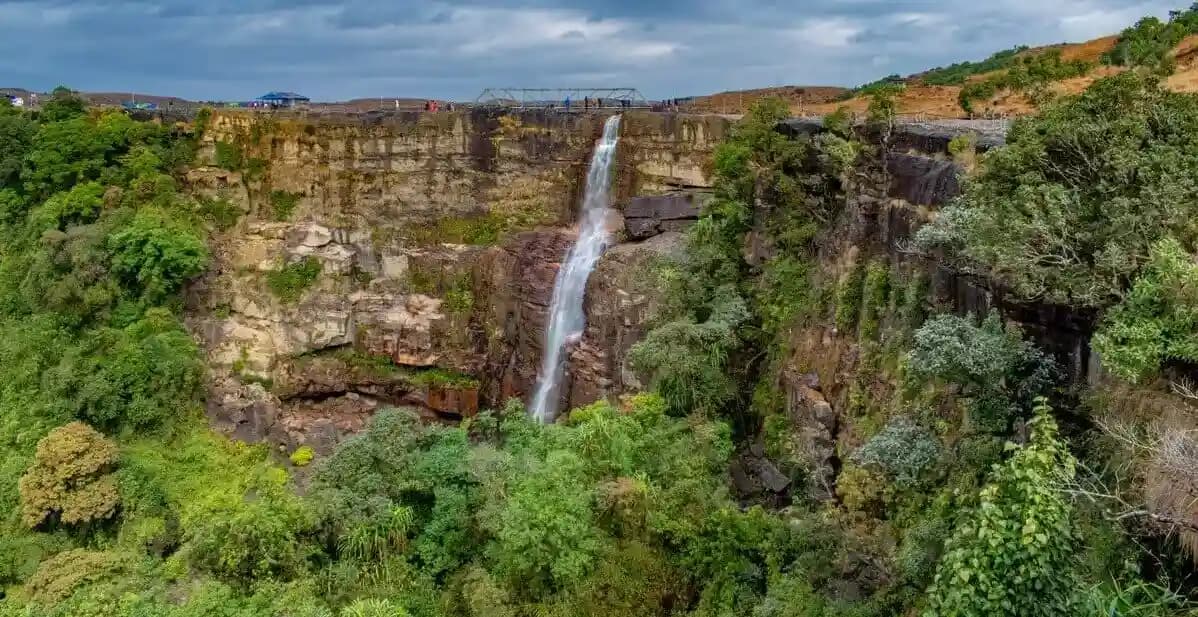
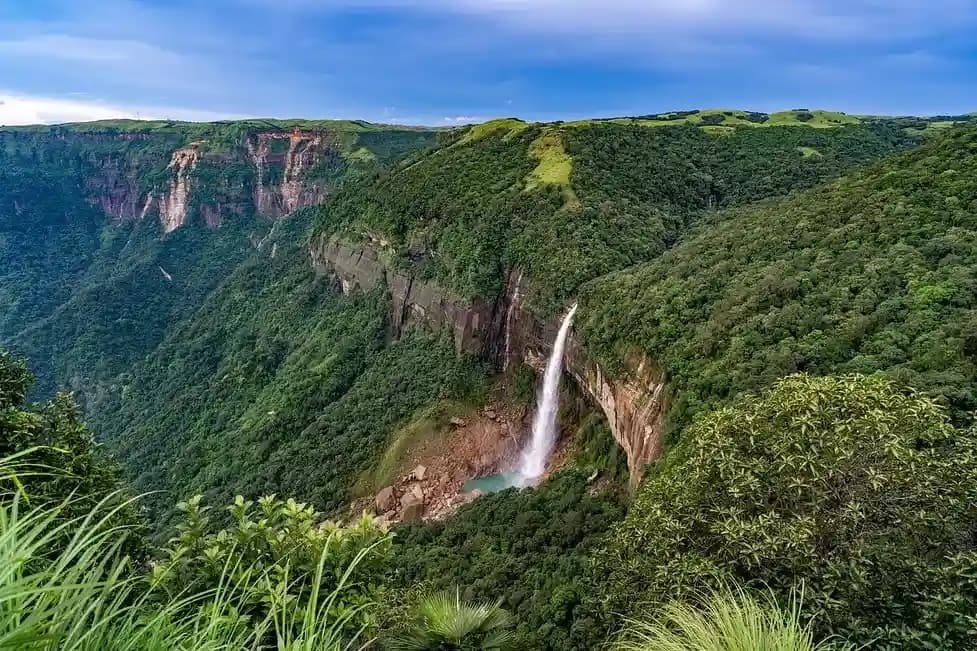
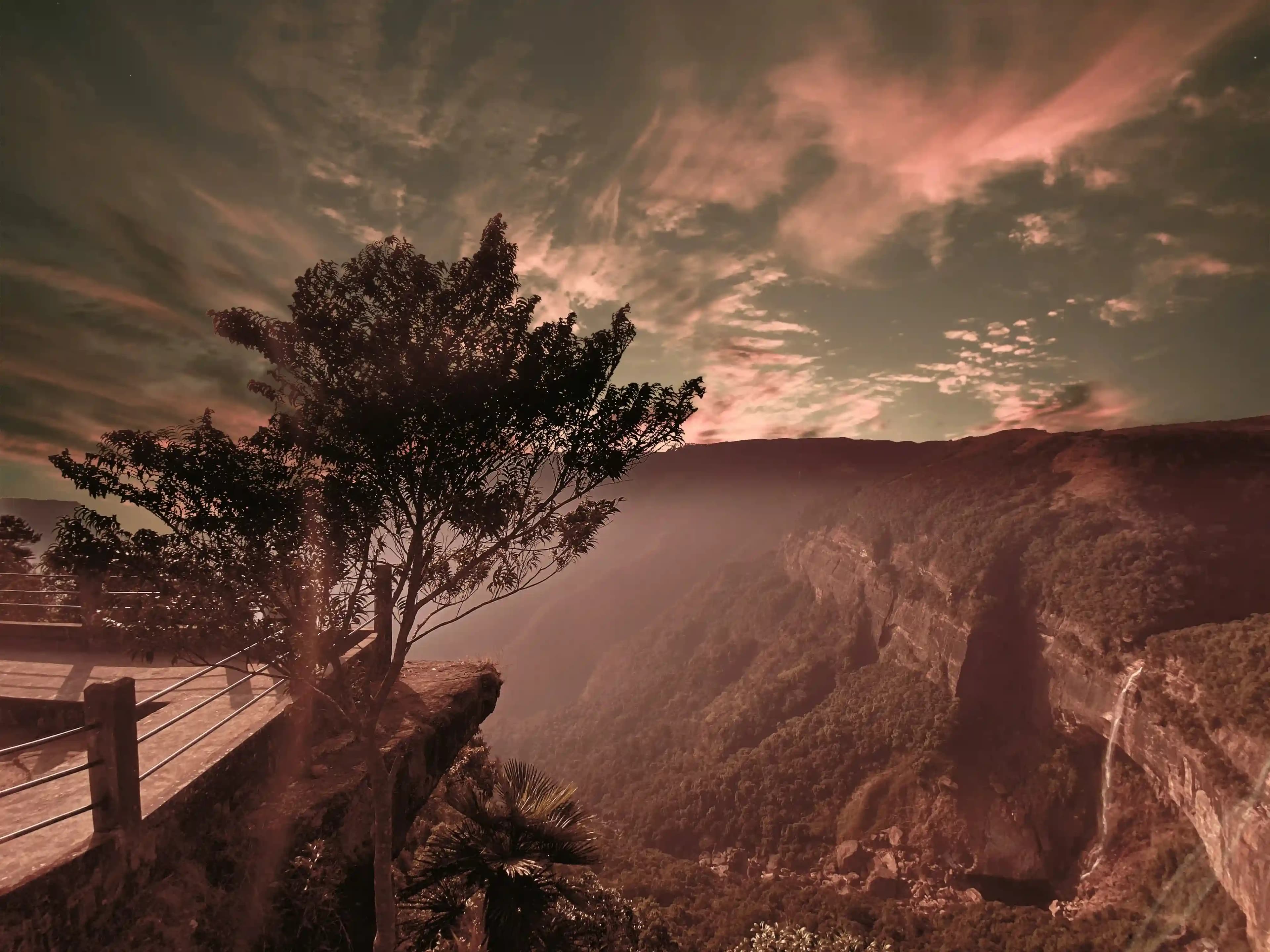
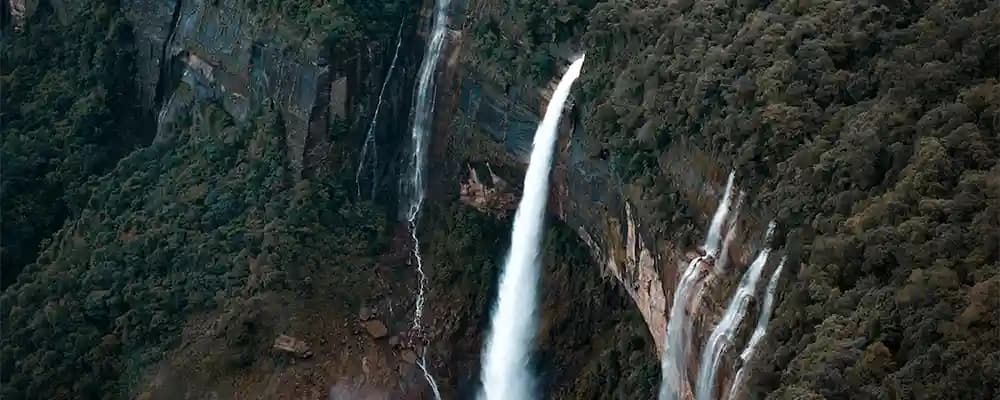
The Nohkalikai Falls is one of the tallest plunge waterfalls in India, with a height of over 300 meters. The waterfall is particularly beautiful after rainfall and is a favourite among photographers and nature lovers. There is a viewing point nearby where one can see the emerald pool below and the deep gorge created by the erosion of the landscape over millennia.
Distance from the garden: 10 - 12 km (via Cherrapunji)
Timings: 8:00 AM - 5:00 PM (daylight hours)
Entry Fee: ₹20 to ₹50 per person
2. Seven Sisters Falls (Nohsngithiang Falls)
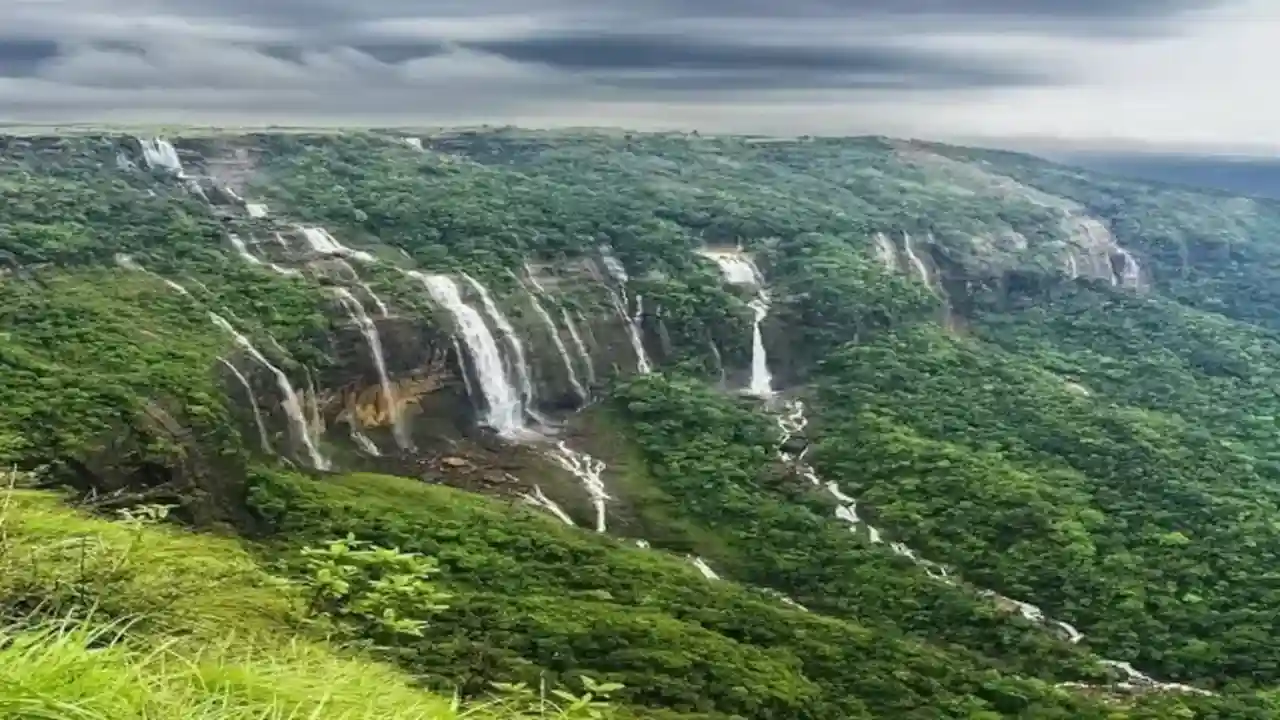
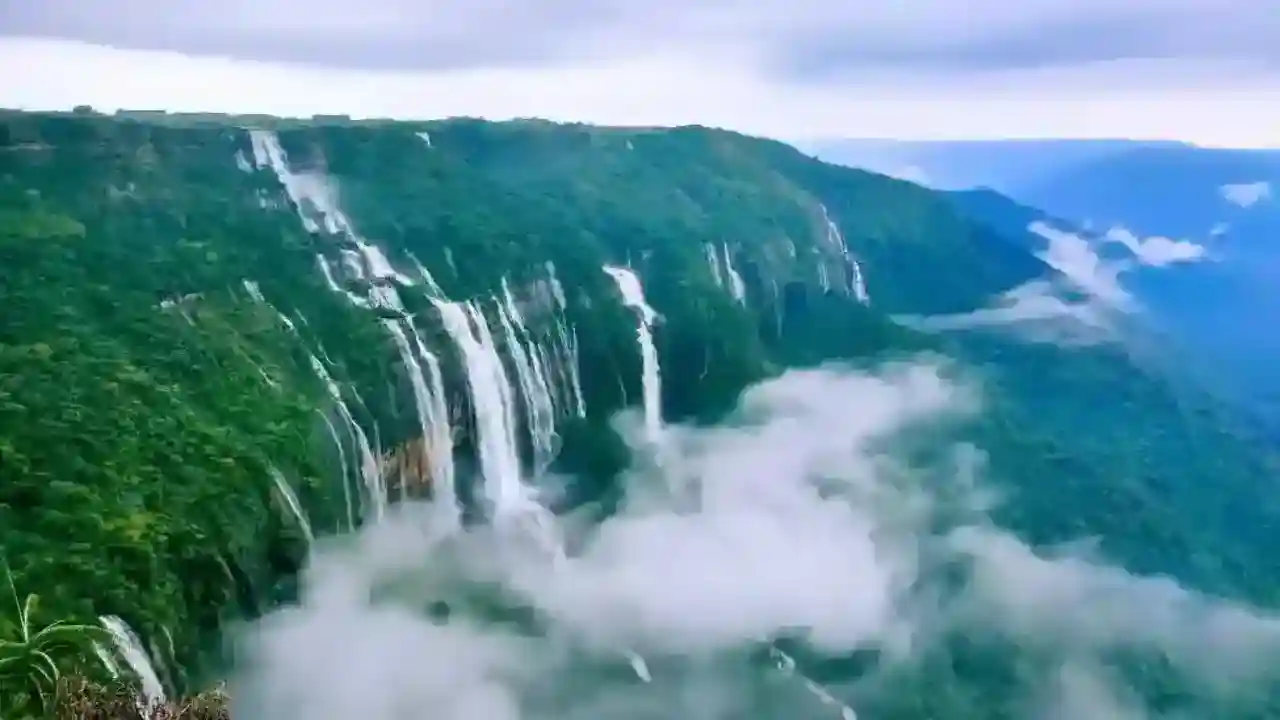
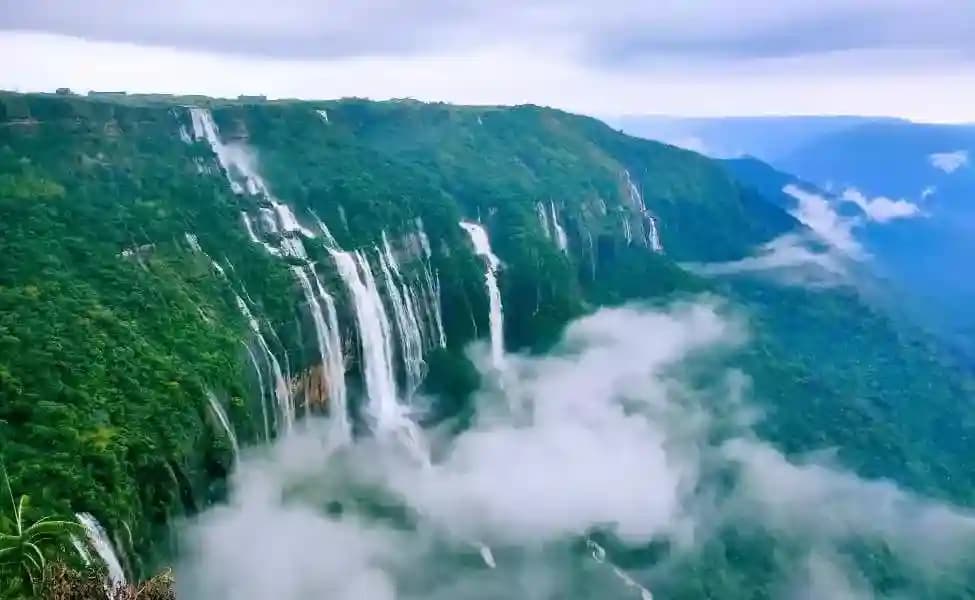
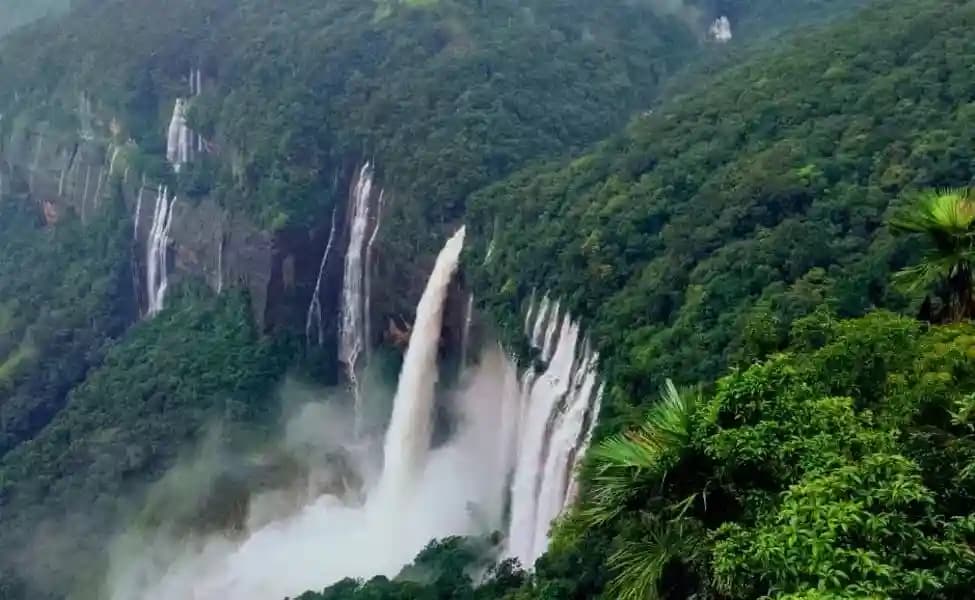
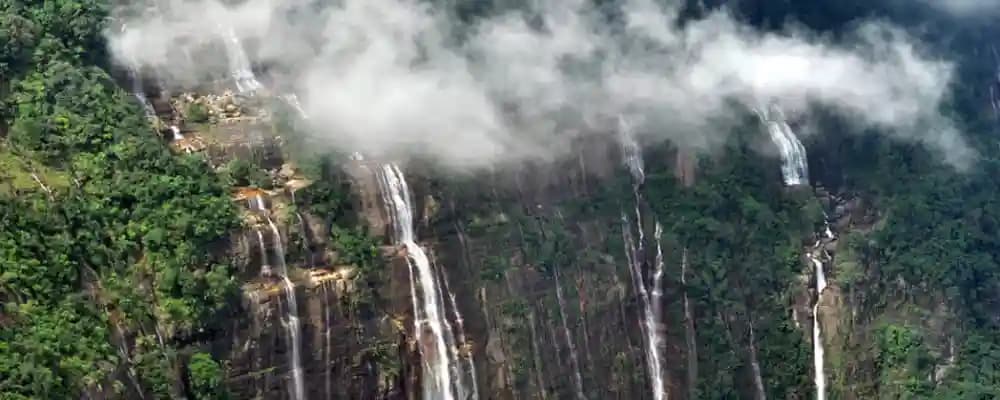
Also known as Nohsngithiang Falls or Mawsmai Falls, this segmented waterfall is known for the seven parallel streams that flow down limestone cliffs. Being one of the most beautiful waterfalls in Meghalaya, these falls look absolutely breathtaking during the monsoon when the streams are full and lively.
Distance from the garden: 14 - 15 km
Timings: Open daylight hours (best 8:00 AM - 4:00 PM)
Entry Fee: Free (may be part of nearby parking fees)
3. Mawsmai Cave
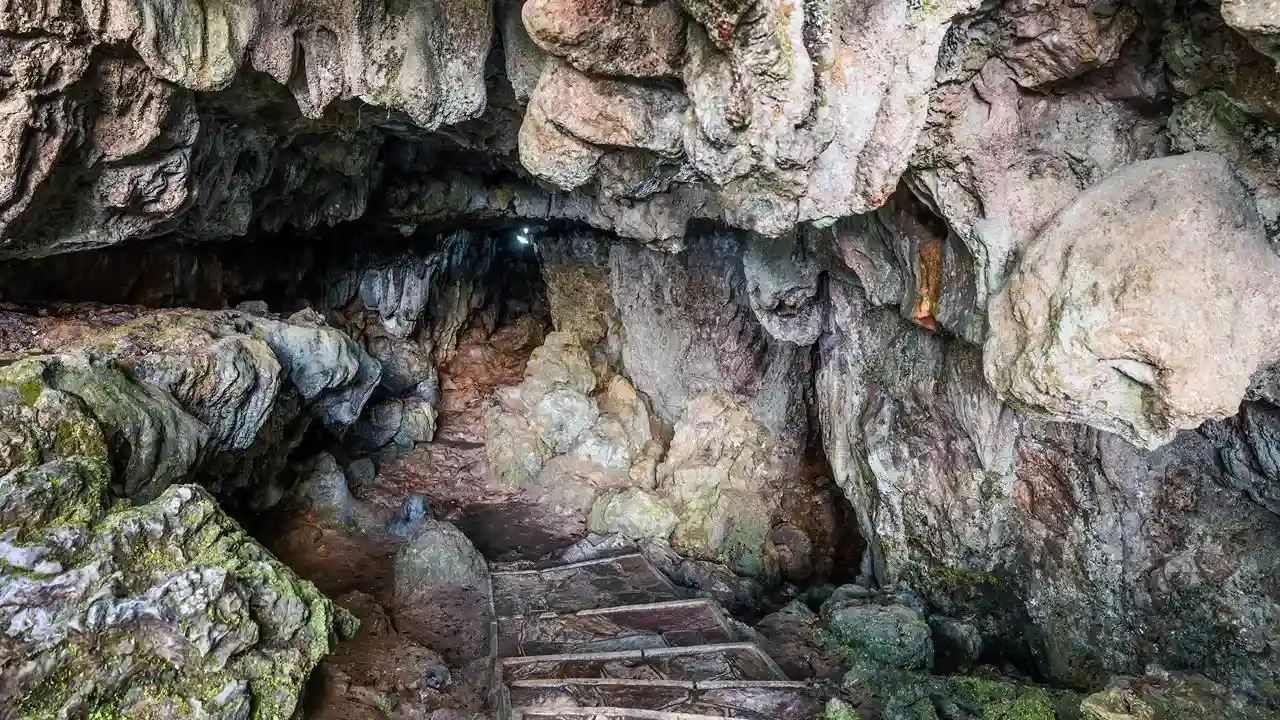
The Mawsmai Cave is a famous limestone cave with interesting stalactites and stalagmites that have been formed over thousands of years. It is one of the best historical places to visit in Meghalaya. One can access the cave with the help of a paved and illuminated path that leads to the cave. The distance from Garden of Caves to Mawsmai Cave is around 5- 6 km. The drive takes 15 - 20 minutes by car or taxi. Many visitors combine this stop with nearby waterfalls and viewpoints
Distance from the garden: 5 - 6 km
Timings: 9:30 AM - 5:30 PM daily
Entry Fee: ₹20 for adults, ₹5 for children (camera charges extra)
4. Eco Park, Cherrapunji
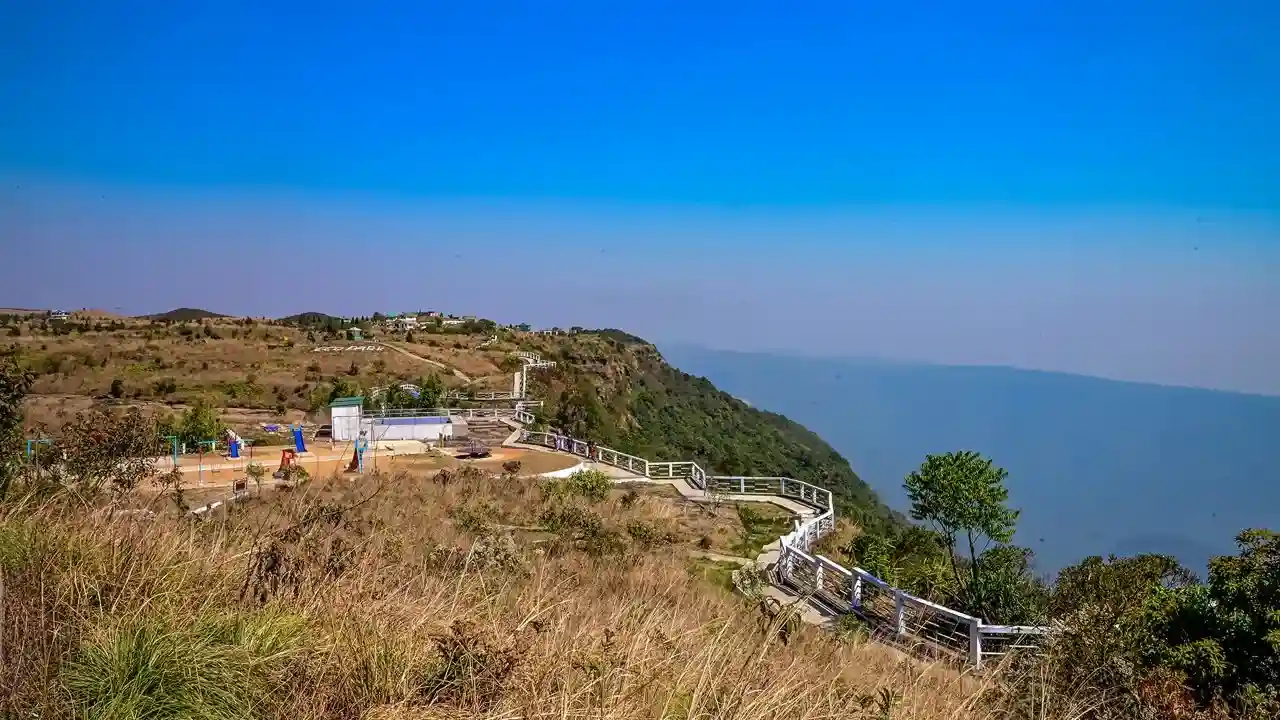
Eco Park is a hillside park offering panoramic views of the surrounding valleys and distant plains. Being one of the best places to visit in Cherrapunji, this park is perfect for enjoying a walk, a picnic or sunset views. This park also provides great views of the nearby waterfalls from its elevated vantage points.
Distance from the garden: 14 - 15 km
Timings: 8:00 AM - 5:00 PM
Entry Fee: ₹10 per person
5. Thangkharang Park
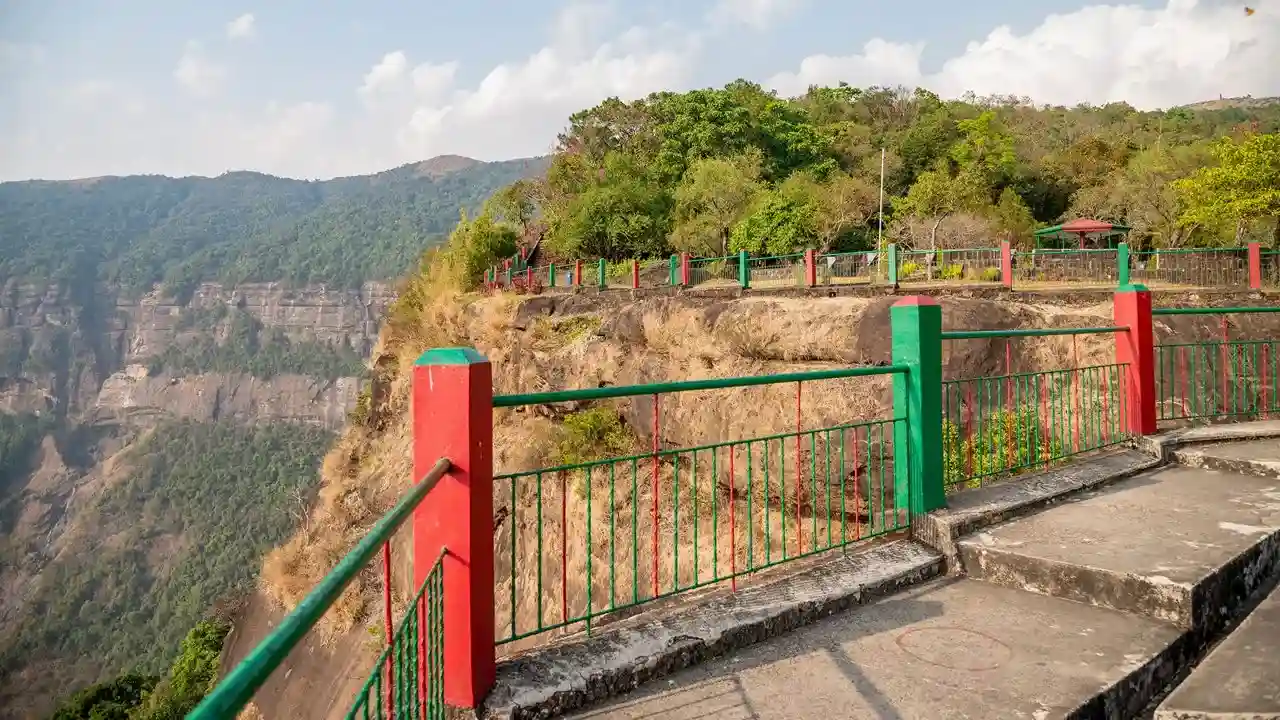
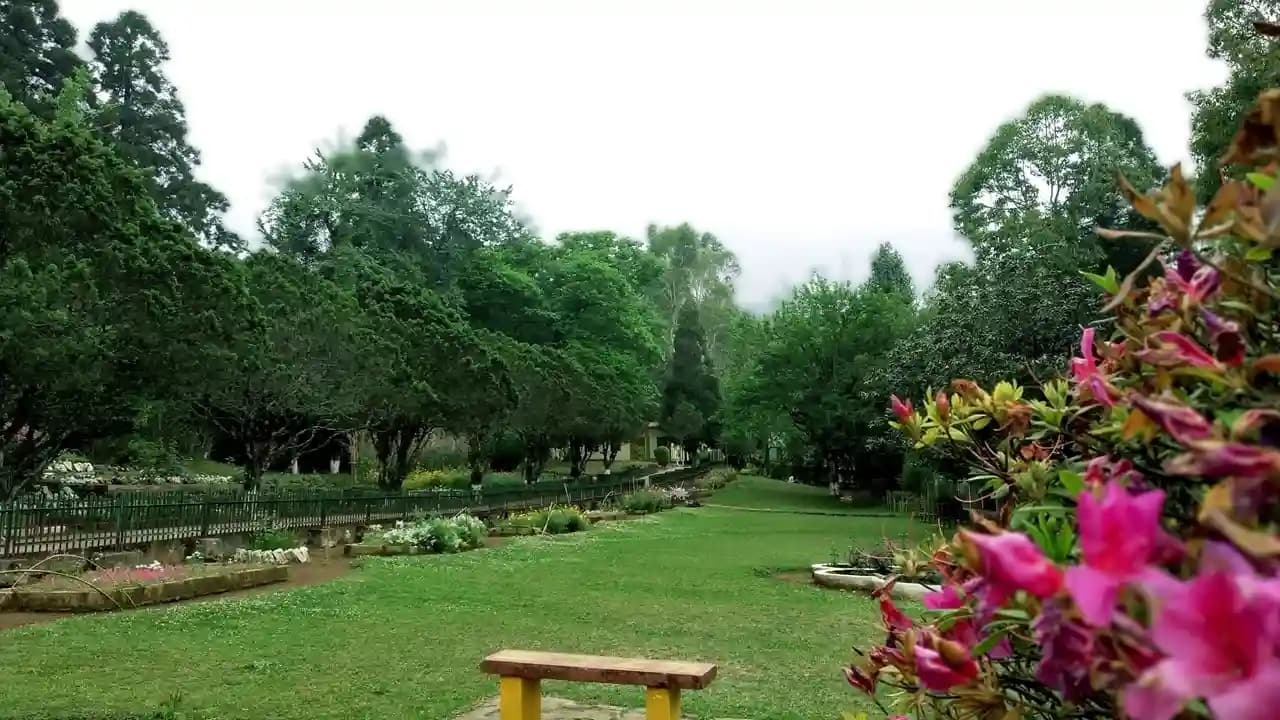
Thangkharang Park is a scenic viewpoint and botanical garden with lush greenery and spots to relax while enjoying views. On clear days, you can see the plains in the distance and capture beautiful landscape photos.
Distance from the garden: 14 - 15 km
Timings: Typically 8:00 AM - 5:00 PM (seasonal)
Entry Fee: ₹10 per person
6. Dainthlen Falls
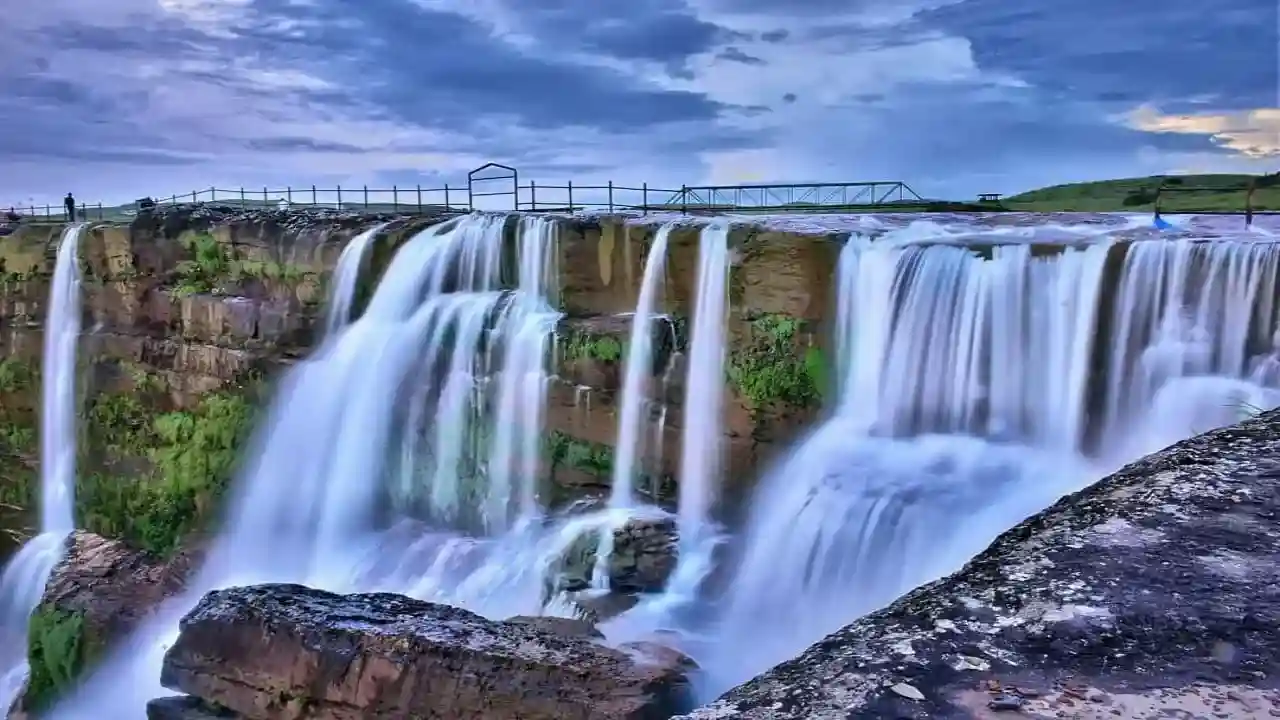
Dainthlen Falls is a picturesque waterfall situated close to Sohra (Cherrapunji), and shrouded in local folklore. The fall plunges dramatically over a high cliff into a deep pool and is surrounded by beautiful green foliage and rugged rocks. According to legend, a giant python once lived here. The site is perfect for nature lovers and photographers who would like to experience peace and tranquility in the midst of natural beauty.
Distance from the garden: 14 km (via Cherrapunji)
Timings: 6:00 AM - 5:00 PM (year‑round)
Entry Fee: Free (nominal parking charges may apply)
7. Wei Sawdong Falls
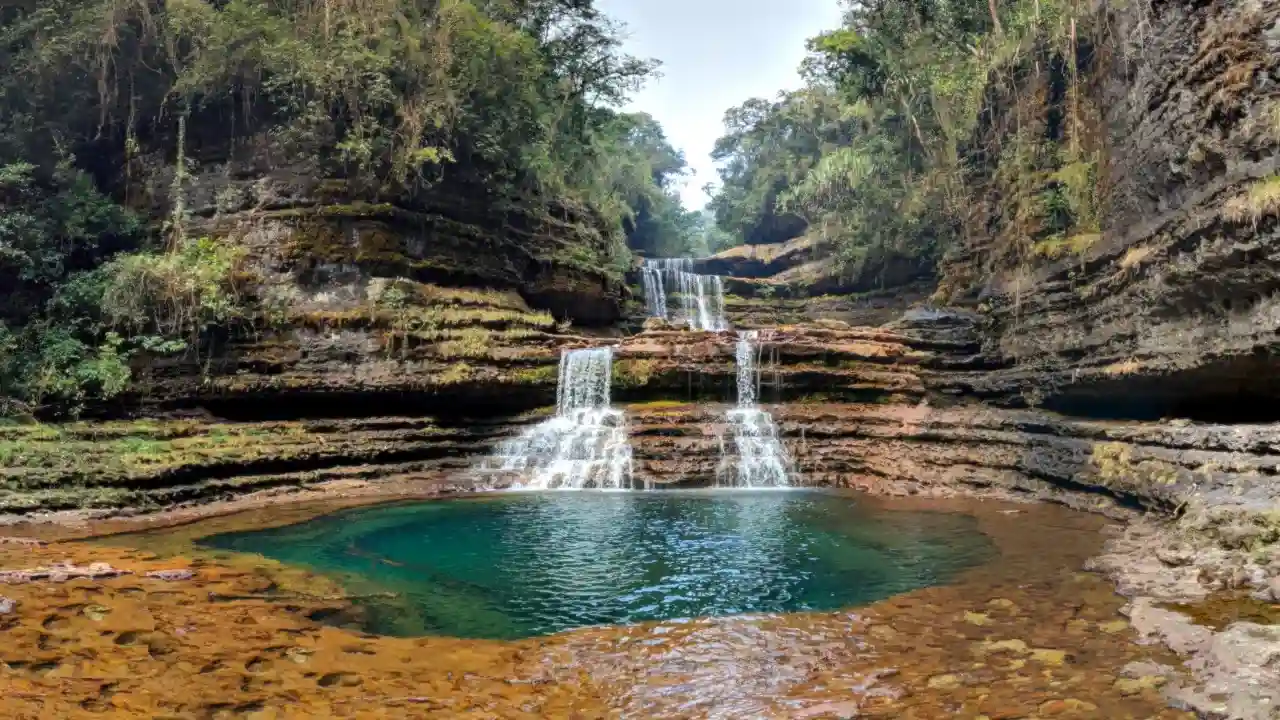
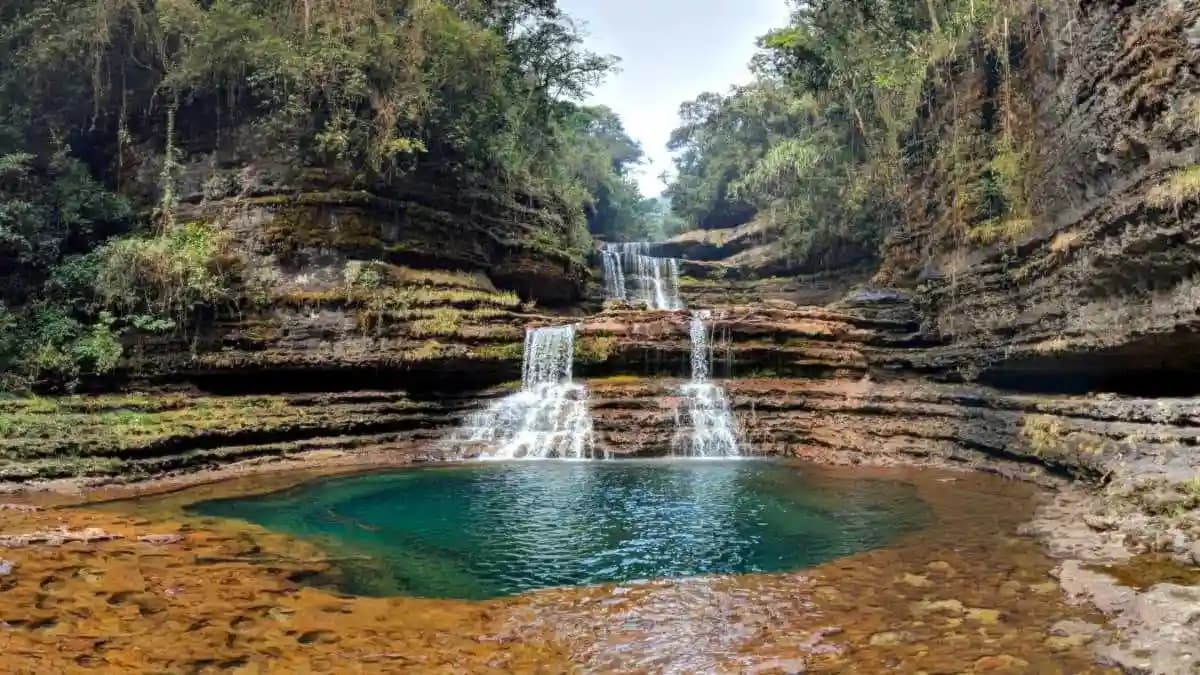
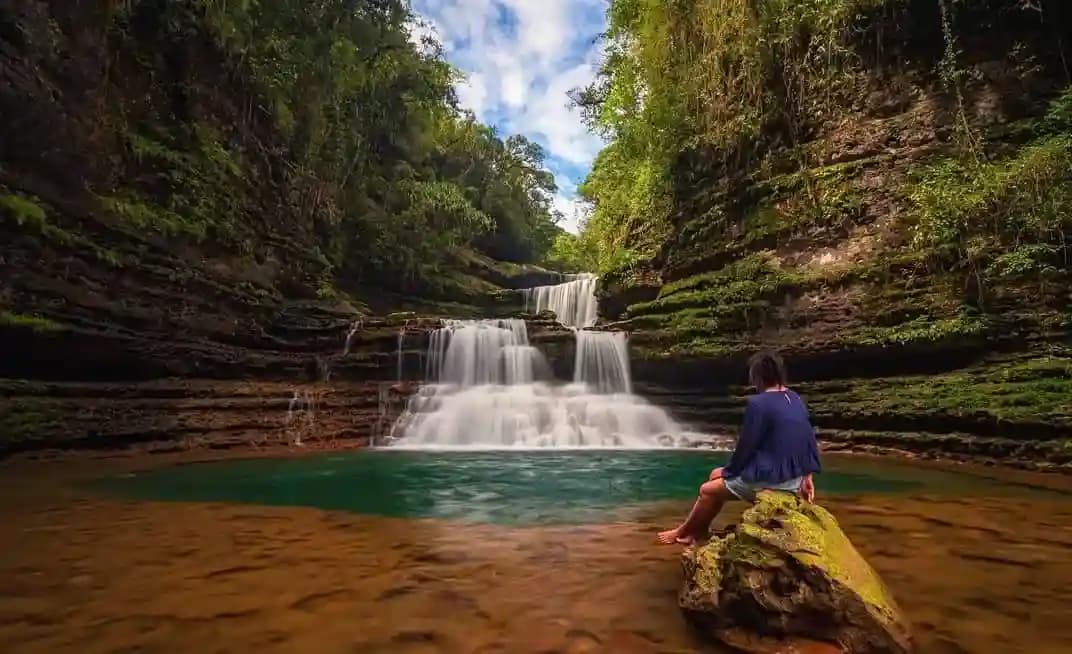
Wei Sawdong Falls is a breathtaking three‑tiered waterfall near Cherrapunji known for its crystal‑clear, bluish‑green pools and layered cascades. The colours and shape make it feel almost surreal, especially during the wet season. Reaching the falls involves a moderate uphill and downhill trek, offering adventure and excellent viewpoints for photography enthusiasts.
Distance from the garden: 20 - 22 km (approximate, via Sohra)
Timings: Daylight hours (best to visit early)
Entry Fee: Free (guide/parking charges may apply)
Travel Tips for Visiting the Garden of Caves
Wear comfortable shoes as the terrain is rocky and uneven
Carry enough water and light snacks for the day
Respect sacred spots like Um Dawai and Ka Synrang Syiem
Camera charges may apply; drones are usually prohibited
Carry a raincoat or umbrella, especially during monsoon months
Start early to avoid crowds and make the most of daylight
Hire a local guide to learn about legends, geology and flora
Keep your mobile and valuables secure while exploring caves and trails
Avoid littering; use designated disposal areas to protect the environment.
Carry basic first-aid supplies for minor cuts or scrapes on trails.
Conclusion
This garden in Cherrapunji combines mythological mystery, cultural legacy, and scenic beauty. Sacred caves like Ka Synrang Syiem and Ka Khoh Ramhah complement majestic waterfalls like Sum Syiem and Riat Umlwai, providing one-of-a-kind experiences everywhere within the Garden of Caves. Legends of giants, clan chiefs and sacred waters add layers of spirituality and history to the picturesque charm. Photographers, nature enthusiasts, and people interested in Khasi traditions will find this place really appealing. Discovering the garden offers visitors a sense of adventure, tranquility, and a greater comprehension of Meghalaya's rich history, leaving them with lifelong memories.