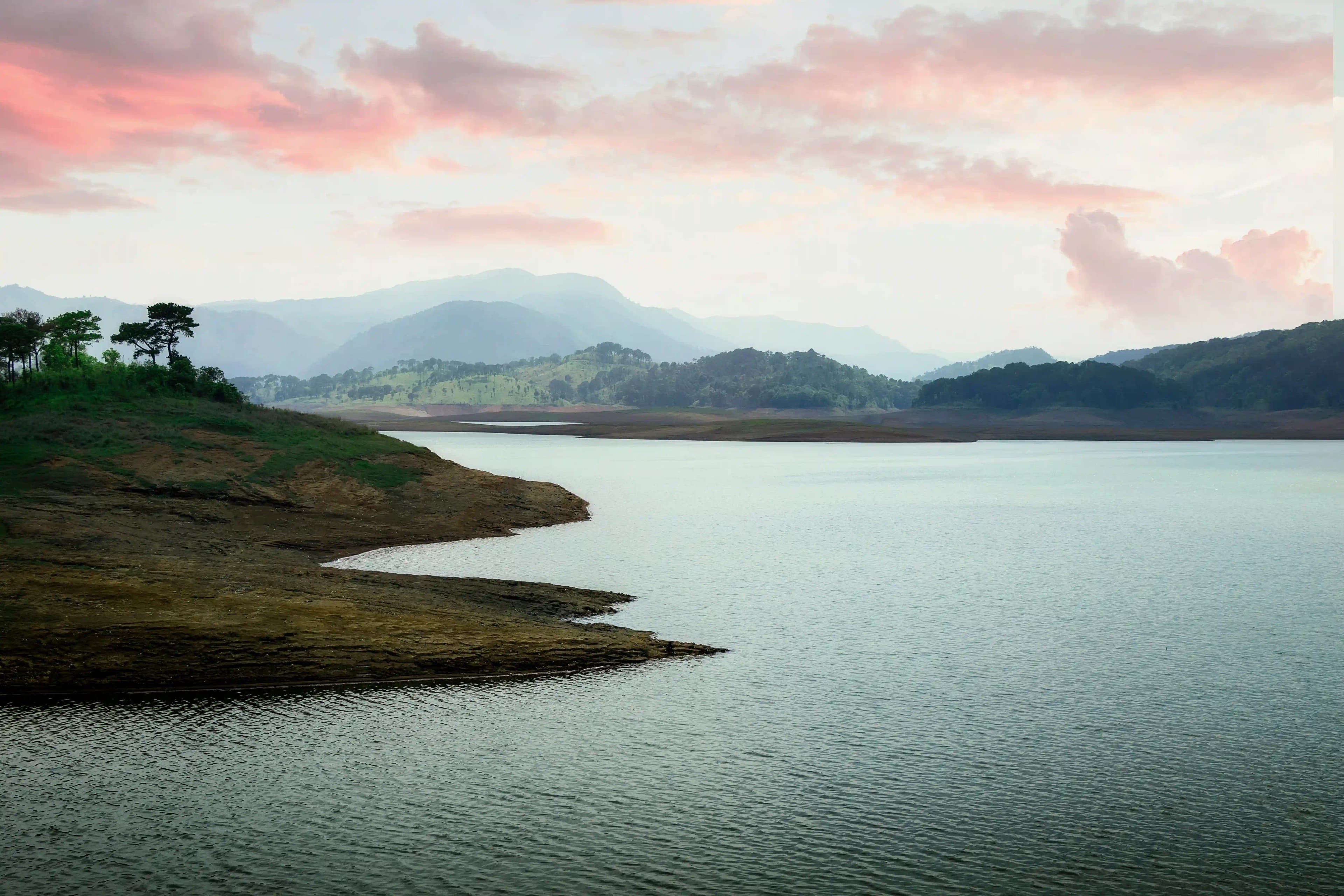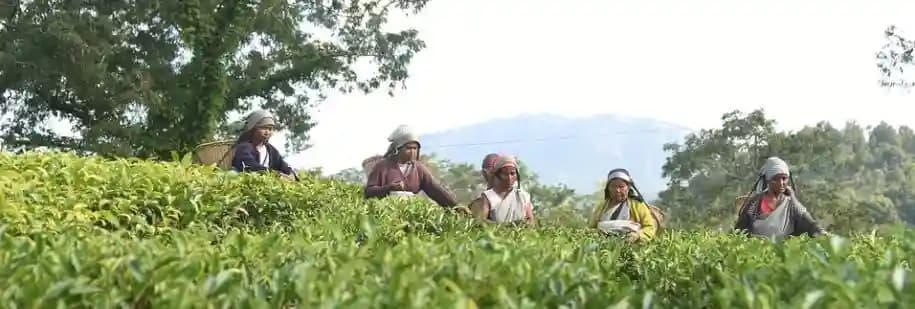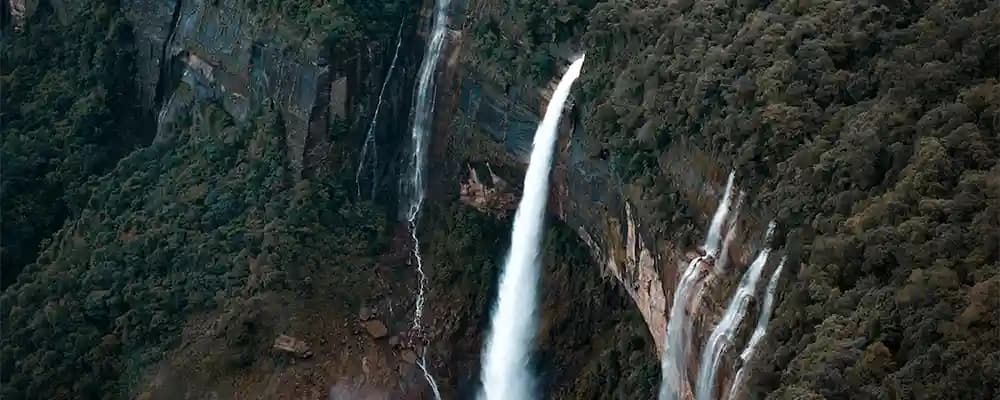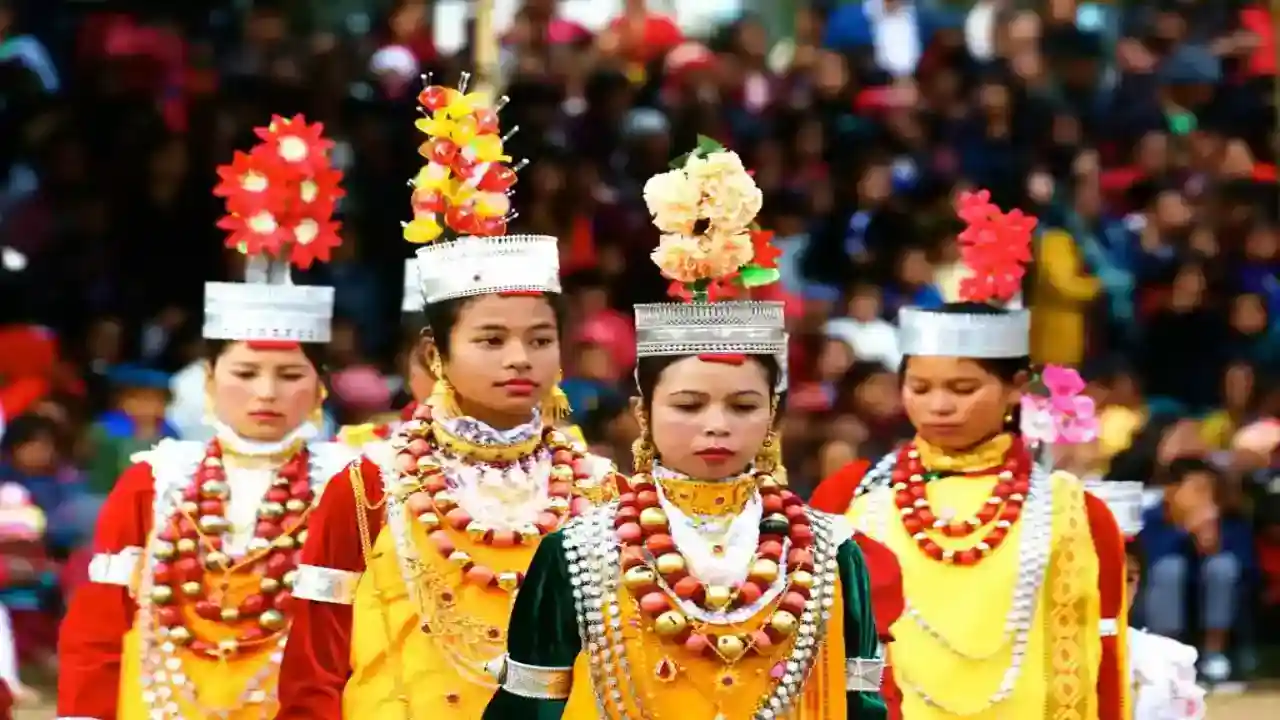
What really makes a place come alive is not just the mountains, the clouds or the rivers it has, but how its people celebrate the spirit of life. The folk dances of Meghalaya are a beautiful expression of joy, belief, nature, and community spirit. In this hill state of North East India, the dance is also not merely a form of entertainment but a living tradition handed down from one generation to the next. From celebrations of harvest to religious rituals, these dances are indicative of the simple but meaningful way of life of the Khasi, Garo, and Jaintia tribes.
Watching these dances, you are not only watching steps, but you are experiencing rain, crops, love, courage, and gratitude. Bright costumes, rhythmical drums, and graceful movements combine to create magic. This guide will allow you to get to know about the popular folk dances of Meghalaya, what they signify, and why they are especially important to the state, adding a unique charm to your trip to Meghalaya.
8 Folk Dances of Meghalaya
The following are the most significant and famous folk dances of Meghalaya, with every detail you must know about them, so that you can actually know the cultural value of these dances.
1. Shad Suk Mynsiem
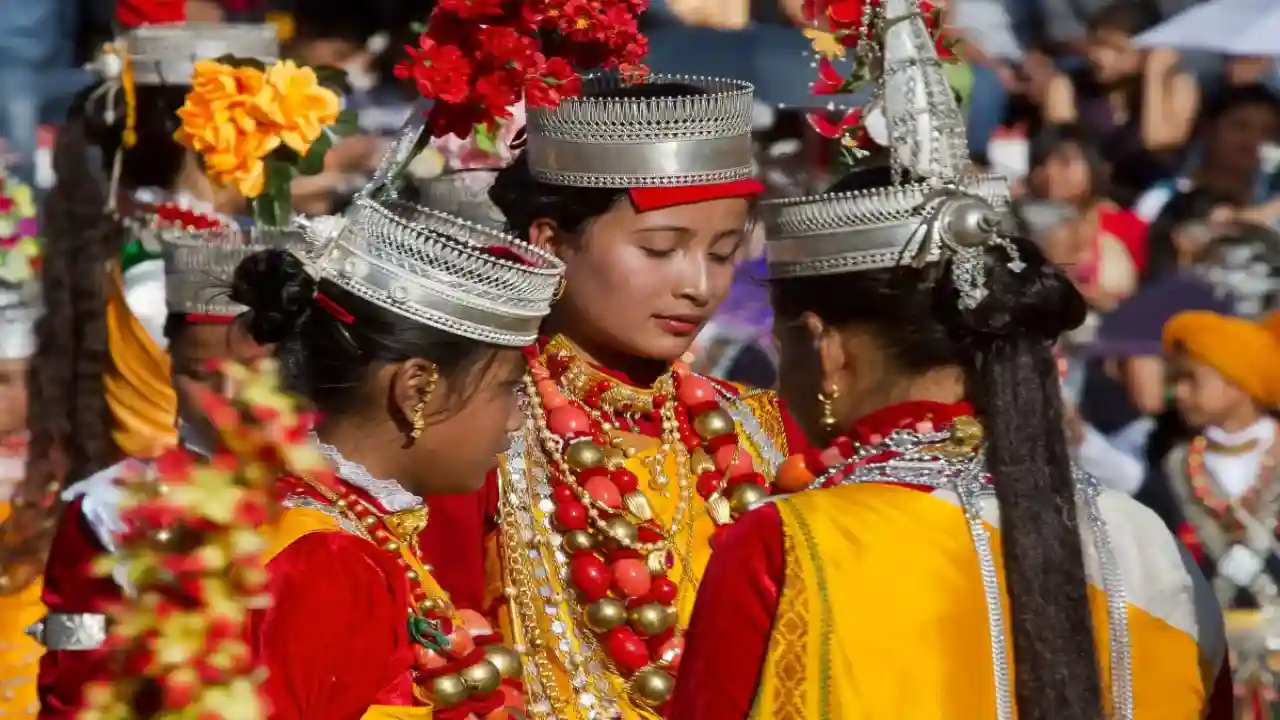
Shad Suk Mynsiem is one of the most joyful and symbolic folk dances of Meghalaya, which is performed by the Khasi tribe. The name translates to "Dance of the Happy Hearts." It is a festival that celebrates peace, prosperity, and gratitude for a good harvest and is generally held in springtime when nature is at its best.
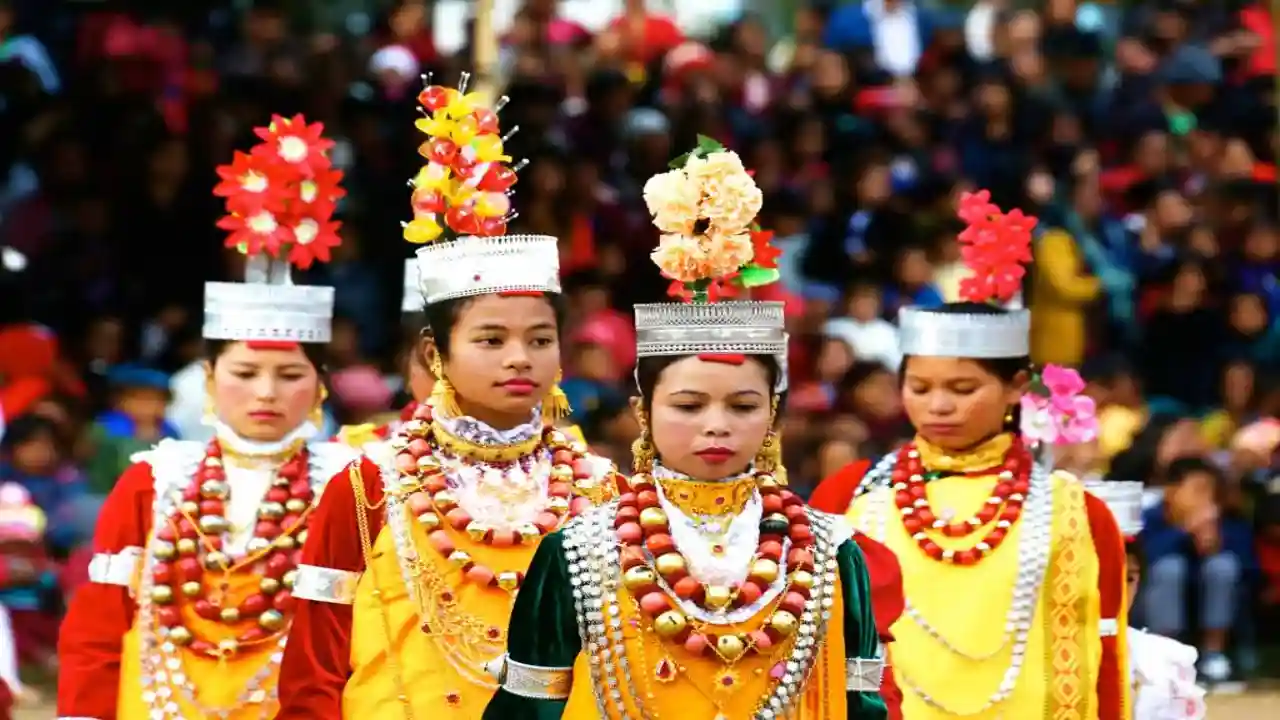
Men and women dance in graceful circular movements with each other. Men wear traditional dhotis and turbans, and women wear graceful silk clothes with ornaments of gold. The dance is a reflection of the harmony between man and nature. Each step is slow, balanced, and meaningful, which reflects respect for tradition and community values. This dance is not loud or aggressive, but rather calm and graceful, offering a profoundly spiritual experience.
Highlights:
Performed during April.
Encourages agriculture and peace.
Performed mainly in Shillong.
Sacred symbol of the Khasi cultural pride.
2. Laho Dance of Meghalaya
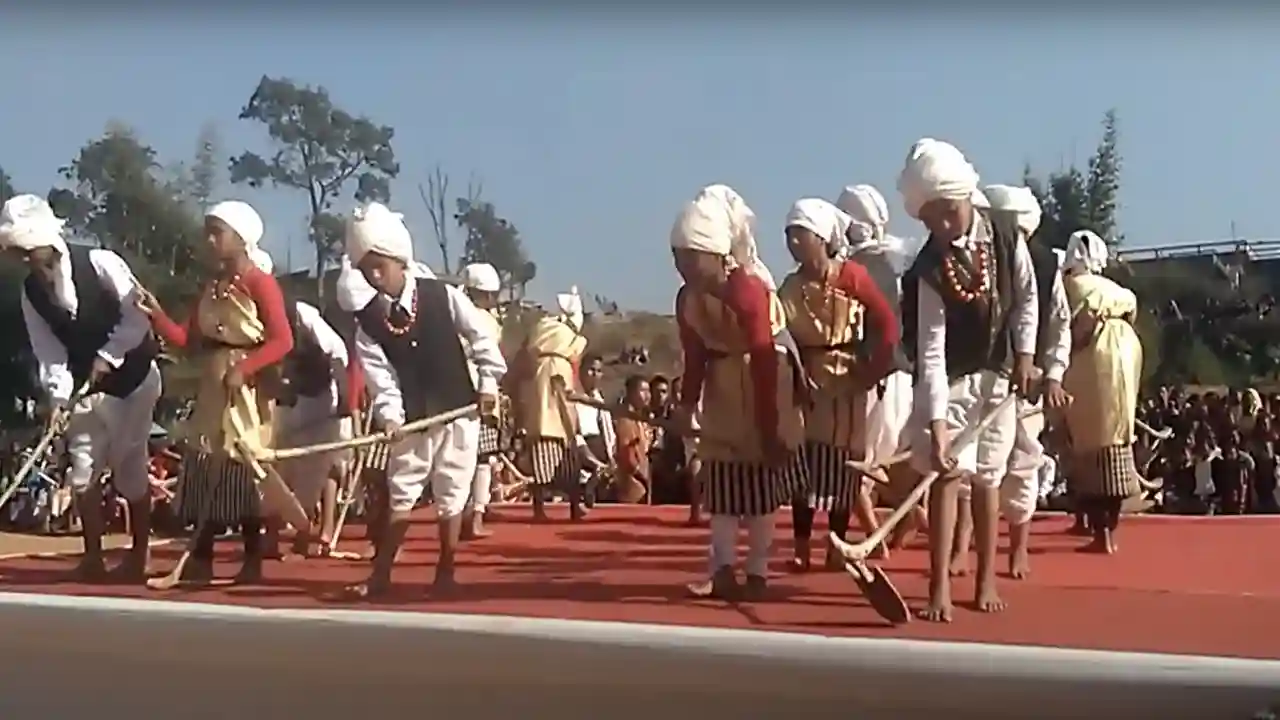
The Laho dance of Meghalaya is a very lively and social dance that is performed mostly by the Jaintia community. Unlike many of the ritual dances, Laho is not formal or serious and is very happy, and so is popular during festivals and community gatherings. Both men and women participate together, standing in close rows and moving with the rhythm.
What makes this dance unique is its playful nature of the dance. The dancers sing along as they dance, and the lyrics usually speak of love, relationships, and everyday life; hence, witnessing it is one of the best things to do in Meghalaya. Simple steps, hand movements, and happy expressions help to make the dance very interesting, and one of the famous folk dances of Meghalaya. The Laho dance illustrates the relationship between men and women, which is very close in society, and demonstrates equality and togetherness.
Highlights:
Popular amongst the Jaintia tribe.
Performed during festivals.
Includes singing with dance.
Symbol of social bonding.
3. Behdienkhlam
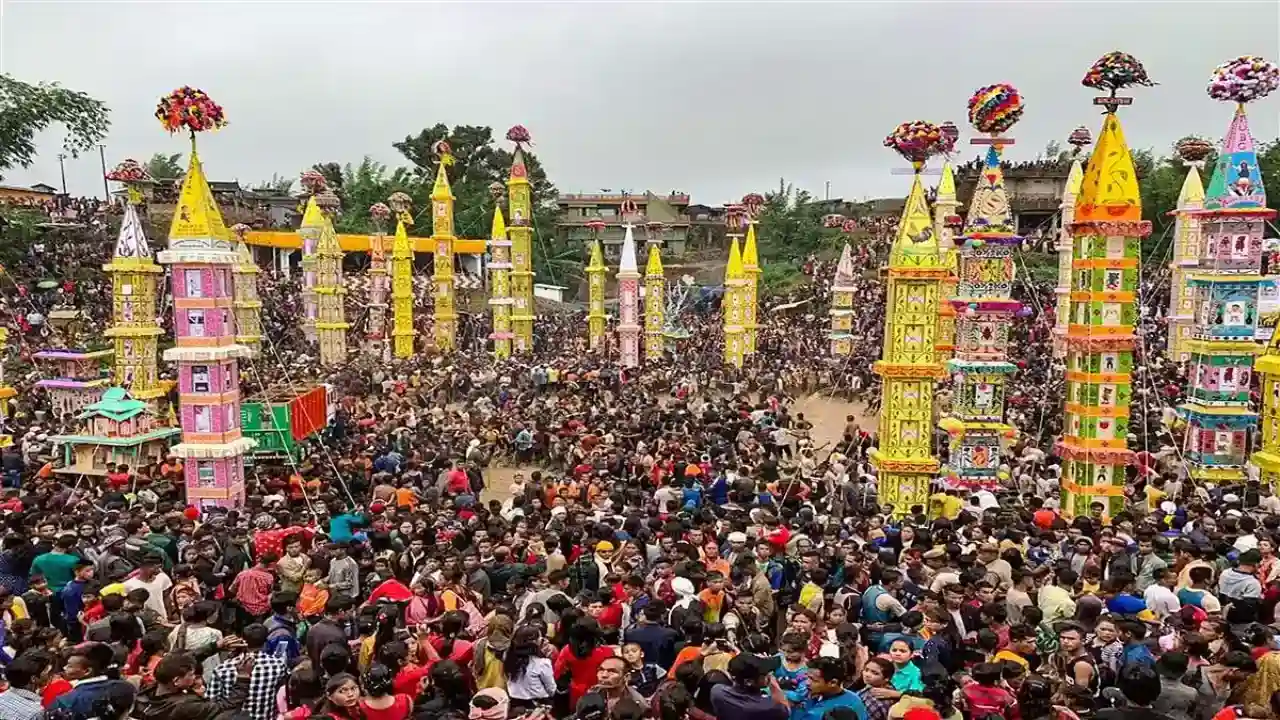
Behdienkhlam is a powerful ritual dance of the Pnar tribe to chase out evil spirits and diseases. This classical dance of Meghalaya is deeply rooted in faith and traditional beliefs. It is normally done during the monsoon season when people offer prayers for good health and protection.
Men carry colourful wooden structures and dance with great energy to the sounds of drums. The movements are powerful and dramatic, and are symbolic of the struggle against negative forces. This dance is not simply about movement; it is a community ritual where people gather with the hope and belief. Behdienkhlam is a reflection of the fact that the folk dances of Meghalaya are closely associated with the spiritual life.
Highlights:
Performed during the monsoon.
Ritual for banishing evil spirits.
Have strong religious importance.
Male‑dominated performance.
4. Shad Nongkrem Dance
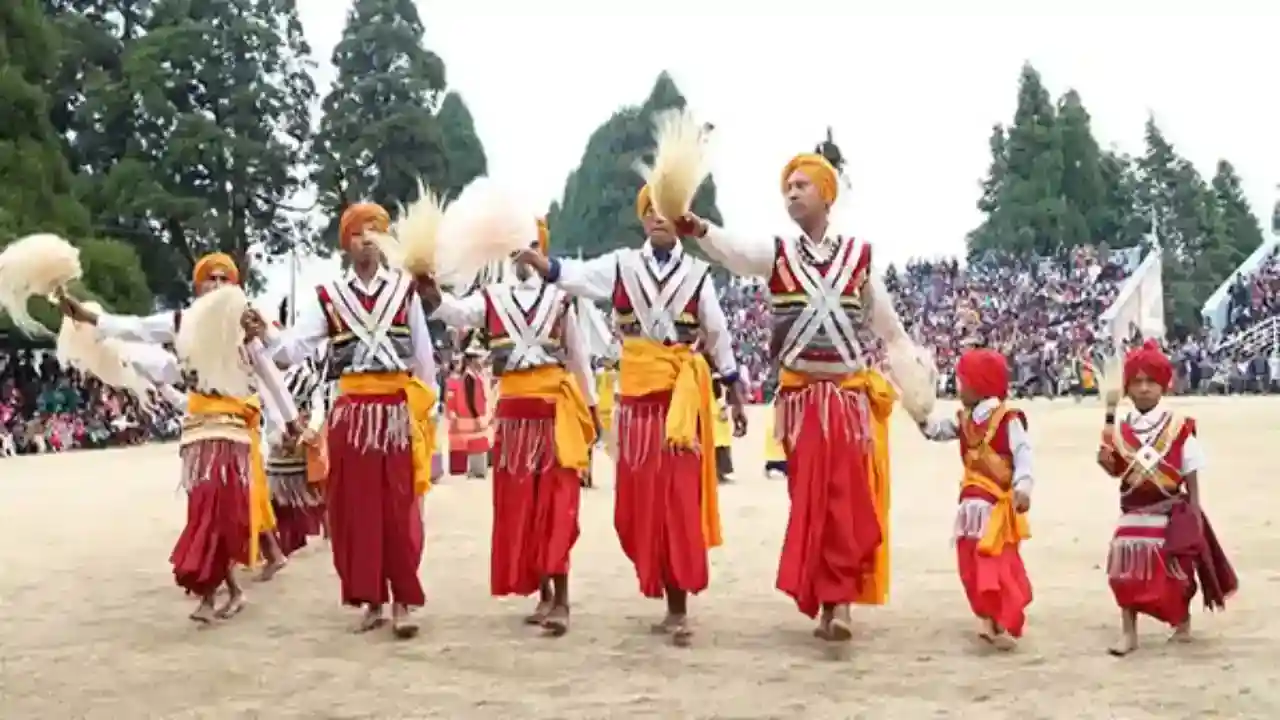
Shad Nongkrem is one of the most sacred folk dances of Meghalaya, performed bythe Khasi tribe. A thanksgiving to Goddess Ka Blei Synshar, the dance reflects gratitude for a good harvest and prosperity. It is organised at Smit village, close to Shillong. Women dance gracefully in the middle, while men defend the women from the sides.
The performance reflects the matrilineal culture of Meghalaya, in which women hold an important social position. Slow drumbeats and traditional instrumental music set the tone for a spiritual atmosphere. Shad Nongkrem is a clear example of the very good connection between dance, religion, and society.
Highlights:
Held annually in Smit.
Religious harvest festival.
Brings out the matrilineal culture.
One of the most sacred dances.
5. Doregata Dance
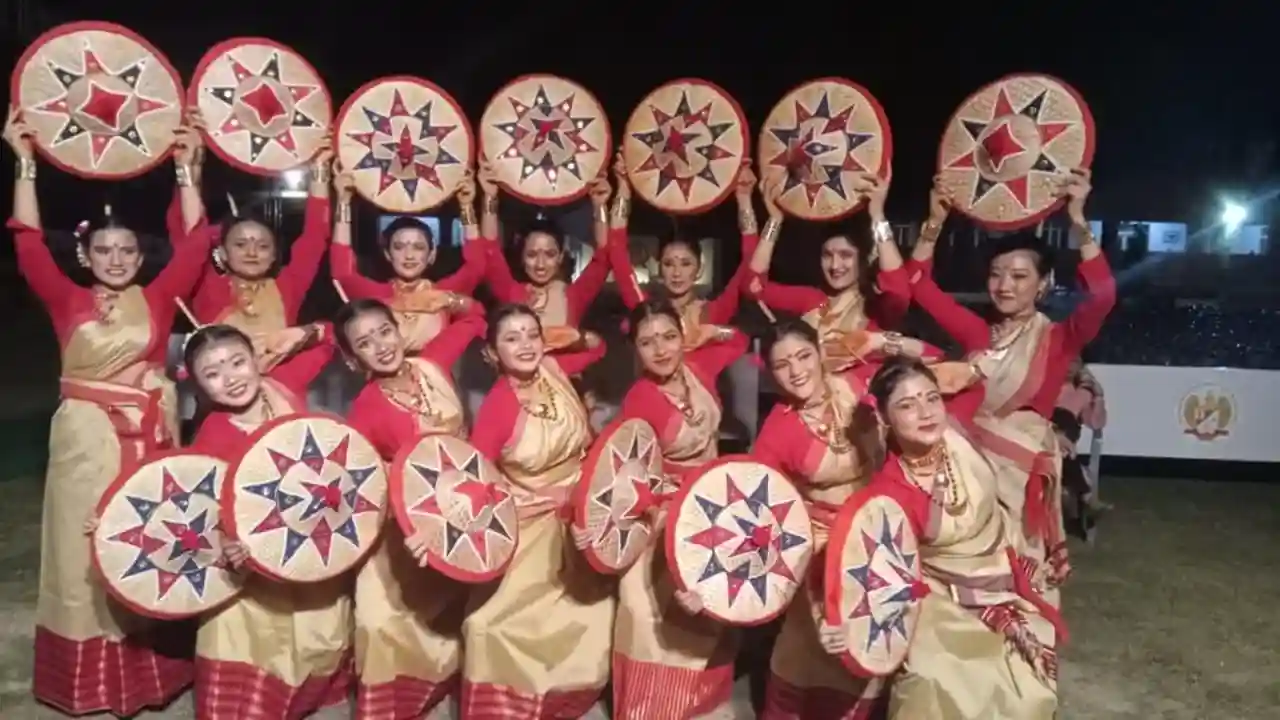
Doregata is one of the vivacious folk dances of Meghalaya among the Garo tribe and is closely associated with agriculture. It is conducted to celebrate successful harvests and farming activities. The dance is energetic and full of rhythmical moves of joy and community spirit. Men and women wear colourful traditional clothes and dance in groups, their feet moving in sync with the sound of the drums.
The steps are quite simple but lively, so it is fun to see them in a dance. Doregata demonstrates how the inhabitants of Meghalaya are intricately dependent on nature and agriculture for their survival.
Highlights:
Performed by the Garo tribe
Harvest celebration dance
Dynamism group performance
Accompanied by drums
6. Ka Shad Shyngwiang-Thangiap
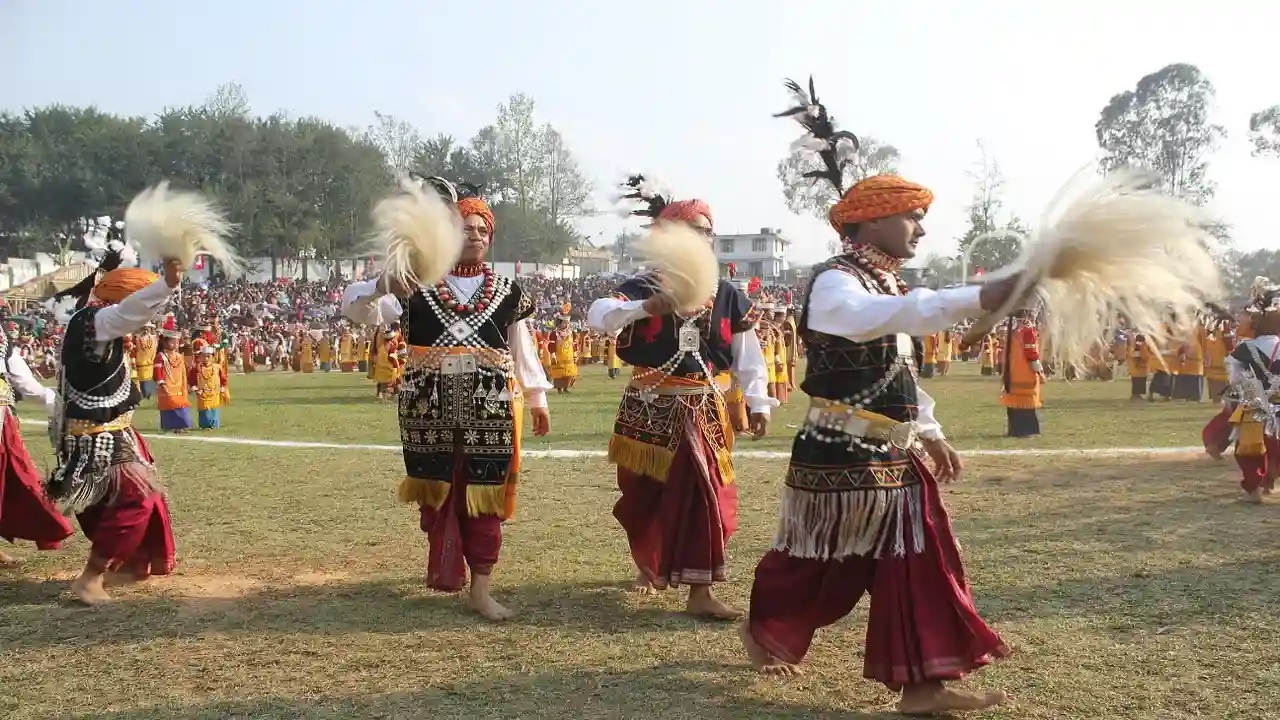
Ka Shad Shyngwiang-Thangiap is a traditional Khasi dance that is performed during the autumn festivals. It is the celebration of the harvest, joy, and community bonding. Men and women perform in different formations in response to the rhythmic drumbeats and music produced by a flute. The dance is gentle, graceful, and deeply connected with nature.
Traditional clothes such as embroidered shawls and ornaments add beauty to the performance. Each of the movements is an expression of respect to land and ancestors. The dance typically takes place on the grounds of the village, so it remains close to rural life. Its peaceful nature and cultural value make it one of the famous folk dances of Meghalaya.
Highlights:
Traditional Khasi dance.
Performed in the course of ceremonies.
Focus on rhythm and grace.
Cultural preservation dance.
7. Wangala Dance

Wangala Dance is the most important dance of the Garo tribe, which is performed during the Wangala Festival, also known as the Hundred Drums Festival. It is a harvest dance dedicated to the Sun God, Saljong. Men and women dance in lines as they beat their drums and blow their buffalo horns.
The sense of constant rhythm and organised movement is an intense visual experience. The dance is an expression of gratitude for a good harvest and blessings for the future. Wangala is energetic and spiritual, and is one of the most recognised forms amongst the folk dances of Meghalaya.
Highlights:
Garo harvest festival dance.
Dedicated to the Sun God.
Famous for drum beats.
Celebrated in November.
8. Pomblang Nongkrem

Pomblang Nongkrem is a ritual dance that goes hand in hand with the Nongkrem Festival of the Khasi tribe. It is done to seek blessings from the gods for prosperity, peace, and protection. The dance contains ceremonial offerings and traditional music with the use of drums and pipes.
Women dancers dance gracefully, and men guard the sacred space. Every step is performed according to strict customs that have been handed down from generation to generation. The calm and sacred atmosphere makes the performance profoundly spiritual. Pomblang Nongkrem is the expression of devotion and cultural discipline, completing the list of famous folk dances of Meghalaya.
Highlights:
Part of the Nongkrem Festival.
Ritualistic dance form.
Deep religious meaning.
Limited performers.
Conclusion
The folk dances of Meghalaya are not mere performances, but living traditions which connect the people to nature, faith, and each other. Each dance is a story of gratitude, belief, and celebration. From the happy Shad Suk Mynsiem to the grim Wangala, these dances are the essence of the tribal culture in the state of Meghalaya.
Watching these dances is like entering a living world where everything from every movement and rhythm is culture. To really experience Meghalaya, you have to experience the folk dances. Take a cultural trip during which you will observe traditions with your own eyes.