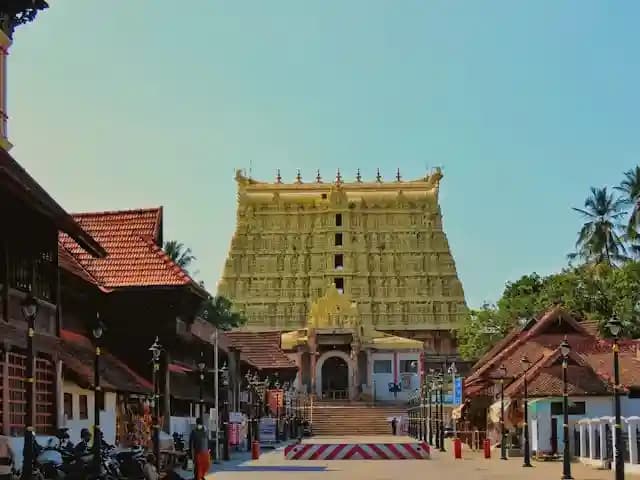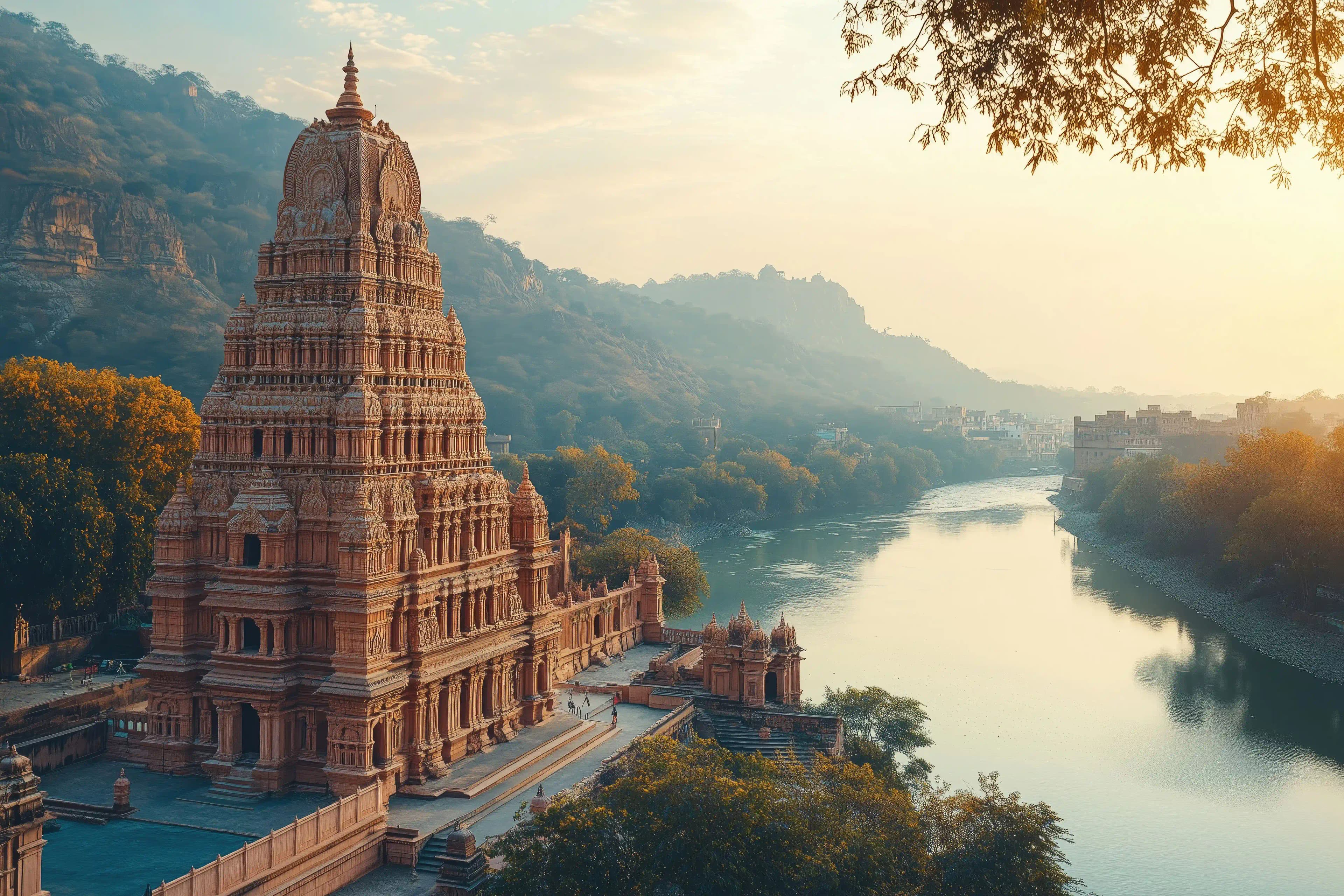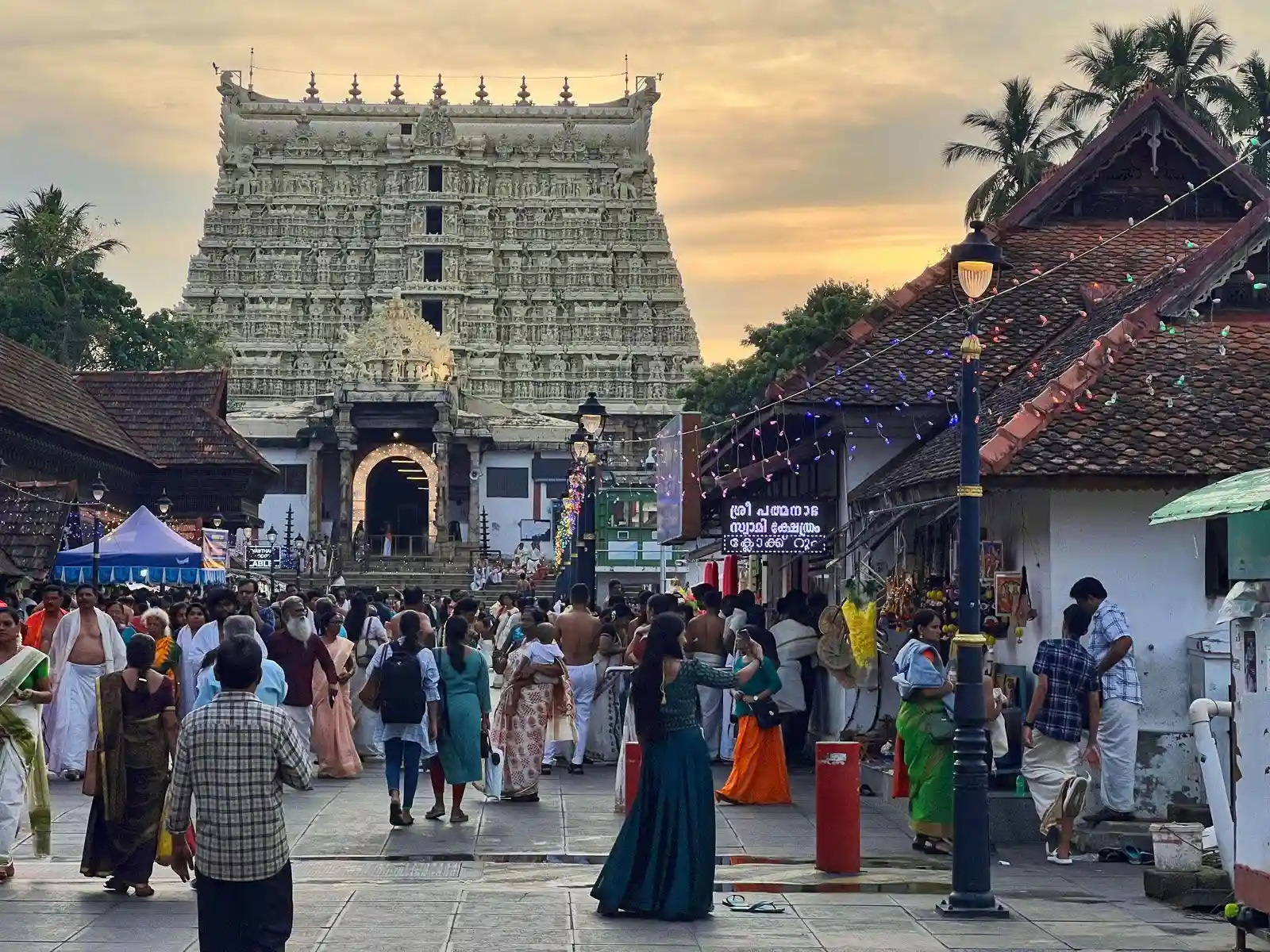
Sree Padmanabhaswamy Temple is one of the most well-known temples in India, dedicated to Lord Vishnu. It is also known for its large collection of gold, jewels, and other valuables stored in underground vaults. Some reports estimate the value of these assets at around $22 billion, not including unopened chambers. The temple follows strict traditions. Entry is allowed only in traditional dress. Men must wear a mundu, and women wear sarees or similar attire. Mobile phones and cameras are not allowed inside.
Darshan here is different from most temples. Devotees view the idol of Lord Vishnu through three separate doors. Each door shows a different part of the reclining form. The idol is made from 12,008 Shaligrama stones brought from Nepal’s Gandaki River. These are joined using a traditional herbal mixture. Padmanabhaswamy Temple Timings are fixed, and entry is controlled. It is better to plan your visit in advance to avoid long waiting times.
Padmanabhaswamy Temple Timings and Darshan Schedule
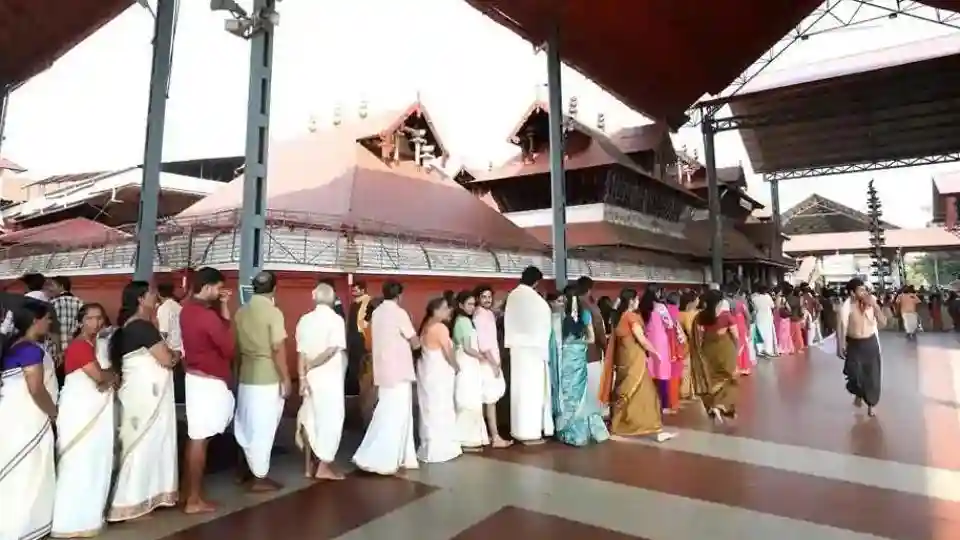
The daily routine at Sree Padmanabhaswamy Temple runs on a fixed schedule that hasn’t drifted over time. The temple does not stay open continuously. It shuts its doors several times a day for rituals, so timing matters. If you arrive at the wrong hour, you could end up waiting outside the stone walls for hours.
In 2026, the usual pattern looks like this:
Morning Padmanabhaswamy Temple Darshan Timings: 03:30 AM to 12:00 PM
Evening Padmanabhaswamy Temple Darshan Timings: 05:00 PM to 08:30 PM
Festival days change the rhythm. During the Alpasi and Painkuni periods, processions take the deity out of the sanctum, and the schedule can shift without much notice. If you want a quiet visit, reach the temple at 03:30 AM for Nirmalya Darshan. The air is cooler, and the crowd is thinner. By late morning, the humidity builds, and the queues grow longer.
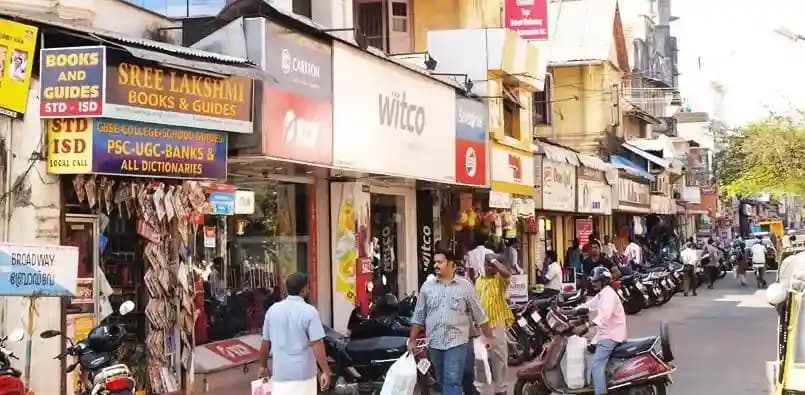
The temple sits in the West Fort area of Thiruvananthapuram, surrounded by narrow streets that fill up quickly after sunrise. Evening hours draw local devotees finishing their workday, which leads to packed corridors and slower movement inside. A simple way to avoid long waits: reach the entrance at least 30 minutes before opening. That small buffer often decides whether you walk in early or spend the next few hours standing outside.
Best Time to Visit Sree Padmanabhaswamy Temple
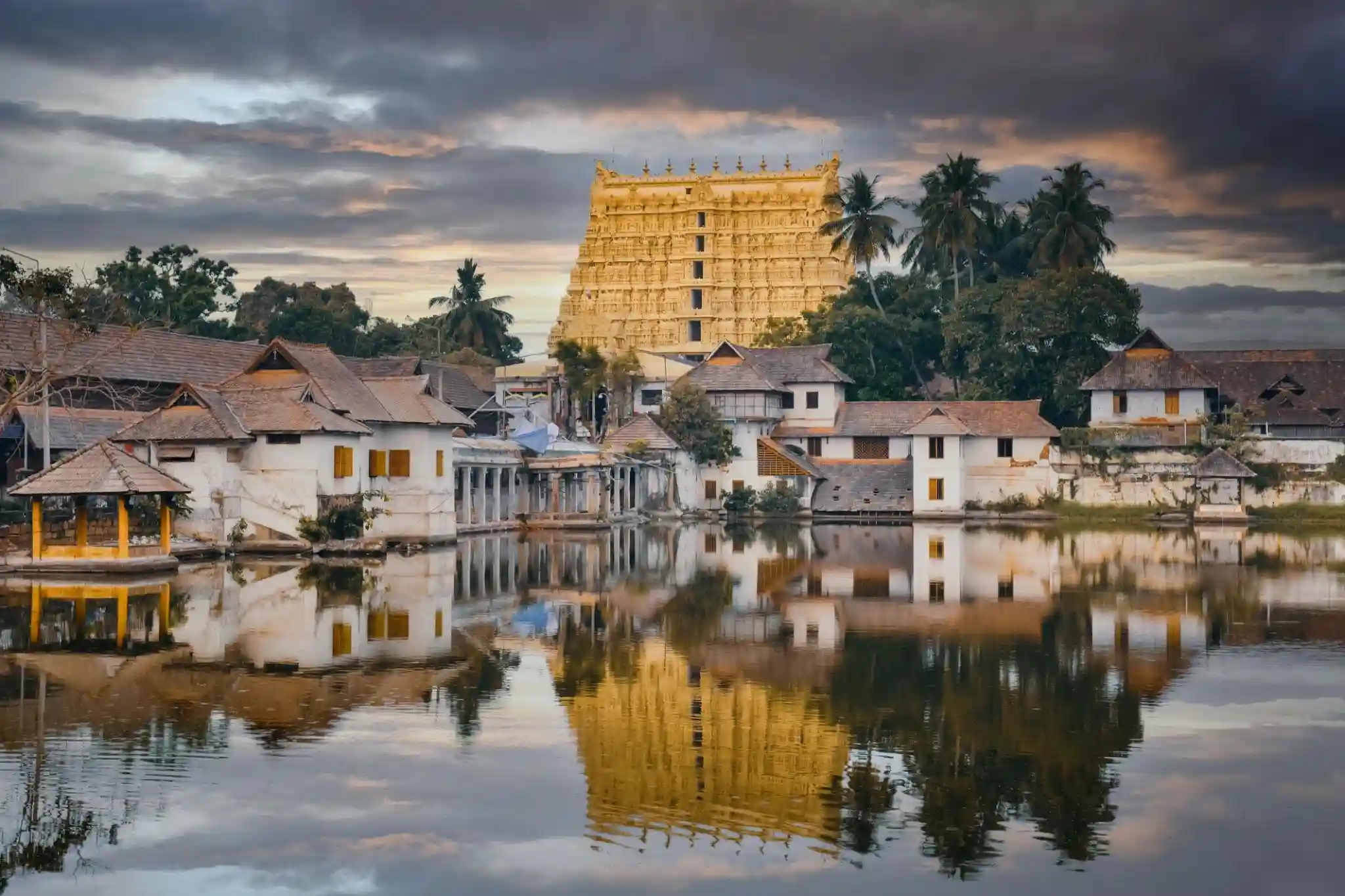
The time you choose has a direct effect on how long you wait and how crowded the temple feels. If you want the quickest darshan, go early in the morning. The Nirmalya Darshanam slot between 3:30 AM and 4:45 AM usually has the shortest queues. People who visit at this time often move through the temple without much delay.
A later but still manageable option is 6:30 AM to 7:00 AM. By then, more visitors start arriving, but the crowd is still under control compared to the rest of the day. Crowds build up quickly after 8:30 AM. Evenings, Thursdays, weekends, and festival days tend to get especially busy, with longer waiting times inside the temple complex.
The temple closes around noon and opens again at 5:00 PM. If you can only visit during peak hours, a special darshan ticket can help reduce the waiting time.
The best time to visit is 03:30 AM for Nirmalya Darshan to avoid peak heat.
Arrive at least 20–30 minutes before your chosen slot to avoid a last-minute rush.
Avoid carrying phones or bags; security checks can slow your entry.
Padmanabhaswamy Temple Darshan Tickets and Entry Rules
Entry follows fixed rules. Visitors go through dress checks, security screening, and guided movement inside the temple.
Ticket system and booking
Darshan does not always require a ticket. General entry is free. Special darshan and certain rituals have a fee, and tickets are usually issued at the temple counter. There isn’t a fully open online booking system for all visitors, so it’s better to confirm the current process before you arrive.
Men must wear a mundu (dhoti). Shirts are removed inside; women are expected to wear a saree, set-mundu, or salwar with a dupatta.
Phones, bags, and cameras are not allowed inside; use the cloakroom facilities near the entrance.
What Makes Sree Padmanabhaswamy Temple Special?
Global curiosity around this temple continues to grow. The fame of Sree Padmanabhaswamy Temple, Kerala, extends far beyond Kerala, largely driven by its reputation as one of the richest religious institutions and its tightly preserved traditions.
1. One of the Wealthiest Temples The temple is known for its underground vaults containing gold ornaments, coins, and precious stones. Estimates often mention around $22 billion in identified assets. Some vaults remain unopened, which adds to public curiosity.
2. The Idol and Deity Form The main deity, Lord Vishnu, is seen in the Anantha Shayana posture, reclining on the serpent Anantha. The idol is made using 12,008 Shaligrama stones brought from Nepal’s Gandaki River and fixed with a traditional compound.
3. Darshan Through Three Doors The idol is too long to view at once. Devotees see it through three doors: the head, the central part (navel), and the feet. This changes how people move during darshan.
4. Temple Design and Vaults The temple has a tall seven-tier gopuram and a long stone corridor lined with 365 pillars. There are six main vaults, named A to F. One of them, often called Vault B, has not been opened and is linked with local beliefs about protective seals.
Inside Padmanabhaswamy Temple: What Visitors Actually Experience
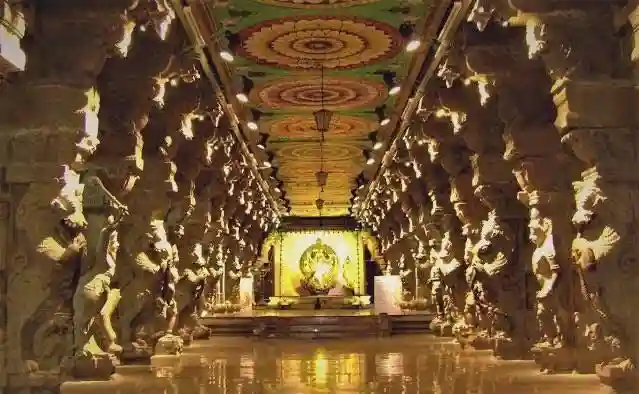
The first thing most people notice is the architecture. Long granite corridors stretch across the complex, supported by 365 carved pillars. Murals, oil lamps, and the smell of sandalwood create a setting rooted in temple rituals rather than display.
Darshan does not happen in a single glance. The 18-foot idol of Lord Vishnu is seen through three doors. Each doorway shows a different section: the head, the central portion, and the feet. Visitors move step by step to complete the full view.
The idol itself uses 12,008 Shaligrama stones from Nepal’s Gandaki River. These are joined with a traditional binding material and placed on the serpent Adishesha.
The temple vaults remain restricted. Some chambers revealed gold ornaments and artefacts, while one vault is still sealed under long-standing temple customs.
Key Highlights inside Padmanabhaswamy temple:
Darshan through three separate doors
365-pillared stone corridors with carvings
Restricted vault system with one sealed chamber
How To Reach Padmanabhaswamy Temple
Reaching Sree Padmanabhaswamy Temple, Kerala, is straightforward once you account for the final stretch near the West Fort gates. The city connects well by air, rail, and road, but the last few hundred meters slow things down due to pedestrian-only zones and crowd control.
By Air
Trivandrum International Airport sits about 6 km from the temple. A taxi or auto takes 15 to 25 minutes in light traffic. Early morning arrivals line up well with the 03:30 AM darshan window, while daytime traffic can double travel time.
By Train
Thiruvananthapuram Central Railway Station is less than 2 km away. Many visitors walk from the station in 15 to 20 minutes. Autos are easy to find outside the station and take about 5 minutes, which helps if you are aiming for the early morning entry.
By Road
Thiruvananthapuram connects to cities like Kochi, Madurai, and Bengaluru through national highways and KSRTC bus routes. Buses and private vehicles reach the city without much trouble. The delay starts near the East Fort area, where traffic builds up during temple hours and festival days.
Last-Mile Travel Challenges
The final approach to the temple is on foot. Police barricades restrict vehicles close to the entrance. Streets narrow as you move toward the temple, and queues often spill into the surrounding lanes. Parking is limited around West Fort. If you arrive after sunrise, expect to park farther away and walk. Reaching early reduces both walking distance and waiting time.
Travel Tips For Visiting Padmanabhaswamy Temple
A visit to Sree Padmanabhaswamy Temple depends on timing and preparation. The temple follows fixed routines, and small delays outside can turn into long waits.
Reach earlier than you think you need to. Even if your darshan is at opening time, get there 45–60 minutes in advance. The queue outside and the security check both take time.
Wear proper traditional clothes from the start. Don’t depend on renting a mundu or saree near the temple; sizes and availability become a problem once the crowd builds.
Carry as little as possible. Phones, bags, and electronics are not allowed inside Padmanabhaswamy Temple, Kerala, and depositing them can easily add another 20–30 minutes.
Expect a very short darshan. You move past three doors, and each view lasts only a few seconds. There’s no stopping, so take it as it comes.
Weekdays are easier to manage. Saturdays, Sundays, and festival days bring heavy crowds, and the waiting time stretches a lot.
Early morning is more comfortable than later hours. By mid-morning, the heat and humidity inside the corridors start to build up.
Footwear has to be left outside. Pick a spot you’ll remember, or use a designated stand if available.
The last stretch is on foot. Vehicles don’t go right up to the entrance, so be ready to walk through narrow lanes that get crowded.
Plan what you’ll do after darshan. Once you step out, the area around the temple fills up quickly, and it’s easier if you already know where you’re heading next.
Conclusion
A visit to Sree Padmanabhaswamy Temple runs on rules that don’t bend for convenience. Entry timings, dress code, and movement inside Padmanabhaswamy temple follow a fixed system, and missing any one detail can slow you down.
This isn’t the kind of place where you walk in and explore freely. Access is controlled, darshan is brief, and most of the experience happens in a steady flow rather than at your own pace. If you go in knowing the timings, what to wear, and what to expect during darshan, the visit feels smooth. If you don’t, small mistakes stack up into long waits.