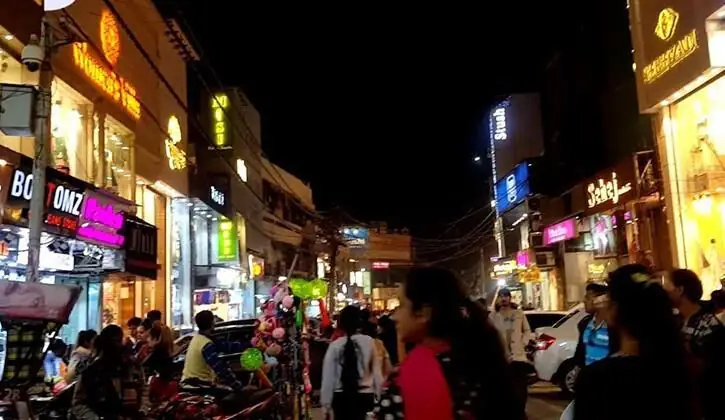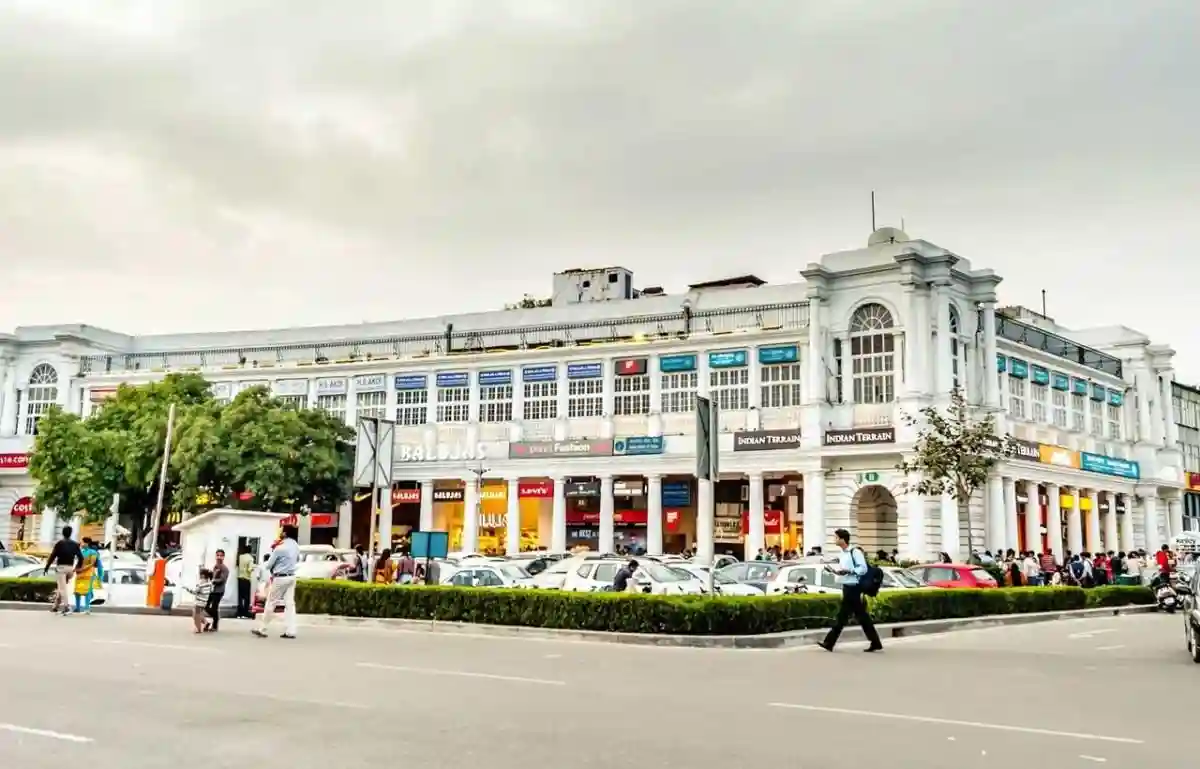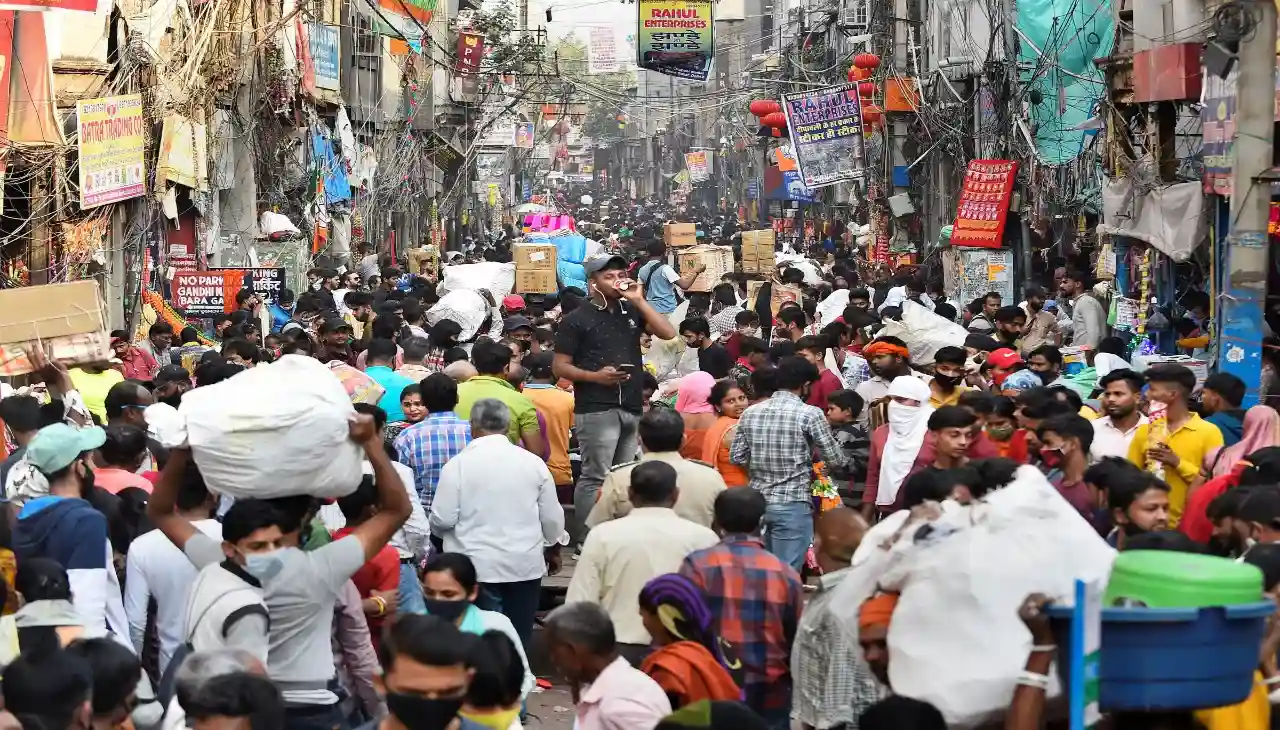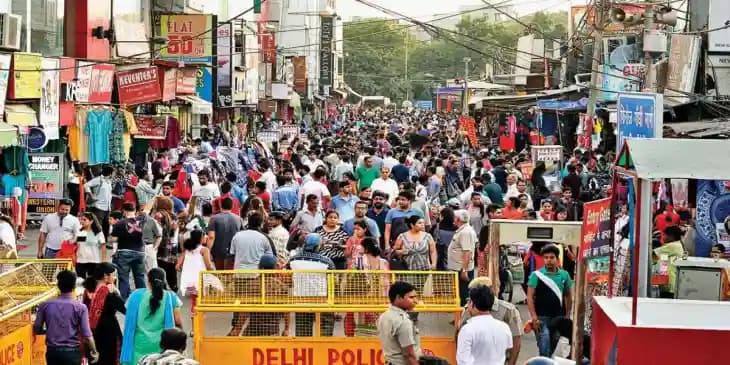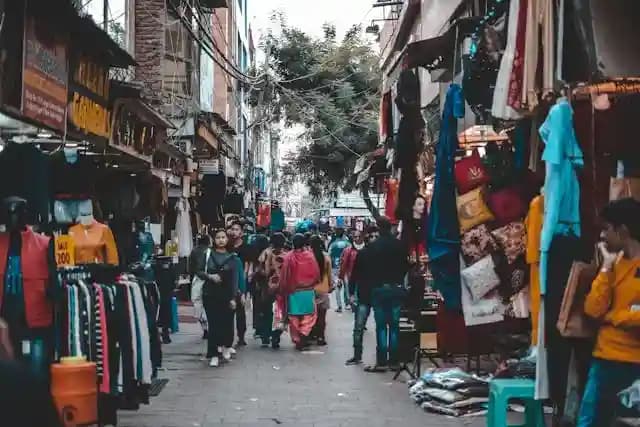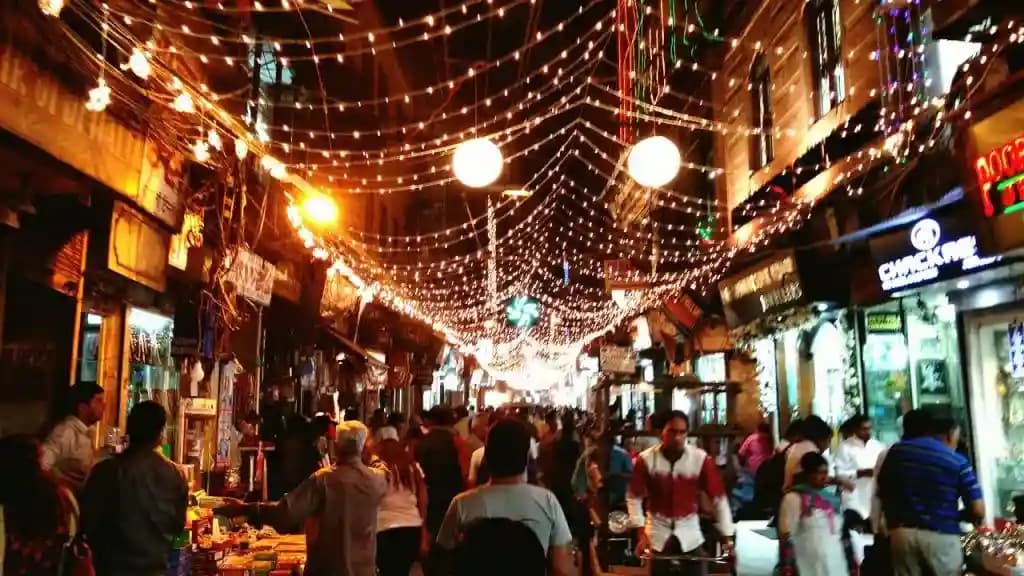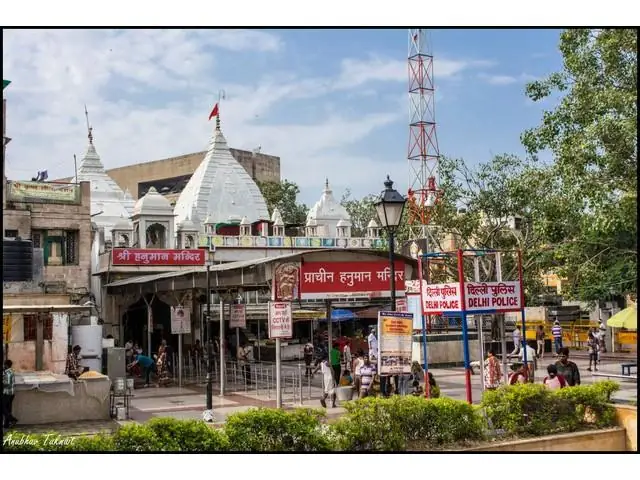
Step off Baba Kharak Singh Marg, and you’re still in central Delhi, traffic edging forward, shoppers moving between blocks of Connaught Place, café menus posted outside glass-fronted stores. Walk a few steps further, and you enter Pracheen Hanuman Mandir. Bells ring, oil lamps flicker, and people stand in line with folded hands.
Local belief links the temple’s origin to the time of the Mahabharata. Whether taken as history or tradition, that claim shapes how many visitors see the place. Families return here across generations; office workers stop by on their commute; some come only on Tuesdays and Saturdays, days associated with Hanuman worship.
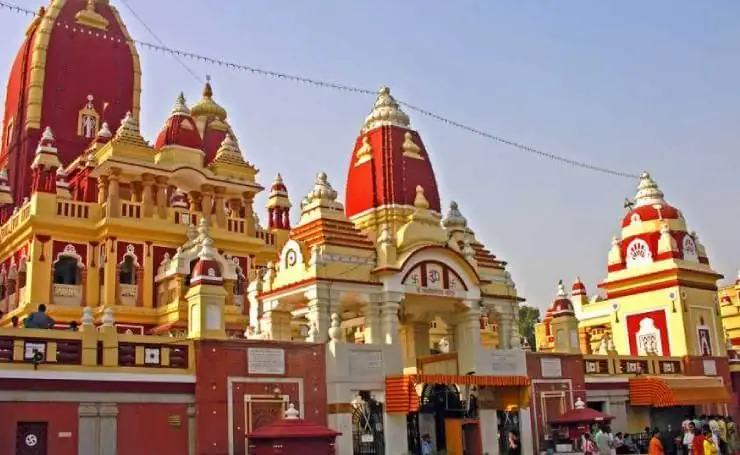
Look up at the temple’s spire, and you’ll notice something unusual: an Islamic crescent mounted at the top. That detail is often connected to the Mughal period, when Emperor Akbar is said to have granted protection to the shrine. The temple is also listed in the Guinness World Records for the continuous chanting of “Sri Ram, Jai Ram, Jai Jai Ram,” a chant that has reportedly been recited here without interruption for decades.
In the rest of this guide, you’ll find the Pracheen Shree Hanuman Mandir’s visiting hours, what sets it apart from other Hanuman temples in Delhi, how to reach it by metro, and a few practical details to keep in mind before you go.
A Brief History of Pracheen Shree Hanuman Mandir
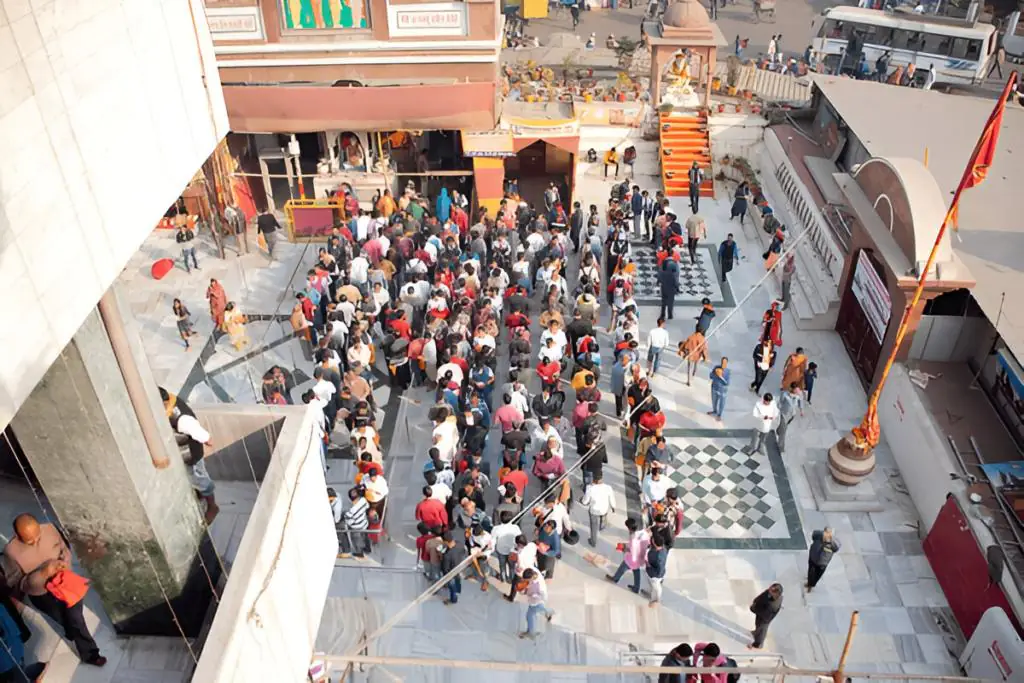
Pracheen Shree Hanuman Mandir is linked to the Mahabharata, with local tradition naming it one of five temples established by the Pandavas in Indraprastha. The others include Kalkaji Temple, Yogmaya Temple, Bhairav Temple, and Nili Chatri Mahadev Temple.
The current structure dates to the 16th century, when Maharaja Man Singh I built the shrine during Akbar’s reign. In 1724, Maharaja Jai Singh II rebuilt it, adding marble interiors, silver-plated doors, and Sundar Kand verses carved along the walls.
The Tulsidas Connection and the Mughal Crescent
Tradition links the temple to Tulsidas, who is believed to have visited during his time in Delhi. One account describes him being summoned by a Mughal ruler and demonstrating devotion through Hanuman, after which the emperor gifted a crescent finial now fixed on the temple spire. The crescent sets this Pracheen Shree Hanuman Mandir apart, as most Hindu shrines use a kalash or Om symbol. The site sits near Gurudwara Bangla Sahib, a mosque on Baba Kharak Singh Marg, and nearby churches.
Pracheen Hanuman Mandir Timings
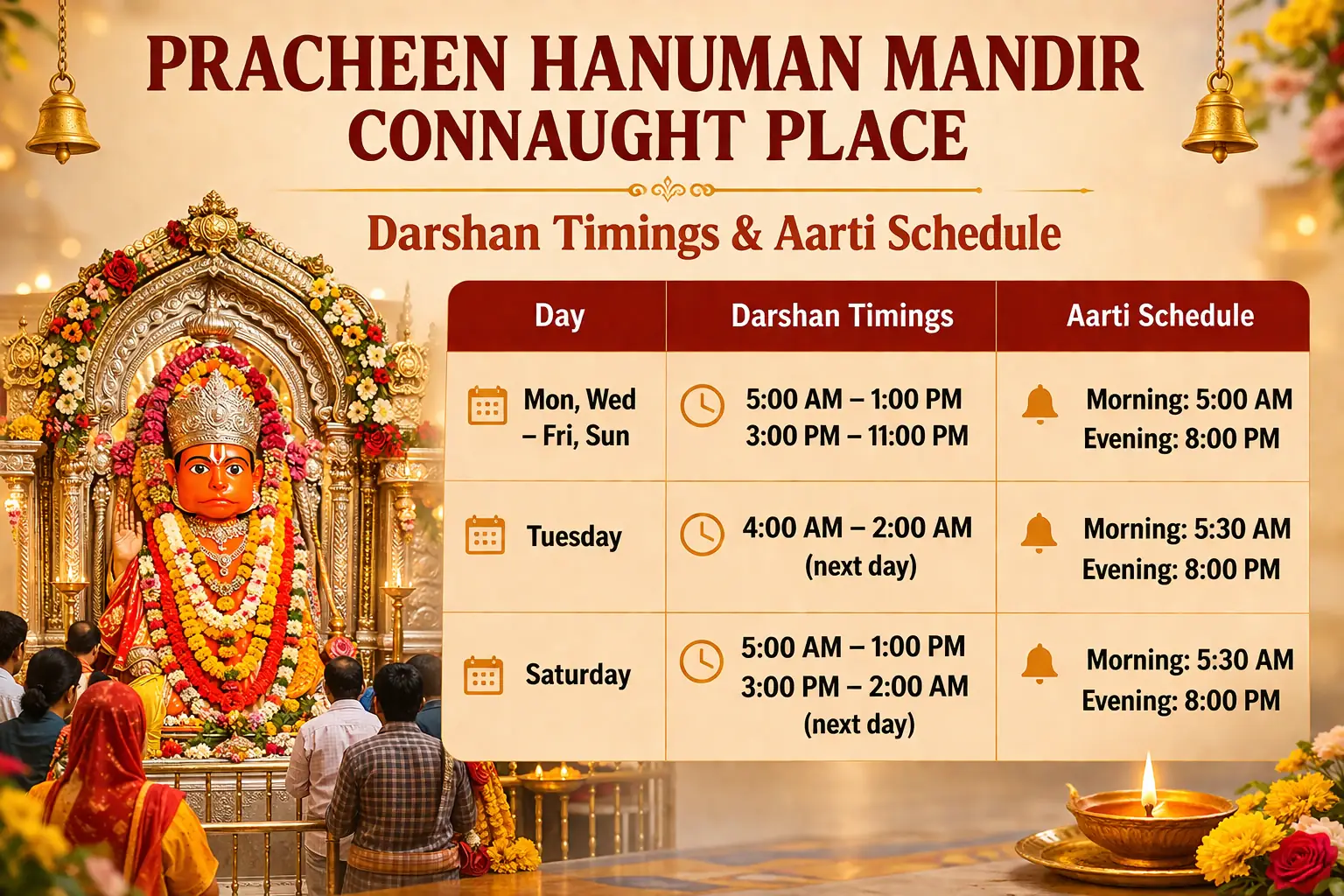 At Pracheen Hanuman Mandir, Connaught Place, the time you walk in decides what you’ll deal with inside. Come at the wrong hour, and you’re either stuck in a slow-moving line or standing in a courtyard that feels oddly empty.
Temple opens from 5:00 AM to 1:00 PM, then again from 3:00 PM to 11:00 PM
Doors shut between 1:00 PM and 3:00 PM; no entry into the sanctum
Entry is free; no strict dress code, but people keep it simple and covered
Early mornings are the easiest time to move through without waiting
Being close to Connaught Place, the crowd builds up sharply after office hours.
Daily Aarti And What Changes On Tuesdays And Saturdays
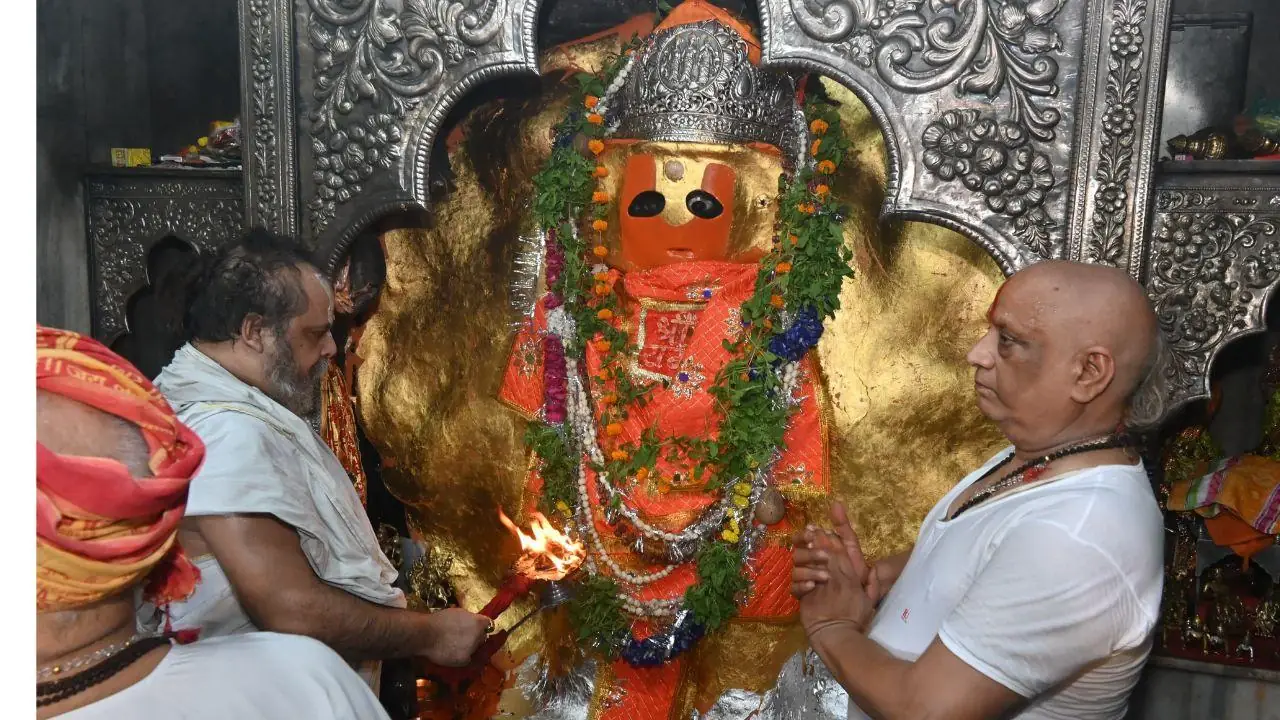
The rhythm of the Pracheen Shree Hanuman Mandir really shows during aarti. That’s when the space fills up and the pace changes.
5:30 AM aarti: steady, familiar faces, little noise
7:00 PM aarti: packed; families, office-goers, first-time visitors
9:45 PM (Shayan): smaller crowd, slower pace
Tuesday & Saturday: expect long queues stretching outside
On these two days, the temple opens around 4:00 AM and stays active late into the night. If you want a quick darshan, come before 7:00 AM. Midday on these days usually means waiting far longer than expected.
Inside The Pracheen Hanuman Mandir
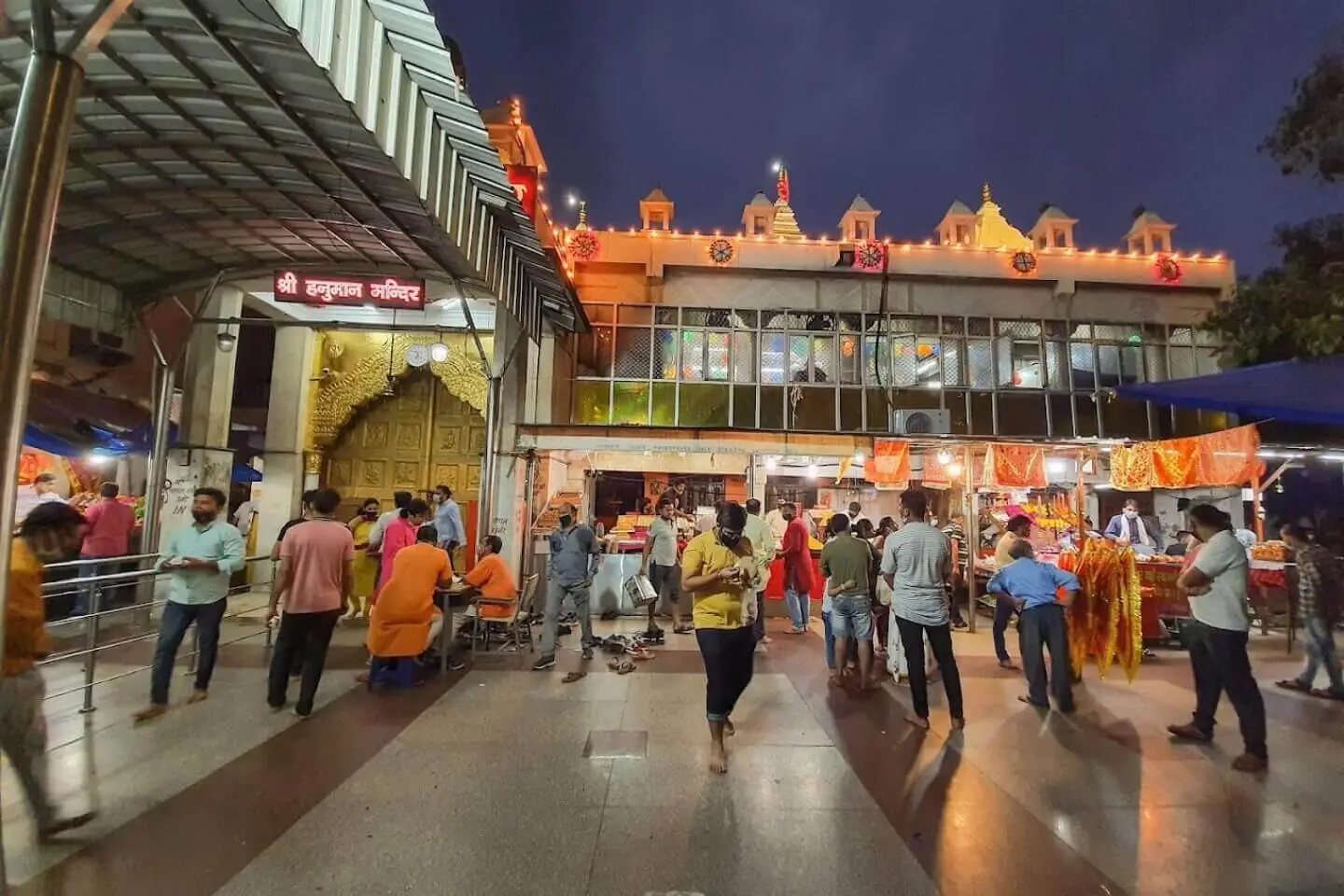
Most visitors at Pracheen Hanuman Mandir move straight to the main idol and leave. If you slow down, the space opens up into smaller shrines that don’t get the same attention. There are separate enclosures for Shiva and Parvati, Durga, Lakshmi Narayan, and a Santoshi Mata shrine that fills up on Fridays. These corners stay quieter, even when the main queue stretches outside.
Rituals shape how regulars plan their visits. The Chola Shringar is one of them. Instead of a quick darshan, it involves preparing and dressing the idol in a way that takes time and intention. On festival days like Hanuman Jayanti, the scale shifts completely, with crowds spilling onto the road and ceremonies running for hours.
Chola Shringar: Sindoor mixed with ghee or jasmine oil is applied to the idol, followed by an orange cloth, silver foil, and perfume
When it happens: Usually Monday, Wednesday, and Friday here; many devotees arrive before sunrise
What most people miss: Smaller shrines inside the complex, especially the Santoshi Mata space on Fridays
How To Reach Pracheen Hanuman Mandir
The temple sits on Baba Kharak Singh Marg, right next to Connaught Place. Getting here is simple. Parking, on the other hand, usually isn’t.
Nearest metro station to Pracheen Hanuman Mandir
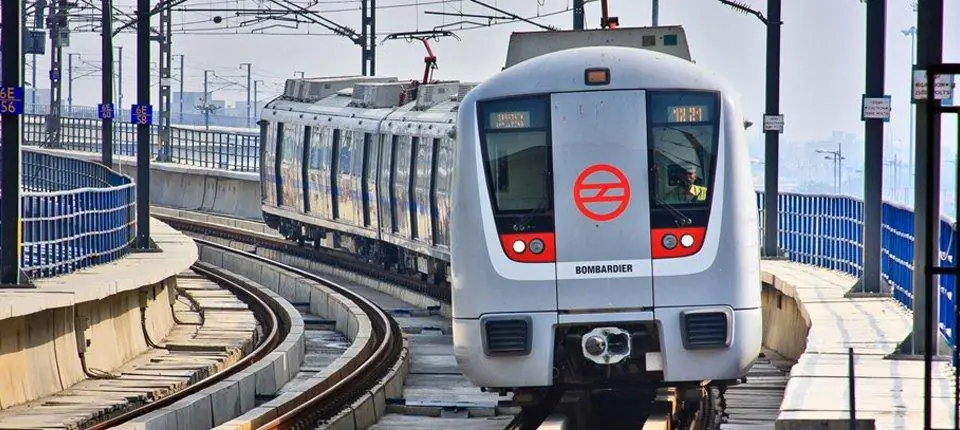
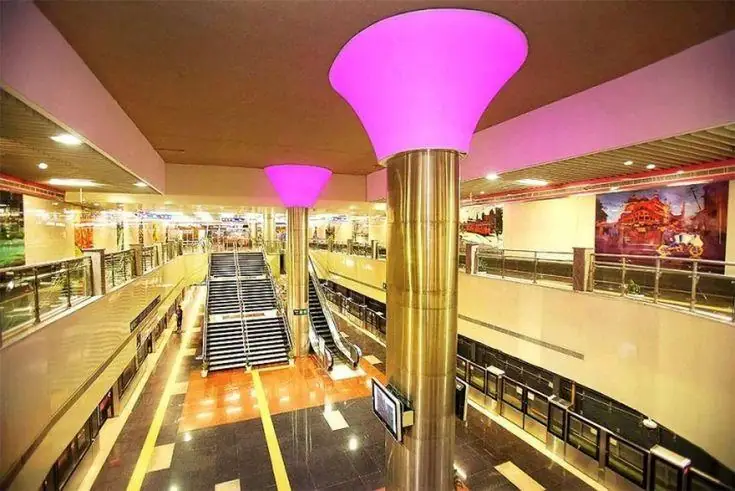
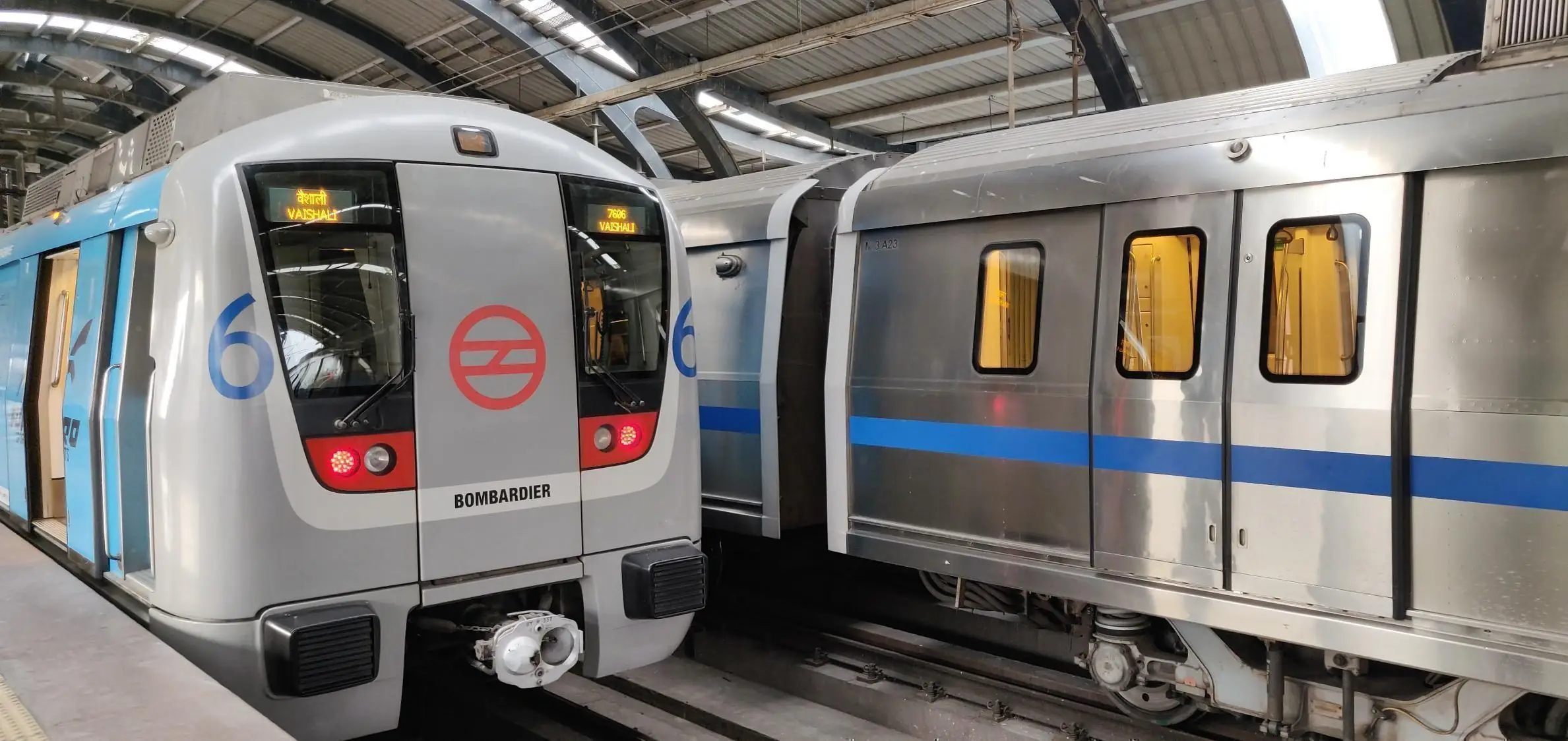
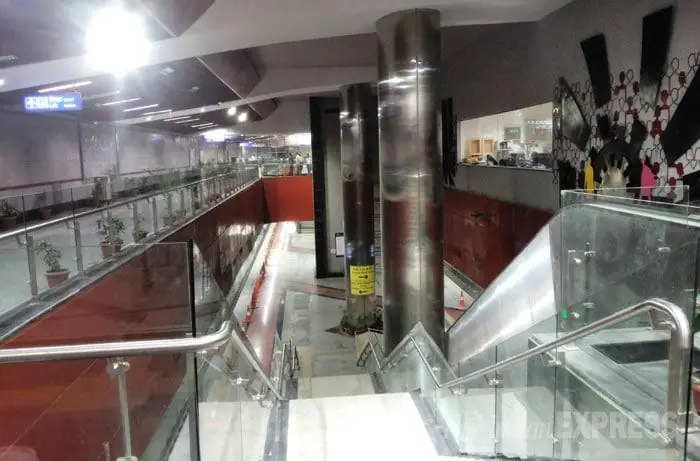
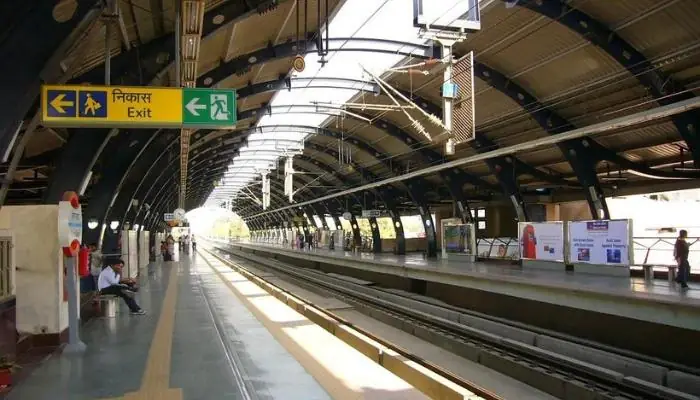
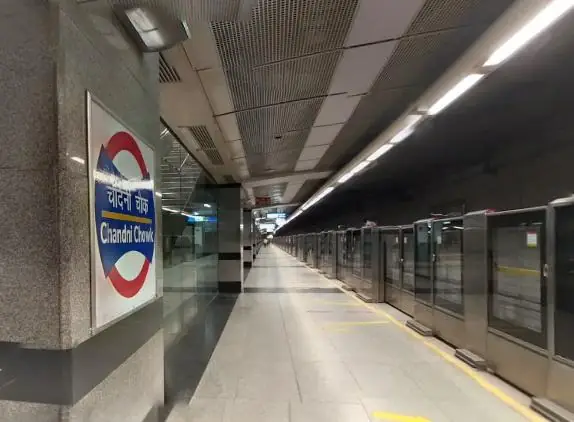
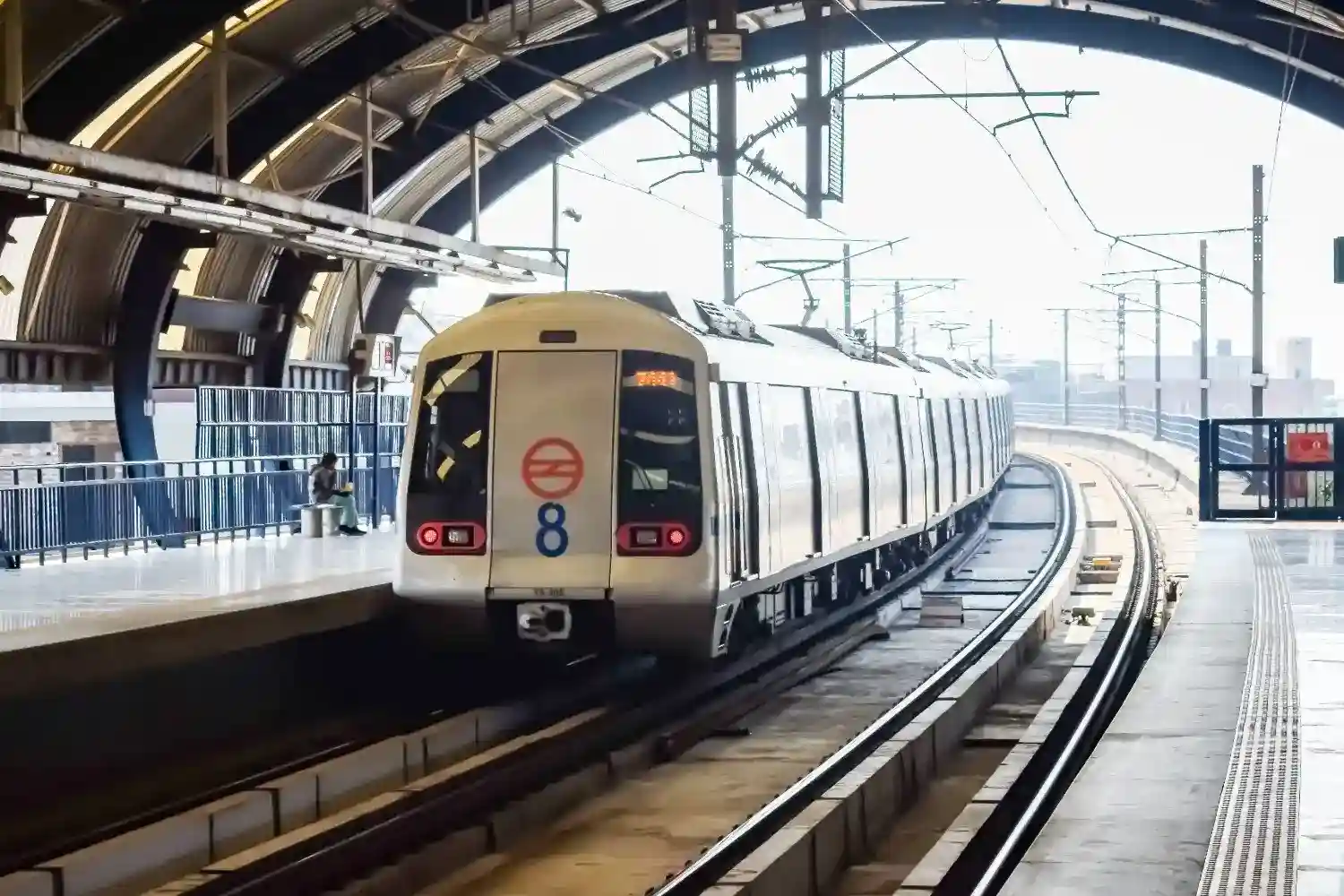
The closest stop is Rajiv Chowk Metro Station on the Yellow and Blue Lines. From there, it’s a 5 to 7 minute walk toward Baba Kharak Singh Marg. You’ll pass Gurudwara Bangla Sahib on the way, so it’s easy to stay on track.
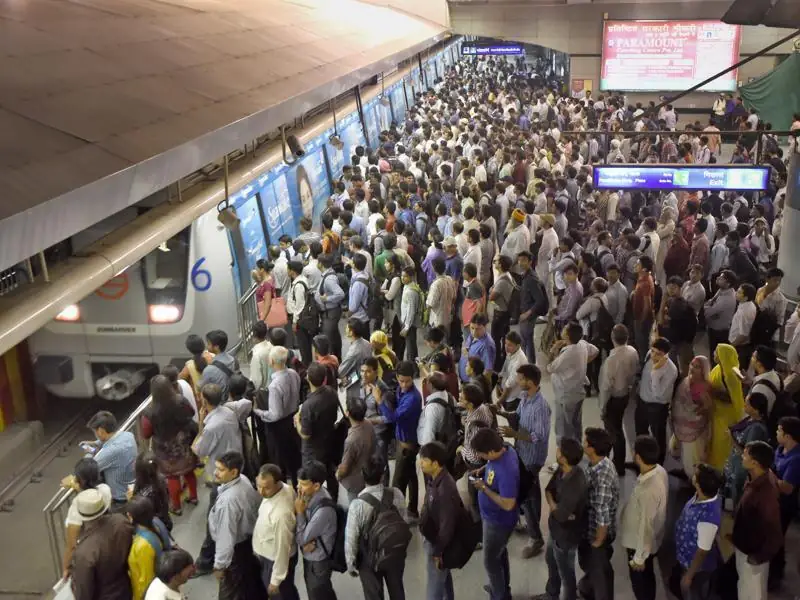
If you’re coming from the airport side, Shivaji Stadium station on the Airport Express Line drops you even closer, almost right beside the Pracheen Hanuman Mandir, Connaught Place. Rajiv Chowk gets crowded during office hours, so expect a slow exit in the evening.
Bus, Auto, And Parking
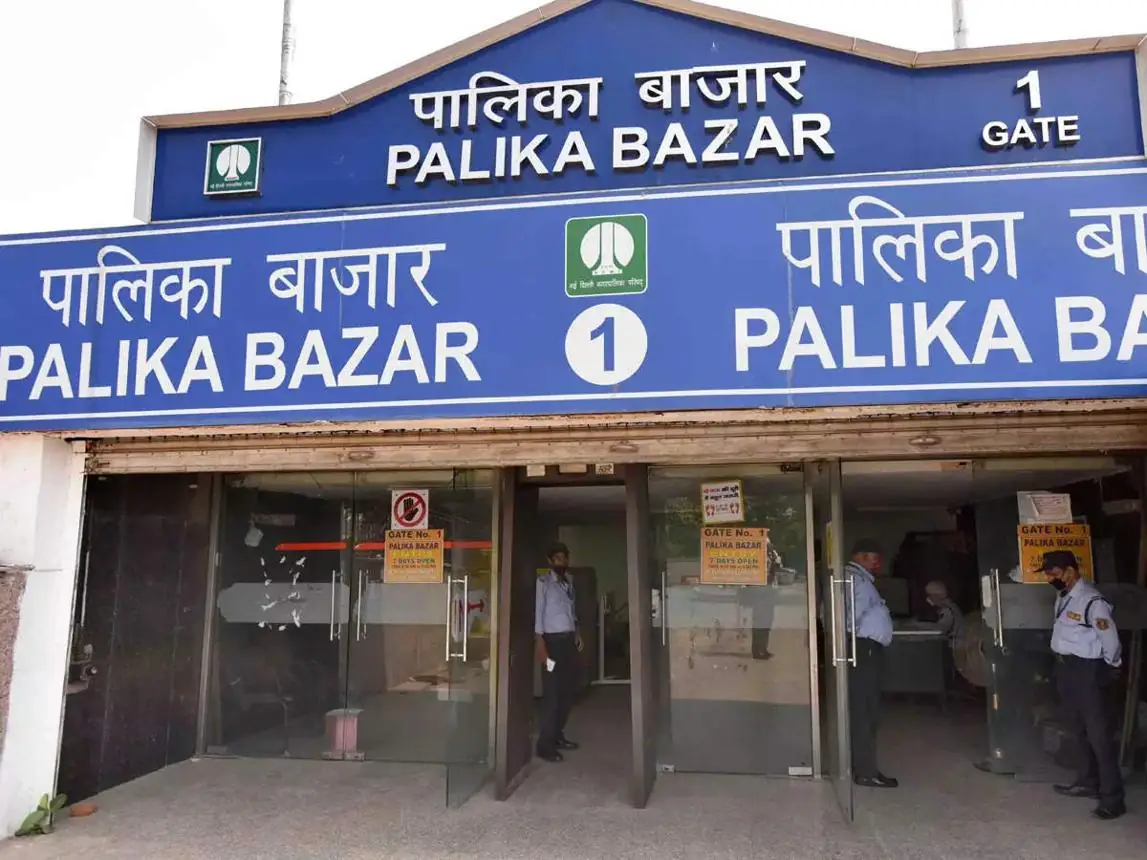
DTC buses stop near Palika Kendra and Shivaji Stadium, both a short walk away. Autos and cabs are easy to find around CP; just settle the fare before starting.
Driving is possible, but parking fills up quickly. The NDMC lot nearby works if you arrive early. On busy days, it’s easier to park around the outer circle and walk.
Travel Tips Before You Visit
A visit to Pracheen Hanuman Mandir is straightforward if you time it right. Most of the friction people face comes from arriving without knowing how the day is structured.
Go early on weekdays: Before 8:00 AM (Mon, Wed, Thu), the line moves quickly, and the space feels less packed
Avoid peak windows: Tuesday and Saturday afternoons (11:00 AM to 7:00 PM) mean long waits; the Pracheen Hanuman Mandir, Connaught Place, also shuts from 1:00 PM to 3:00 PM daily
Plan for specific rituals: Chola takes place on Monday, Wednesday, and Friday; major festivals like Diwali and Hanuman Jayanti draw very large crowds
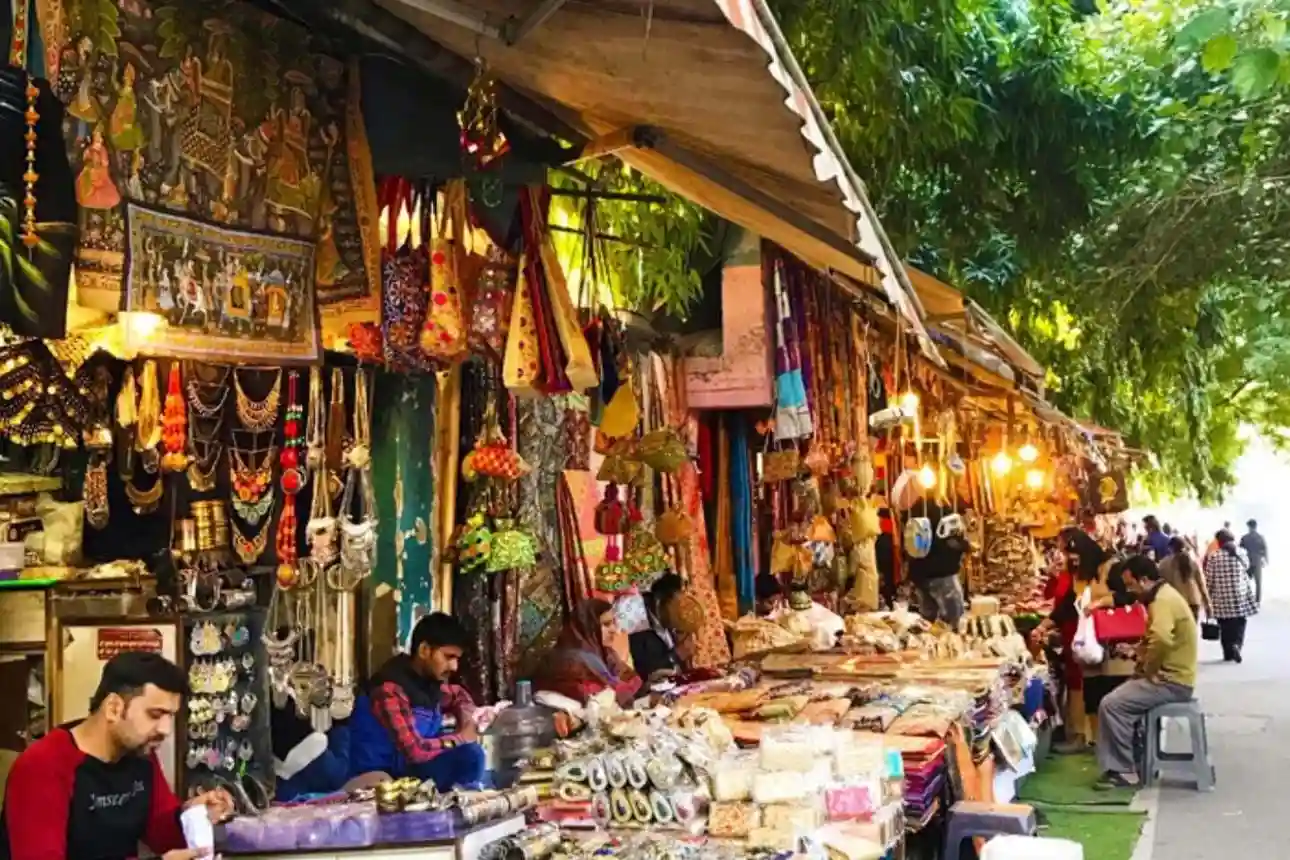
Inside the complex, Mehndi artists and small bangle stalls are part of the space; keep an eye on your belongings and avoid taking photos inside the sanctum
If you’re already around Connaught Place, it’s an easy stop, but a little timing makes a big difference.
Conclusion
In central Delhi, where traffic, shops, and offices crowd every block, Pracheen Hanuman Mandir continues its daily rhythm without drawing attention to itself. The continuous chant since 1964, the Bala Hanuman idol seen from one eye, and the crescent fixed high on the spire give the temple a distinct identity. It stands close to Gurudwara Bangla Sahib and a nearby mosque, sharing space shaped by different traditions. Visit early in the morning, before the streets fill up, and the experience feels slower, quieter, and easier to take in.