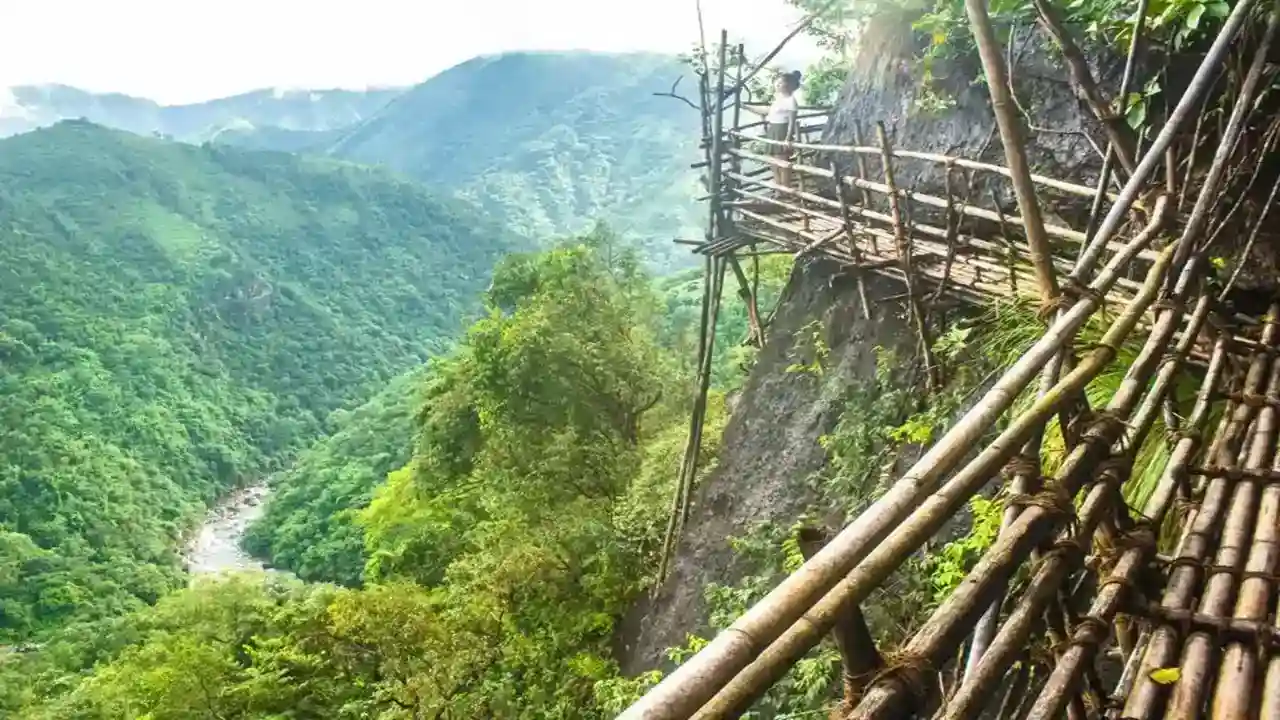
Ever wondered what it feels like to walk on a bamboo bridge hanging over a river? The mist rolls through the valley as you take your first step onto the swaying bamboo, and suddenly you realise this isn't just another trek. The Bamboo trek in Meghalaya pulls adventure seekers into a world of cliffside walks, handmade bridges, and old Khasi stories that locals still tell. This isn't your typical mountain hike where you follow a marked trail. Here, you're crossing rivers on cane ropes, climbing vertical ladders on cliff faces, and pausing in valleys that feel completely untouched.
This guide covers everything from location and transport to timing and packing for the Mawryngkhang bamboo trek. Some travellers plan every detail themselves, while others prefer a Meghalaya trip package that sorts out the logistics so they can just show up and trek. Here's everything you need to know.
Bamboo Trek Overview
This dreamy trek begins at Wahkhen Village in the East Khasi Hills and feels different from the moment you step onto the first bridge. The trek is well-known for its bamboo pathways suspended above the Wahrew River by cane ropes, all handmade by the local Khasi community. The Bamboo Trek history traces back to when villagers built these bridges out of necessity, turning simple crossings into what's now a thrilling adventure route. The beautiful trek takes you to the cliff-top trail that leads to the Mawmoit viewpoint and the famous U Mawryngkhang rock, which locals still consider sacred. A trekker typically travels a 7 kilometre loop that includes river crossings, forest trails, and sky walks. When it comes to trekking in Meghalaya, this trail stands out because everything here is organic and alive, swaying slightly underfoot, reminding you that you're walking on something deeply connected to the land and its people.
Access Point: From Shillong via taxi or local transport.
Bamboo Trek Location: East Khasi Hills in Meghalaya, India
Bamboo trek Difficulty:Moderate.
Start and End Point: Wahkhen Village
Trail Length: The round-trip distance is approximately 3.54 kilometres.
Terrain: Cliff-edge bamboo bridges, forest paths, and small streams.
Duration: 4-5 hours total.
Best Time for Bamboo Trek Best Time
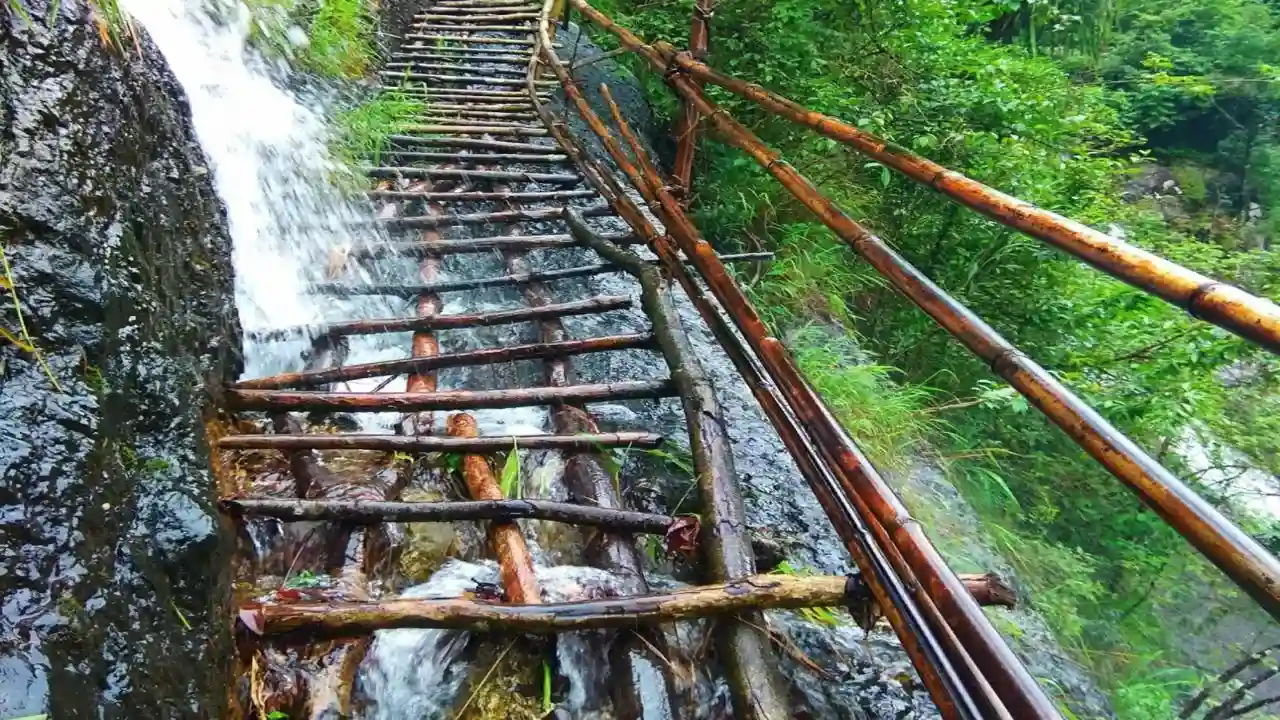
The Bamboo trek in Meghalaya can customise the entire experience for you. The best time for this particular trek is from October to April, when the weather is dry, the bamboo bridges are stable, and the valley provides clear views, making it ideal for first-timers and photographers alike. This period also happens to be the best time to visit Meghalaya in general, as the monsoons have passed and the entire state opens up for exploration. The winter months start cooler, and the trek is less slippery, especially near the Mawkhlieng Cliff. Temperatures are expected to rise in March and April, as vegetation grows, but the risks associated with rainy weather are avoided.
How to Reach the Bamboo Trek
Knowing how to get to this trek efficiently saves you time and lets you spend more energy on the actual adventure. The Bamboo trek location in Wahkhen Village is accessible from Shillong by car, self-driven vehicle, or taxi. The road is mostly paved but gets narrower as you approach the village. If you're coming from Guwahati, you'll need to reach Shillong first, then head towards Pynursla and Pomlum, where signs will guide you to Wahkhen. Public transport is pretty limited on this route, so booking a taxi in advance makes things much smoother. Many travellers combine this trek with other things to do in Meghalaya like visiting nearby waterfalls or exploring East Khasi Hills attractions.
From Shillong City Centre:
Distance: About 45 kilometres
Transport Options: Private taxi, self-drive car, or shared jeep to Pomlum
Time: Around 1.5 to 2 hours
From Guwahati Airport:
Distance: Approximately 140 kilometres (includes the Shillong route)
Transport Options: Bus or taxi to Shillong, then private taxi to Wahkhen
Time: About 4 to 5 hours total
From Cherrapunji Town:
Distance: About 60 kilometres via Pynursla
Transport Options: Hired car or local taxi service
Time: Around 2 to 2.5 hours
3-Day Tentative Bamboo Trek Itinerary
A well-planned trekking itinerary helps you pace yourself properly, balance rest with progress, and experience Meghalaya beyond just the trek. Here's a detailed 3-day itinerary to make the most of your Bamboo trek in Meghalaya adventure.
Day 1: Arrival and Preparation
Arrive at Guwahati airport or railway station in the morning and transfer to Shillong, which takes about 3 to 4 hours. Check into your accommodation, explore Shillong's local markets in the evening, grab any supplies needed, and rest early. Overnight stay in Shillong.
Day 2: The Bamboo Trek
Start early from Shillong and reach Wahkhen village by mid-morning (1.5 to 2 hours). Register at the entry counter and begin the bamboo bridge trek Meghalaya. Complete the trek loop, including river crossings, cliffside skywalk, forest trails, and Mawryngkhang rock summit (4 to 5 hours total). Return to Shillong by evening. Overnight stay in Shillong.
Day 3: Explore and Depart
Visit nearby East Khasi Hills attractions, waterfalls, or Shillong viewpoints in the morning. Head back to Guwahati in the afternoon for your onward journey or continue to explore other places to visit in Meghalaya.
What to Expect During the Trek
The trek itself takes you through several memorable sections that make this experience unique:
Bamboo Bridge Crossings: Hand-built bridges made of cane ropes and natural materials sway gently as you cross. Guides explain how these structures are maintained and share insights into community craftsmanship
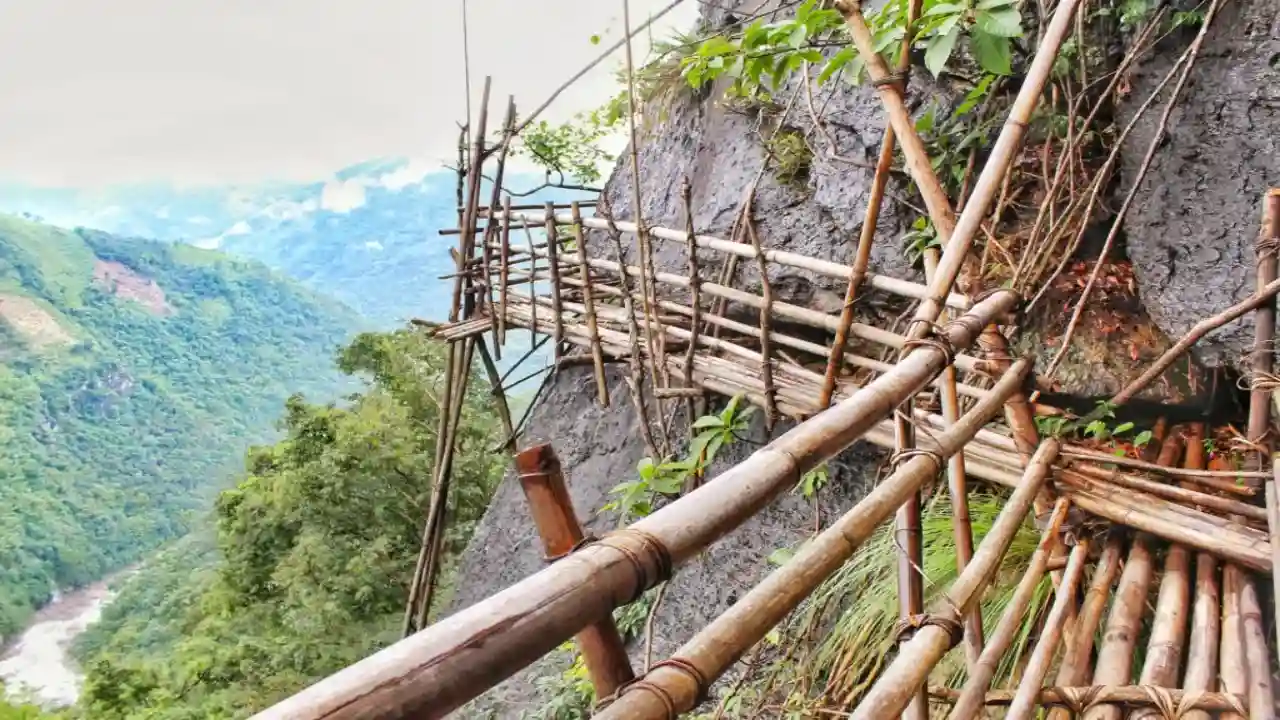
Cliffside Skywalk Challenge: The most thrilling section where you climb a narrow, nearly vertical bamboo skywalk. It tests your balance and rewards you with stunning valley views of forested ridges and gorges
Forest and Wildlife Corridor: Shaded bamboo groves offer natural rest stops. The birdsong, filtered sunlight, and cool air make perfect breaks for hydration and photos. Some trekkers who enjoy camping in Meghalaya choose to extend their stay and camp near these forest trails to experience the area after sunset
Cultural Storytelling Stops: Locals share Khasi legends about rock formations and U Mawryngkhang, the King of Stones, adding cultural depth to the physical journey
Summit Reflection Point: The top of Mawryngkhang rock offers panoramic mountain and river valley views. Prayer flags and bamboo railings mark this sacred space where you can pause before heading back down.
What to Pack for The Bamboo Trek
Proper packing for any trek ensures that you stay comfortable, safe, and make steady progress on the bridges, ladders, or forest trails. Here's what you should carry to make your Bamboo trek in Meghalaya experience smooth and hassle-free, along with some practical Bamboo Trek tips.
Footwear and Clothing:
Trekking shoes with a good grip are required due to the slippery bamboo and stone surfaces
A waterproof rain jacket or poncho is a must-pack item, given the unpredictable weather in the East Khasi Hills
Comfortable, breathable clothing that dries quickly
Hydration and Snacks:
Refillable water bottle to stay hydrated throughout the trek
Energy-rich snacks like nuts, granola bars, or dry fruits
Basic electrolytes to maintain energy levels
Essential Gear:
Small backpack to carry all your items comfortably
Sunscreen to protect against UV rays
Insect repellents for forest trails
First-aid kit with basic medicines and bandages
Camera with good battery life for photographing the landscape
Enough cash for entry fees and refreshments since card facilities may not be available
Conclusion
The Bamboo Trek in Meghalaya offers more than just a physical challenge. It's a journey that connects you to the land, the people who've lived here for generations, and the stories that make this place special. Walking across those handmade bamboo bridges and climbing cliff-edge skywalks isn't something you do every day, and that's exactly what makes it worth the effort. Plan for the right season, pack smart, and give yourself enough time to actually enjoy the experience instead of rushing through it. Whether you're here for the adrenaline, the views, or the cultural depth, this trek delivers on all fronts.