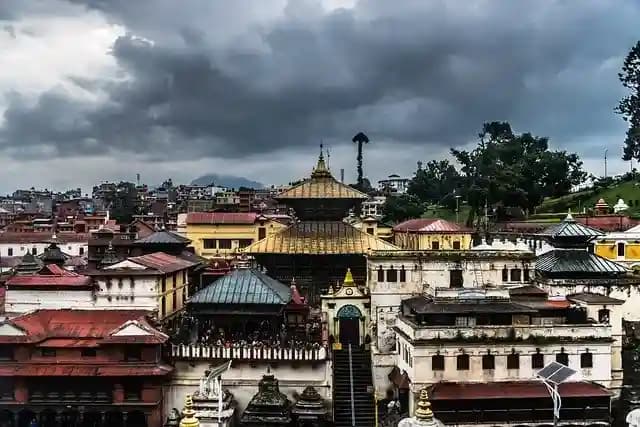
Have you ever wanted to go to a place, where the temple bells resemble the heartbeat of that place and the air smells of devotion? That special place is the Pashupatinath Temple of Nepal. It is located on the banks of the holy river, Bagmati, and it is not just a temple but a spiritual experience you should not miss. When you go through its golden gates, you do not merely see a structure but you witness some ancient rhythm and serenity that transports you into some other world. This temple has something to offer everyone whether you visit because you desire blessings, to observe ceremonies, or simply to seek tranquilly.
Let’s go on a little tour of the Pashupatinath Temple, what you can see therein, which is the best time to visit it, the distance of the temple to Delhi and Kathmandu, and such other tour arrangements as you shall have before you visit with our Nepal tour package.
About Pashupatinath Temple
Pashupatinath Temple is one of the oldest and significant temples that are devoted to Lord Shiva. It is located in Kathmandu, Nepal, and it is a UNESCO World Heritage site. Lord Shiva is referred to by people as Pashupati, i.e. Lord of all the living beings. The pagoda roof of the temple is covered with gold and doors are decorated with silver. On its one side flows the Bagmati River which gives it a soothing touch.
There are hundreds of small shrines within the complex of the temple, and each of them narrates a story about the ancient times. You will hear conch shells, “Om Namah Shivaya” chanting, smell incense, making faith feel really true.
Pashupatinath Temple History
The history of the temple dates back to over a millennium. King Supuspa Deva of the Licchavi Dynasty constructed the first temple during the 5th century. It has been restored and reconstructed throughout the centuries, and the present-day structure was built during the 17th century. It is a legend that Lord Shiva had wandered Kathmandu Valley in the disguise of a deer. When Gods attempted to restore him to Kailash, one of his horns detached, indicating the place which was developed into this temple.
So, when you come here, you’ll be knowing that you are walking on land that has been touched with legend and blessed with hundreds of years of prayer.
Significance of Pashupatinath Temple
The temple is not only a place where one prays to God but a spot that links life and eternity. According to Hinduism, a visit has the power to liberate a soul escaping the circle of birth and death. There are a lot of individuals who visit here just to pray, meditate or do final rites of the deceased beside the Bagmati River in the hope of gaining spiritual peace.
This temple is also particularly significant in Maha Shivratri when thousands of pilgrims worldwide gather here. The entire complex illuminates oil lamps, sings hymns and chants and gives the impression of a divine event. The temple has other aspects other than the spiritual one, and that is the evidence of Nepalese craftsmanship in the temple in terms of gold roof, silver doors, and elaborate carvings of wood that portray eternal tales of faith.
Information About Pashupatinath Temple
The following are some of the notable things, which will make your visit to go smoothly:
1. Inside Pashupatinath Temple
The main shrine has a special four-faced Shiva Lingam which indicates various faces of lord Shiva.
Only Hindus are allowed to enter the chief sanctum. Visitors that are not Hindus are welcome to stroll around the outer temple or observe it through the opposite side of the river.
Guhyeshwari Temple, Ram Mandir, and Vishwarup Temple are other temples found in the complex.
Wear something modest, and your phone should always be on silent to show respect.
2. Pashupatinath Temple Timings
The temple opens at 4:00 AM and closes at 9: 00 PM.
The principal darshan (sightseeing of the deity) is between 5:00 AM and 12:00 PM and between 5:00 PM and 7:00 pm.
An evening aarti along the Bagmati River at about 6:00 PM is a must-see, one that touches every soul.
3. Pashupatinath Temple Distance
From Kathmandu city centre: approximately 4- 5 km.
From Tribhuvan International Airport: 3- 4km (a 10 -15 minutes trip) out of Tribhuvan International Airport.
From Delhi to Pashupatinath temple Nepal: 1,200- 1,300km (2 hour flight between Delhi and Kathmandu).
Kathmandu to Pashupatinath Temple distance: 10-15min (by taxi), approximately 4km.
Best Time to Visit Pashupatinath Temple
October-December: In winters Nepal is bright and has no distractions, very pleasant in sightseeing and praying.
Jan to March: This is Maha Shivratri, a big festival time for Shiv devotees, so this is also the best time to pay a visit to the temple.
April to August: Nepal in summer is a little humid but the mountain views are stunning.
Tip: Go in the morning (4 am-7 am) or in the night (5 pm-7 pm), to have a better and more Godly experience.
How to Reach Pashupatinath Temple
Getting to the temple is easy.
1. From Delhi to Kathmandu
The fastest way is by plane. Several airlines fly direct flights between Kathmandu and Delhi which are approximately 2 hours.
In case you are fond of road trips, one can travel by bus or car across the India-Nepal border at Sonauli, although it may require 20-24 hours.
2. From Kathmandu Airport to Pashupatinath Temple
Tribhuvan International Airport is within 10-15 minutes of distance from the temple.
You can also get a taxi from there to reach the temple.
3. Within Kathmandu
Popular places such as Thamel and Durbar Square are about 4- 5 km away.
There are taxies and local buses, but guided car transfer is less time-consuming and exhausting.
Places to Visit Around Pashupatinath Temple
There are numerous beautiful places in Kathmandu which are worth visiting with the temple. The following are five places that must not be missed in the area are:
1. Boudhanath Stupa
The Boudhanath Stupa is one of the largest Buddhist stupas across the globe and it can be seen within a very short distance. The softness of monks chanting in the monasteries makes the atmosphere really calm.
Location: Boudha, Nepal in Kathmandu, Nepal.
Timings: From sunrise to sunset.
Things to do: Walking around the stupa, rotating the prayer wheels, going to the local monasteries, relaxing in cafes on the roof.
2. Saswatha stupa (the Monkey Temple)
The Swayambhunath Stupa is known for its inquisitive monkeys and beautiful landscape, situated on a hill overlooking Kathmandu. Climb the stone steps, see the sunrise and see the city unfolding beneath you.
Location: Swayambhu, Kathmandu, Nepal
Timings: Open all day
Things to do: Ringing the prayer bells, giving a safe feed to the monkeys, as well as, watching panoramic views of the city.
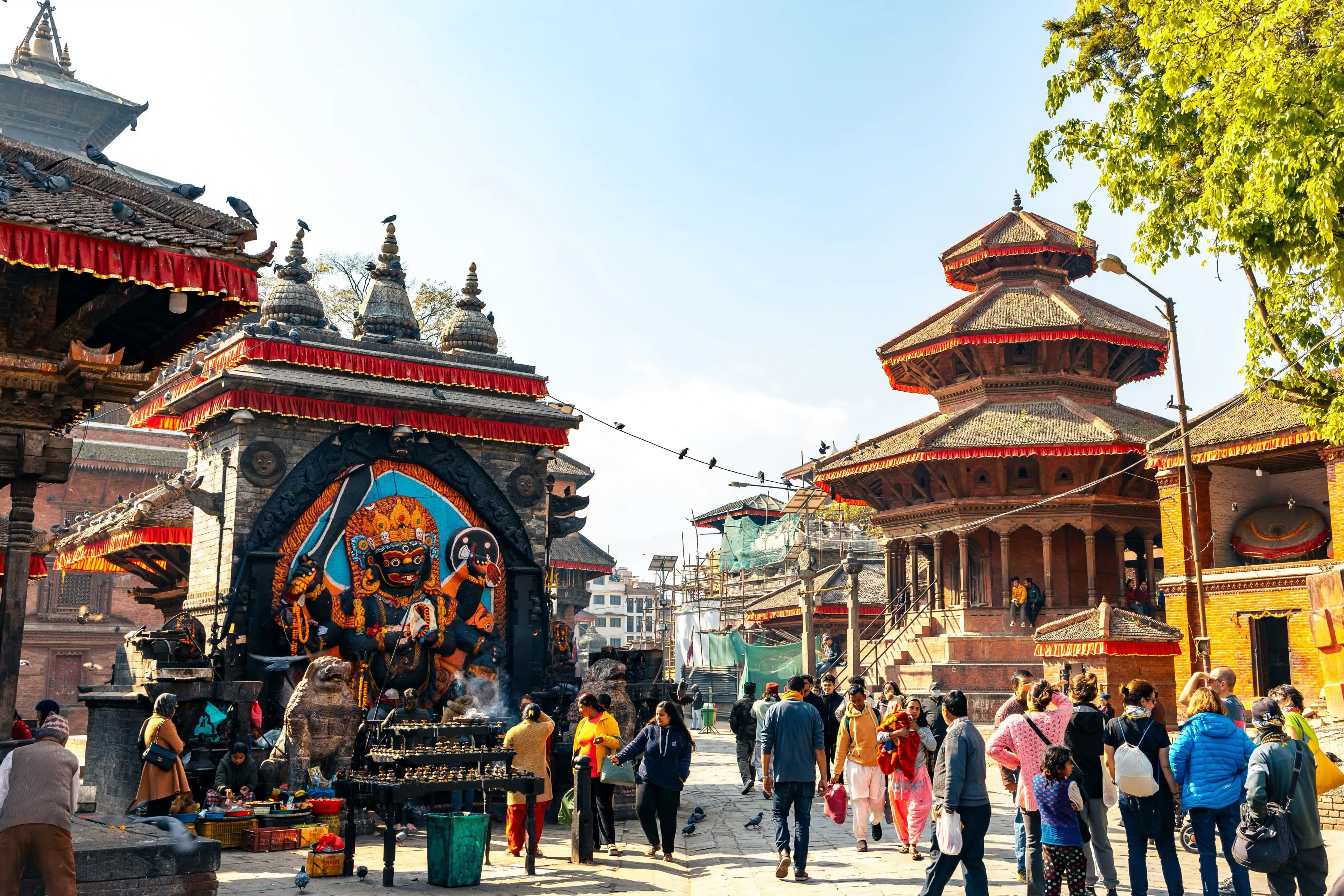
3. Kathmandu Durbar Square
Kathmandu Durbar Square is a heritage site, a living historical and architectural museum. It is home to Nepalese royalty and full of temples, courtyards and palaces. Its wooden carvings and busy local markets are some of the reasons why it is a good place to visit.
Location: Kathmandu, Nepal.
Timings: Morning to evening
Things to do: Sightseeing of Hanuman Dhoka Palace, observing the sculptures, shopping for local handicrafts and trying local snacks.
4. Garden of Dreams
Need a quiet moment? Garden of dreams is a peaceful spot in the middle of Kathmandu. Having flowers, fountains, and friendly benches, it is the right place to have a rest after a visit to a temple.
Location: Kaiser Mahal road, Kathmandu.
Timings: 9:00 AM- 6:00 PM
Things to do: Have a cup of coffee at the garden cafe, read a book by the fountain or simply enjoy the tranquilly.
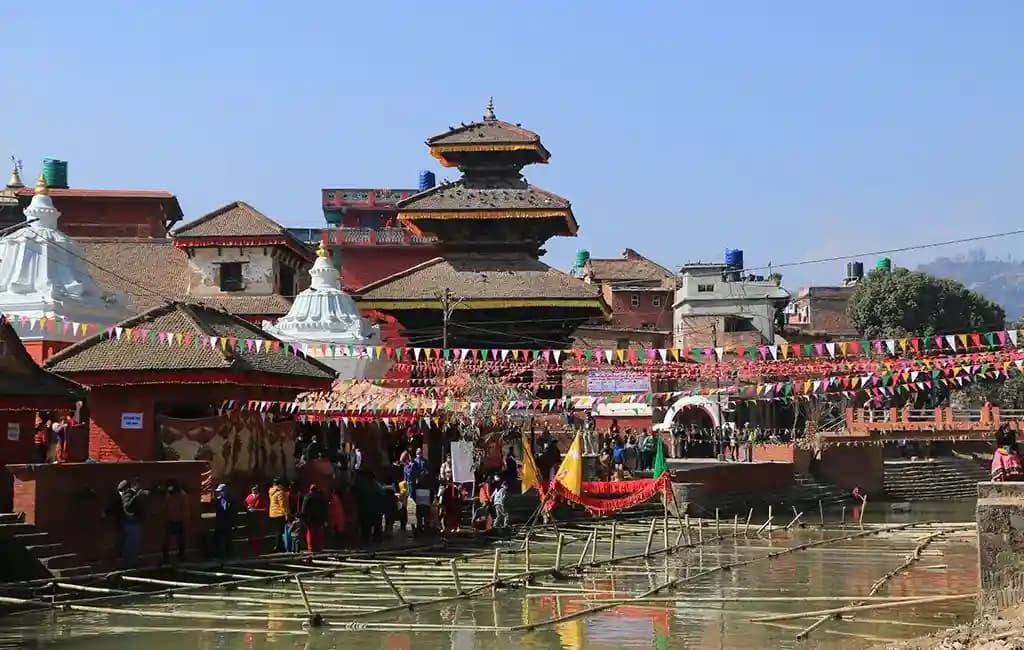
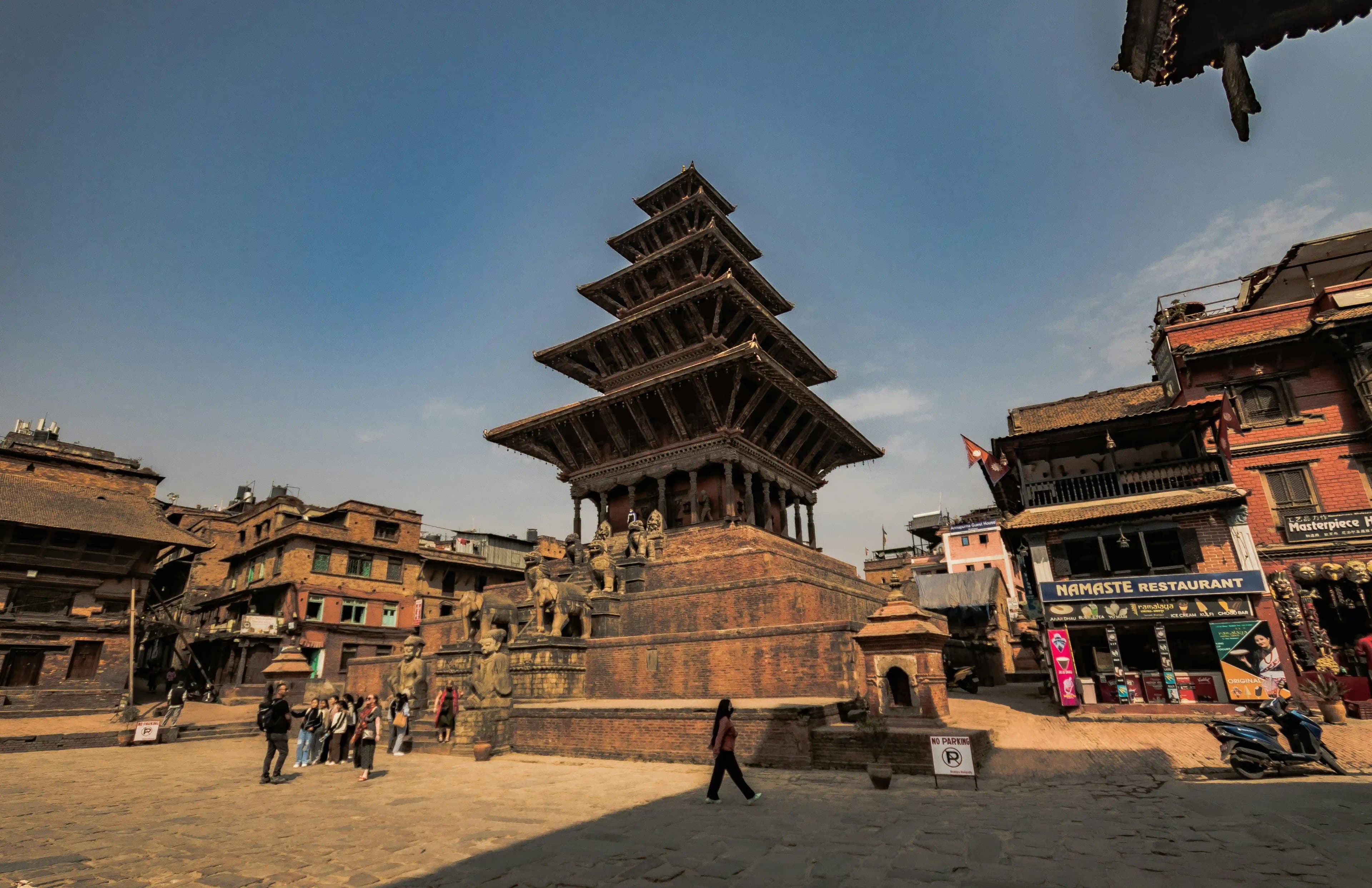
5. Bhaktapur Durbar Square
Bhaktapur Durbar Square is just a short drive outside Kathmandu and a place that can make one go back in time. A photographer would have a time of it in ancient brick temples, narrow alleys and old-fashioned artisans at work. It brings back memories of the rich Nepalese culture as well as old world beauty.
Location: Bhaktapur, Kathmandu Valley, Nepal.
Timings: Operating all day long.
Things to do: Visiting Nyatapola Temple, experience pottery, and try the local yogurt Ju Ju Dhau.
Conclusion
The Pashupatinath Temple is not just a place, it is a journey that will always be with you. Each step there feels like a prayer. The chants, the light of the oil lamp and the smell of incense forms a divine tranquility which is difficult to explain. You may go there to be blessed, to hear its stories or to breathe the spiritual air, but one thing is sure, you will walk away with a lighter heart and a filled soul.